Category: General Interest

  • Could you be fined for overpacking?

    Could you be fined for overpacking?

    As we approach the summer holidays, many of us will be heading abroad or planning a staycation, to enjoy a well-deserved break. However, if you’re planning to travel with a lot of luggage, you need to take care to not overload your vehicle. Doing so could mean you unintentionally break the Highway Code, and be in “improper control of their vehicle”. 

    With this in mind, we at Howden are sharing our top tips on how to pack your car safely this summer and what you should do to ensure that your vehicle remains road safe despite the additional weight. 

    What are the rules around overloading a vehicle? 

    Rule 98 of the Highway Code states that you ‘must not overload your vehicle or trailer.’ This is supported by several of UK laws, including Section 100 of The Road Vehicles (Construction and Use) Regulations 1986, which says that the ‘weight, distribution, packing and adjustment of the load’ should not endanger anyone in the vehicle, or other road users. 

    So what does that mean for when you’re packing up, ready to hit the road?

    Calculating your vehicle’s payload weight  

    The payload weight refers to the maximum amount of additional weight that you can add to your car before it is deemed unsafe. This includes the weight of the driver, any passengers, and luggage that will be loaded into the vehicle. You can use the following formula to calculate your vehicles payload weight. 

    Gross vehicle weight rating (GVWR) – kerb weight = payload weight 

    The GVWR refers to the maximum weight of the car and its contents, while the kerb weight refers to the weight of the car if it was empty and carrying a full tank of fuel. 

    The main figure to focus on is the payload weight. This should be available in your vehicle driver manual and indicates how much additional weight you can add to your vehicle. 

    The maximum payload weight will, understandably, vary depending on the size of your car. For smaller cars, such as the Kia Picanto, Fiat 500, and Volkswagen Polo, the maximum payload weight can be between 385kg and 482kg. Assuming you have four adult passengers, each with one suitcase and a piece of hand luggage, it becomes quite easy to exceed a 400kg payload. 

    Load Individual weight Combined weight 
    4x passengers 75kg 300kg 
    4x suitcases 20kg 80kg 
    4x pieces of hand luggage 10kg 40kg 
    Total 105kg 420kg 

    Top tips for travelling with additional passengers and bags

    Here are some of our top tips for maximising the amount of luggage you can safely travel with when heading on holiday.  

    Calculate the combined weight of passengers and luggage 

    If you are concerned that you’re going to exceed your vehicle’s maximum payload, it makes sense to weigh your luggage and your passengers before the journey. If you know the combined weight of everything you are packing into the car, you can be confident that you aren’t at risk of overloading. 

    Load the heaviest items in first 

    Start by loading the heaviest items of luggage into the bottom of the boot first. This helps the vehicle to maintain a lower centre of gravity and should make the vehicle easier to handle. 

    You can tuck smaller items of hand luggage under the rear passenger footwells. This will prevent the boot from being loaded above the top of the back seat, which may block your rear view as a driver.  

    Keep luggage strapped down 

    If you’re worried about luggage moving around during the journey, consider investing in a non-slip mat for the boot or bungee cords to keep it in place. 

    If you have an unused backseat, you can also use it to hold luggage. Use the seatbelts to help secure it in place and prevent it from moving around in transit. 

    Consider using vacuum sealed bags 

    If you are travelling with a lot of clothes, consider using vacuum sealed bags. While this won’t impact the overall weight of the luggage, it can reduce the overall size of the item by up to 75%, which can allow you to pack more into the boot without impacting the driver’s field of view. 

    Inflate your tyres to a higher pressure 

    To accommodate for the additional weight of more passengers and luggage, it is recommended to inflate your tyres beyond their usual pressure. Your vehicle handbook will indicate what PSI to inflate your tyres to, to ensure that your vehicle can still be driven safely with the added weight. Tyre pressure information is also sometimes displayed on the inside of your fuel door. 

    Ensure that you are inflating your tyres to the recommended PSI before beginning your journey while they are cold for the most accurate reading. If not, underinflated tyres can affect braking distance, steering, and fuel usage. 

    A member of our Travel Insurance team said:  

    “With nearly three-quarters of Brits intending to go on a holiday within the UK this year, many will be planning to drive to the airport at the start of their trip.   

    “It is easy to overpack when planning a holiday, especially if you have children. Rules around overpacking your car are often overlooked, but exceeding your vehicle’s payload can drastically increase stopping distance and reduce the control you have over the vehicle.”

    And remember, if you have any questions about your car, van, or leisure insurance, our friendly, expert advisors are here to help. Simply find your nearest branch, and pop in to speak with one of the team or give us a call. 

    Sources: Vehicle payload calculation, travel trends

    You could also read:

    This is a marketing blog by Howden Insurance.

  • The best travel money options: cash vs card

    The best travel money options: cash vs card

    Are you jetting off abroad on holiday this summer? There’s so much to be excited about; sightseeing, good food, relaxing in the sun. Whatever your vacation style, or destination, traveling abroad often involves the critical decision of how to handle your finances.

    Should you carry cash, rely on your credit or debit card, or perhaps a mix of both? Understanding your options can help you have a stress-free travel experience, so let’s unpack all the considerations.

    Using cash abroad: the traditional choice

    The adage ‘cash is king’ is well-founded. Traditionally, popping to the Bureau de Change to get your Euros, Dollars or other foreign currencies is a staple part of holiday preparation.

    Using cash abroad still has its merits, even in today’s digital age. While some shops or eateries may be card-only venues since Covid, having cash to hand can be very useful on holiday. From market stalls to street vendors, to tipping staff or venturing to remote locations, sometimes cash is the simplest option for everyone.

    What’s more, using cash should mean you won’t get stung by any additional transaction fees and could help you budget over the course of your holiday. Seeing what funds you have physically can help you keep track!

    If cash if your preferred payment method on holiday, just take note of a couple of points:

    • Cash can be bulky. Especially with low value currencies where you’ll end up carrying several bills at a time for just a small value of money.
    • Carrying large amounts of cash can mean you’re vulnerable to theft. Criminals can spot you leafing through notes or hear your coins jangling, and target you. And once it’s gone, it’s gone!

    Using cards on holiday: what you need to know

    Credit and debit cards can make travelling easier, especially with modern security features and the ability to freeze or cancel them in the case of loss or theft. You may find that you get better exchange rates, especially if you use a travel-friendly card with no foreign transaction fees, or a prepaid travel card. And sometimes, you might need a card to book excursions or make reservations online or to make larger purchases abroad.

    Just make sure you understand the fees that can come from the various card options. Debit, credit, or prepaid cards can come with ATM withdrawal charges, or initial loading fees. These unexpected fees can make it hard to keep track of spending.

    A word on travellers cheques

    While many people opt for cash or card, some do prefer to use travellers cheques. These pre-printed cheques for fixed amounts can be issued in sterling or foreign currencies, and spent abroad or swapped for local money at banks or Bureaux de Change.

    The main benefit of travellers cheques is that they are safer to carry around than cash. So long as you record the serial number of each cheque you were originally issued, you will be able to get them replaced should they be stolen or lost. However, as they are not as popular a payment option compared to other methods, you might find them tricky to exchange.

    The best of both worlds

    Ultimately, you should use the payment option that’s most convenient for you, but a mixed approach can offer you both flexibility and security. By carrying a small amount of local currency, you can cover things like taxi fares, tips, parking or small purchases. And then you can find a travel-friendly card, with good rates, that will work for bigger transactions.

    Travelling safely with your money

    Here’s a few money pointers to help you enjoy your holiday.

    • Inform your bank: always inform your bank of your travel plans to prevent your card from being flagged for suspicious activity.
    • Limit ATM withdrawals: withdraw larger amounts to minimise fees, but don’t carry too much cash at once.
    • Carry cards and cash separately: don’t keep all your funds in one place for your own security. Split your payment options up, such as keeping some cash in a money belt and your card in an RFID wallet in your bag.
    • Monitor exchange rates: monitor exchange rates and plan your currency exchanges for when rates are favourable.

    Relax on holiday, knowing you’re covered

    When traveling abroad, the choice between cash and card depends on your destination, personal preferences, and spending habits. Cash provides universal acceptance and control over spending, while cards offer security and convenience. Combining both options, can enhance your trip, giving you peace of mind that you’re prepared for any situation.

    And for even greater peace of mind, why not talk to one of our travel insurance advisors? Our travel insurance experts can help you find cover that protects you financially if something happens to you while you’re away or before you travel. This could include the costs of cancelling your trip if you become ill and can’t go, the costs of emergency medical treatment whilst you’re away, or if your baggage is lost, damaged or stolen during your trip.

    For more help, find your local Howden branch and stop by, or give the team a call.

    Sources: Which?, EuroChange, Nerd Wallet

    You could also read:

    This is a marketing blog by Howden Insurance.
  • Win a 9ft paddling pool in time for half term

    The sun is shining, and what better way to cool off than in your very own 9ft steel frame paddling pool – worth £150! We’ve got two of these amazing pools up for grabs, and entering couldn’t be easier.

    To be in with a chance of winning, simply like, comment, and share our competition post on any of our social media channels. That’s it!

    Whether it’s for family fun, a garden gathering, or just a chance to relax in the sun, this pool is the perfect summer treat.

    Don’t miss out – get involved today!

    Competition Terms & Conditions

    1. Competition Details

    • Promoter: A-Plan Holdings incorporated and registered in England and Wales with company number 00750484 whose registered office is at 2 Des Roches Square, Witney, Oxfordshire, OX28 4LE
    • Competition: Win a 9ft Paddling Pool
    • Opening Date: 12:00 on 2025-05-13
    • Closing Date: 2025-05-18
    • Prize:
      • 9 Foot Steel Frame Paddling Pool with Pump
      • Cash Value: £150
      • Number available: 2
      • Exclusions: Must be over 18 years and resident in England or Wales

    1.1 You agree to be bound by these terms and conditions by submitting a Competition entry.

    2. Eligibility

    2.1 The Competition is open to all residents in England, Northern Ireland, Wales and Scotland aged 18 years or over, except employees (and/or their immediate families or households) of the Promoter or its holding or subsidiary companies.

    2.2 The Promoter will not accept Competition entries that are incomplete, illegible, or have been altered, reconstructed, forged or tampered with.

    2.3 There is a limit of one entry per person per action.

    3. How to Enter

    3.1 To enter the Competition, you must:

    • Comment, Like, and Share the post on Facebook.
    • Comment, Like, and Share the post on Instagram.
    • Comment, Like, Repost, or Share the post to our X username.

    3.2 The Promoter must receive all Competition entries through the specified method by no later than 17:00 on 18/05/2025. All entries received after the Closing Date are automatically disqualified.

    3.3 No purchase is necessary.

    3.4 The Promoter will not accept responsibility for Competition entries that are lost, mislaid, damaged or delayed in transit, regardless of cause.

    4. Selection Process and Claiming the Prize

    4.1 Prizes are subject to availability. The Promoter reserves the right to substitute the prize with a cash alternative of £150. The prize is not negotiable, refundable, or transferable.

    4.2 A random number generator will choose the winners. The selection is final and no correspondence will be entered into.

    4.3 The Promoter will contact the winner via the contact information provided. This cannot be amended after submission.

    4.4 If the winner cannot be contacted or has not claimed the prize within 30 days, the Promoter reserves the right to offer the prize to the next eligible entrant.

    4.5 If you object to your surname, county, or winning entry being published, contact the Promoter. The Promoter may still provide this information to the Advertising Standards Authority on request.

    5. Data Protection and Publicity

    The Promoter will only process your personal information as set out in the Privacy Policy. See also clause 4.5 regarding the announcement of winners.

    6. Limitation of Liability

    Insofar as is permitted by law, the Promoter, its agents, or distributors will not be liable for any loss or damage arising out of participating in the Competition or accepting the prize. Your statutory rights are not affected.

    7. General

    7.1 The Promoter reserves the right to exclude or disqualify any participant acting contrary to the spirit or intention of the Competition.

    7.2 The Promoter reserves the right to hold, void, suspend, cancel, or amend the Competition as necessary.

    7.3 If there is a discrepancy between these terms and any promotional materials, these terms shall prevail.

    7.4 These terms and conditions are governed by the laws of England and Wales, and the parties submit to the exclusive jurisdiction of the courts of England and Wales.

  • Train like a Lion: kickstart your spring fitness routine!

    Train like a Lion: kickstart your spring fitness routine!

    As anticipation builds for The British & Irish Lions squad announcement, the team will no doubt be in full training mode. But how do you train like a lion?

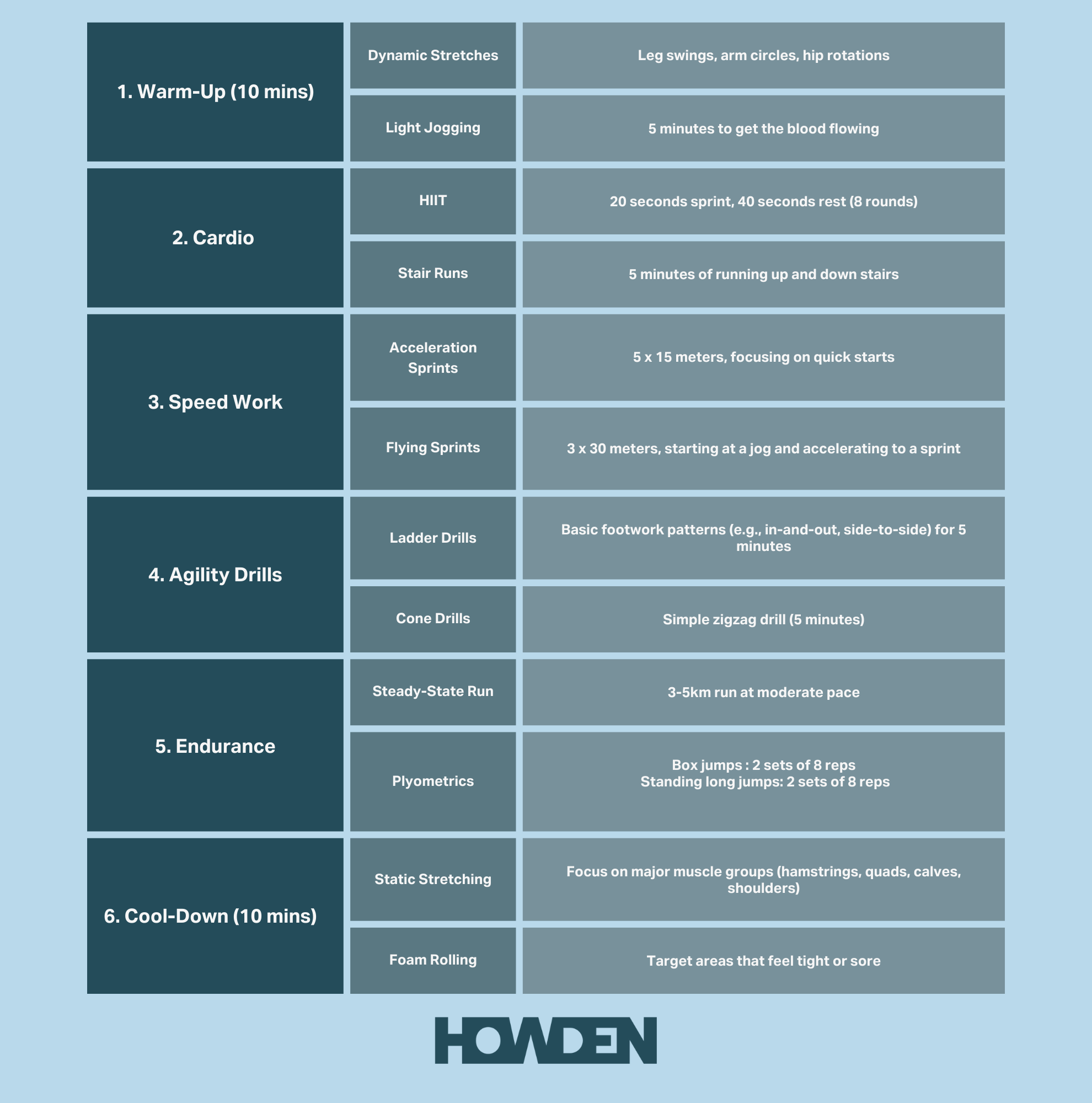
    Here, we’ve compiled three Lions’ inspired workouts that you can try at home or in the gym, as well as top diet and recovery tips from the players themselves!

    Train like a forward: strength & power workout

    If you’re looking to improve pure strength and power endurance, then former Lion James Haskell has just the workout for you. According to Men’s Health magazine, Haskell recommends doing this full-body workout twice a week for a month to build visible, athletic muscle and maximise ‘smart strength’.

    Find the full workout page on the Men’s Health website here.

    Train like a back: high-intensity cardio and speed workout

    Perhaps instead you want to focus on your speed, agility and power, and be prepared in case you have to face a much larger opponent on the pitch. For the Lions’ fly-half, Marcus Smith, it’s all about power and agility over bulk. According to an article by the Telegraph, Smith uses high-intensity sprint training and plyometrics among other things to continually out-pace his opponents on the pitch.

    Smith has also been known to work with Olympic decathlete Daley Thompson to improve his top-end sprinting speed and maintain acceleration over longer distances. Below, we’ve put together a fitness routine inspired by Smith.

    All-round ‘strong-man’ workout

    This brutal training method was used by fitness coach and personal trainer Andrew Tracey to prepare the England Rugby team for the World Cup, and revolves around heavy loaded carries – essentially carrying around awkward and heavy objects in quick succession. Sounds fun, right?

    According to Men’s Health, heavy loaded carries offer ‘the perfect hybrid of strength and cardio training’, because, ‘moving heavy things over long distances quickly provides you with all the benefits of both worlds – perfect for an elite rugby player.’

    And if you want to go one step further, to really maximise your gains, it’s recommended to use heavy odd-objects with irregular weight distribution, like sandbags or kegs, rather than traditional weights (such as dumbbells or kettlebells).

    Not only are they awkward to manoeuvre, but their contents are also moving around inside, meaning you have to constantly readjust your grip as you carry them. In the process, many more muscles are used in lifting and carrying. Why not have a look and see what you can use around the house!

    For reference, England players used 70kg sandbags, 50kg kegs, and for farmer’s carries (holding a heavy weight in each hand and walking a set distance) they carried their own weight in each hand. We would advise you to start somewhere slightly more realistic, to avoid breaking your back!

    The workout

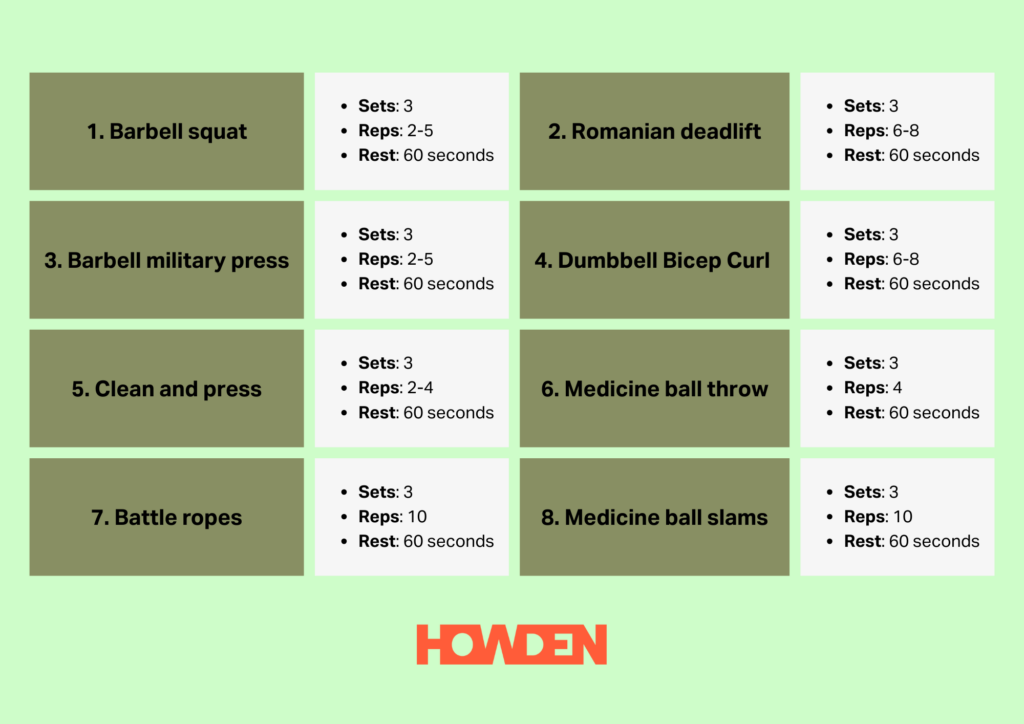
    As fast as you can, aim to complete five rounds of the following exercises, giving yourself a three-minute rest between rounds:

    1. Left hand suitcase carry – grab a dumbbell or kettlebell (as heavy as you can manage), letting it hang naturally by your side. Breathe in, engaging your core, and walk briskly while clenching the opposite hand to create tension. At the 20-meter mark, place the weight down safely and quickly.
    2. Sprint back to the start line (20m).
    3. Sandbag bear hug carry (20m)– Squat down with a flat back, roll your hands under the bag, lift it to your lap, and wrap your arms tightly around it. Stand tall, keeping the bag secure, and take short, strong strides while staying upright and focused. Move quickly to complete the distance before placing the bag down.
    4. Sprint back to the start line (20m).
    5. Right hand suitcase carry – repeat the same as step 1, this time with the weight in your right hand.
    6. Sandbag bear hug carry (20m)
    7. Sprint back to dumbbells (20m)
    8. Farmer’s carry (20m) – this time, combine steps 1 and 5, with weights in both hands, and sprint back to the start line as fast as possible.
    9. Rest & repeat!

    Rugby diet tips

    What you eat between training is just as important as the exercise you are doing. And for the Lions, that’s a whopping 3,750 calories on average per day – around 50% more than the recommended daily intake for a man. So, what should you be eating if you want to keep up with the Lions?

    Protein

    An obvious one, but absolutely essential for muscle repair and growth. It is a foundational part of the Lions’ diet. According to Canterbury, the Lions avoid processed food like white rice or white pasta, and get their protein from low-fat sources like chicken, fish, beans and lentils.

    Carbohydrates

    Unlike endurance sports, rugby demands explosive power, making carbs essential for energy. However, the breakdown of carbs varies, influenced by genetics and the speed at which glucose converts to energy.

    Prioritise complex carbs like brown rice, wholegrains, oats, fruits, and vegetables about three hours before training. Their fibre content ensures a gradual energy release and slows the entry of sugars into the bloodstream.

    Fruit

    Fruit is a great food source for both pre-game and recovery. Bananas, rich in starch and magnesium, are excellent pre-workout foods, offering quick energy boosts. Or even better, make a banana smoothie. Cherries are another excellent choice, especially for athletes, due to their anti-inflammatory and antioxidant properties, which help reduce exercise-induced muscle pain and inflammation.

    Lastly… sugar!

    Of course, it’s a treat – but also a great source of short-term fuel – so a quick sugary snack is never a bad thing when it comes to exercise.

    How do players recover after training?

    It’s a well known fact that rugby players are no strangers to ice baths; they have many benefits for athletes, such as reducing muscle soreness, preventing inflammation, accelerating recovery and improving circulation. And you don’t need all the fancy equipment to do it yourself – just run a cold bath at home, throw some ice in and you’re good to go!

    Other than a cold plunge, the Lions employ a whole team of recovery experts, including masseuses and physios. Outside of professional support, the players also regularly use saunas and go swimming to promote cardiovascular health and muscle relaxation.

    Our clients wellbeing is really important to us. If you’re as big a fan of the Lions as we are, you may find that a rugby-style routine works well for you – it’s all about coming up with new ways to keep you fit and healthy! Did you know that Howden also offers health and life insurance? Contact your local branch to find out more!

    Get involved in the excitement at Howden!

    There’s set to be many more memorable moments this summer as The British & Irish Lions take on Australia, so why not join in the fun with your local Howden branch? We’re working with clubs across the country to celebrate, so check out what your branch is up to here.

    Sources: Men’s Health, Canterbury, GQ, The Telegraph

    You could also read:

    This is a marketing blog by Howden Insurance.

  • Bank Holiday Bonanza


    Competition Details

    Competition Details

    Promoter: A-Plan Holdings incorporated and registered in England and Wales with company number 00750484 whose registered office is at 2 Des Roches Square, Witney, Oxfordshire, OX28 4LE

    Competition: Howden Bank Holiday Bonanza

    Opening Date: 12:00 on 2025-05-02

    Closing Date: 2025-05-07

    Prize:

    • Details: Four pairs tickets to FA Cup Final at Wembley on 17th May, One Ninja Creami, One Mac Allister Robot Mower, One Cadac Grill, One Perfect Draft
    • Cash Value: up to £300
    • Number available: 1 per item
    • Exclusions: Must be over 18 years and live in England or Wales

    1. Terms and Conditions

    1.1 You agree to be bound by these terms and conditions by submitting a Competition entry.

    2. Eligibility

    2.1 The Competition is open to all residents in England and Wales aged 18 years or over, except employees (and/or their immediate families or households) of the Promoter or its holding or subsidiary companies. We will only arrange for delivery to addresses in England and Wales.

    2.2 The Promoter will not accept Competition entries that are incomplete, illegible, or have been altered, reconstructed, forged or tampered with.

    2.3 There is a limit of one entry per person per action.

    3. How to enter

    3.1 To enter the Competition, you must comment on Facebook, Twitter or Instagram which one of the five prizes you would like to win.

    3.2 The Promoter must receive all Competition entries through the specified method by no later than 23.49pm on the Closing Date. All Competition entries received after the Closing Date are automatically disqualified.

    3.3 No purchase is necessary.

    3.4 The Promoter will not accept responsibility for Competition entries that are lost, mislaid, damaged or delayed in transit, regardless of cause, including, for example, as a result of any postal failure, equipment failure, technical malfunction, systems, satellite, network, server, computer hardware or software failure of any kind.

    4. Selection process and claiming the prize

    4.1 Prizes are subject to availability. The Promoter reserves the right to substitute the prize with a cash alternative to the value of the prize. The prize is not negotiable, refundable or transferable. The winner shall comply with any additional terms and conditions and/or exclusions which may apply to the prize.

    4.2 A random number generator will choose the winner, and subject to clause 4.1, the selection is final, and no correspondence or discussion will be entered into.

    4.3 The Promoter will contact the winner via the contact information provided. The Promoter will not amend contact information after submitting the Competition entry form.

    4.4 The Promoter will make all reasonable efforts to contact the winner. If the winner cannot be contacted or has not claimed their prize within 30 (thirty) days of being notified, the Promoter reserves the right to offer the prize to the next eligible entrant selected from the correct entries received before the Closing Date. The Promoter accepts no responsibility if you cannot take up the prize. The prize may not be claimed by a third party on your behalf.

    4.5 If you object to any or all of your surname, county and winning entry being published, please contact the Promoter. In such circumstances, the Promoter may still provide the information to the Advertising Standards Authority on request.

    5. Data protection and publicity

    The Promoter will only process your personal information as set out in the Promoter’s Privacy Policy https://www.howdeninsurance.co.uk/common-pages/privacy-notice/. See also condition 4.5 with regard to the announcement of winners.

    6. Limitation of liability

    Insofar as is permitted by law, the Promoter, its agents or distributors will not in any circumstances be responsible or liable to compensate any entrant to the Competition or accept any liability for any direct or indirect loss and/or damage occurring as a result of participating in the Competition, including but not limited to, taking up the prize. Your statutory rights are not affected.

    7. General

    7.1 The Promoter reserves the right to, at its sole discretion, exclude or disqualify any participant whose conduct is contrary to the spirit or intention of the Competition or who is in breach of these terms and conditions.

    7.2 The Promoter reserves the right to hold, void, suspend, cancel, or amend the prize Competition where necessary.

    7.3 In the event of a discrepancy between these terms and conditions and the provisions of any promotional material relating to the Competition, the provisions in these terms and conditions will prevail.

    7.4 These terms and conditions shall be governed by the laws of England and Wales, and the parties will submit to the exclusive jurisdiction of the courts of England and Wales.

    “`

  • Will you ignore the diesel ban?

    Will you ignore the diesel ban?

    Remember when the government delayed the petrol and diesel car ban back in 2023? Well, it’s back on again — and honestly, it’s hard to keep up with all the to-ing and fro-ing. The Labour government has confirmed it’s sticking to the original plan: from 2030, you won’t be able to buy a brand-new petrol or diesel car in the UK.

    Feels like ages away, right? But cast your mind back to when we first went into lockdown — that was five years ago. Time has a habit of sneaking up on us, and 2030 will be here before we know it.

    And remember to let us know what you think! Keep reading to vote in our poll.

    So, what exactly is happening?

    Back in 2023, the ban on new petrol and diesel cars was delayed until 2035. But now? That delay’s been reversed.

    Here’s a quick look at what’s changing:

    • From 2030: No new petrol or diesel cars will be sold.
    • Hybrids that can travel a reasonable distance on electric power will still be available — for a little while longer.
    • From 2035: Only fully zero-emission vehicles (like electric cars) can be sold.
    • Good news: If you already own a petrol or diesel car, you can keep it. The ban only applies to new car sales — not the ones already on the road.

    So, no — you won’t have to scrap your car overnight. You’ll still be able to drive it, get it insured, and keep using it for years to come.

    But it’s not all smooth driving ahead…

    While switching to electric sounds great in theory, it’s not always that simple in real life.

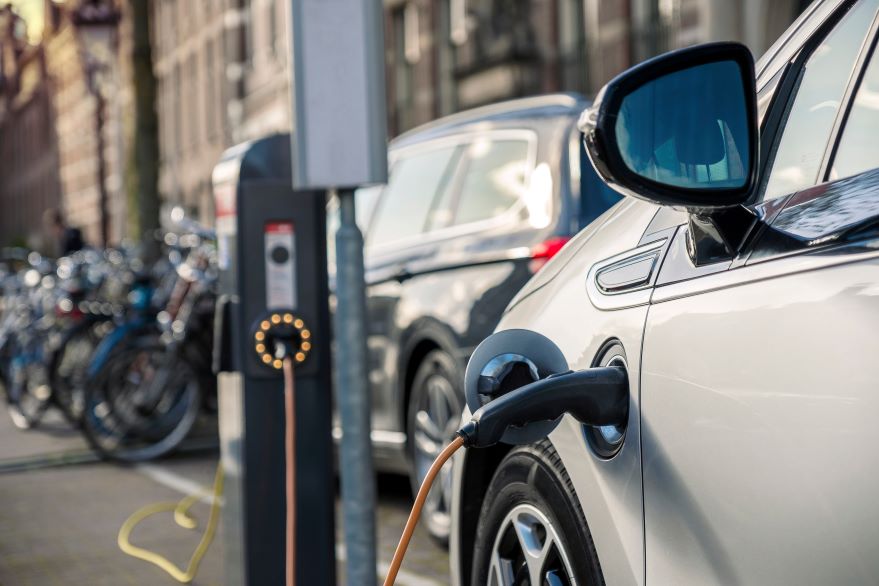
    For a lot of drivers, there are still big barriers — the cost of EVs, limited charging options, and the fact that many homes don’t have driveways for at-home charging. If you regularly drive long distances, the current charging network might feel patchy and inconvenient.

    The government is aware of the challenges. Right now, the Transport Secretary is gathering input from electric vehicle experts and car manufacturers to figure out the best way to make the transition happen — and make it work for everyday drivers like you.

    Ford recently issued a warning during the government’s consultation, saying that the push for more EV production just doesn’t add up without stronger demand. And at the moment, that demand is falling short — mainly because of high costs and the UK’s underdeveloped charging infrastructure.

    How will local infrastructure cope?

    So, the big question is: can the government deliver what’s needed to make this plan actually work? That includes making electric cars more affordable and building the infrastructure to support them.

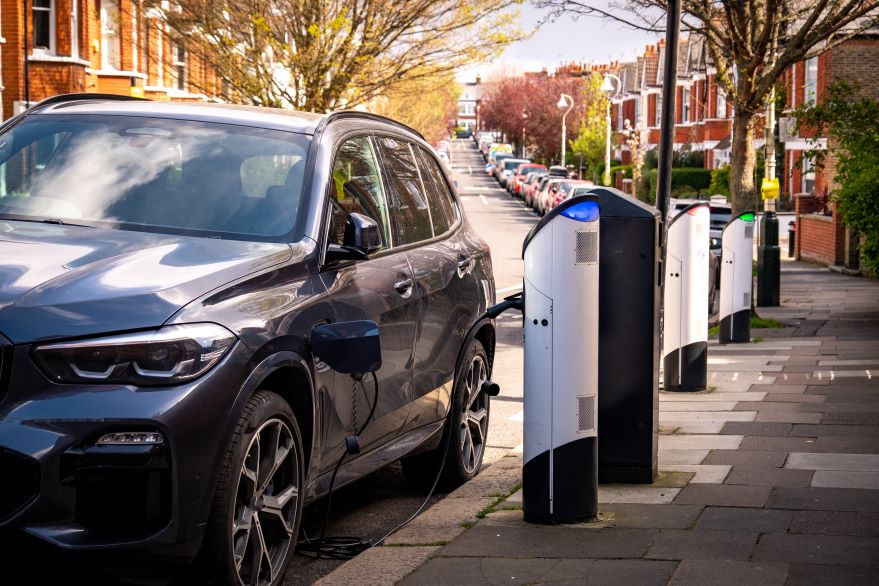
    One local council is stepping up. In a positive move, Suffolk County Council has partnered with charge point operator to roll out over 6,000 new EV charging stations across the county.

    The £21.3 million project is designed to help people — especially those without off-street parking — make the switch to electric vehicles more easily. These charging points will be installed in residential streets and public car parks, giving locals better access to the EV network.

    It’s all part of the government’s wider LEVI fund, which supports local authorities in boosting EV charging capacity. Suffolk is actually the first council in England to both award its funding tender and sign a deal with a charge point provider. Hopefully, others will follow their lead.

    A shaky road to public confidence

    Back when the 2030 ban was still firmly in place, a survey showed that 42% of drivers planning to buy a new car expected it to be a low-emissions vehicle — either fully electric or a hybrid.

    But after Rishi Sunak announced the delay to 2035? That number dropped to 38%, according to research from Kwik Fit. That’s a fall of over two million potential EV or hybrid buyers. These kinds of U-turns make it harder for drivers to feel confident about going electric.

    So what do people think now?

    With the goalposts always changing, it’s hard to know how to plan ahead. But, with the news that diesel and petrol cars will be phased out, what does that make you think about your next vehicle?

    [TS_Poll id=”19″]

    Don’t panic – but do plan!

    You don’t need to rush into buying an electric car tomorrow. But it’s smart to start thinking ahead.

    As the 2030 deadline gets closer, demand for petrol and diesel cars could spike — and prices for good used models might rise sharply. And if you’re thinking about changing your car in the next few years, it’s worth factoring these shifts into your plans.

    And remember, government policies can change. Another election could see these deadlines pushed back again — or brought forward. Nothing’s certain except that your car needs to keep you moving, no matter what.

    Whatever you drive — petrol, diesel, hybrid or electric — Howden is here to help you keep covered. We’ll help make sure you’re protected on the road, whatever the future brings! Contact your local branch via phone or pop in and speak to an insurance expert.

    Sources: Which? The Mirror, Kwikfit, Cinch

    You could also read:

    This is a marketing blog by Howden Insurance.

  • Is car insurance finally going down?

    Is car insurance finally going down?

    April hit hard. Rising bills, expensive groceries, and general cost-of-living fatigue made it feel like ‘awful April’ was living up to its name. But if you’re a driver, there’s one silver lining on the horizon—car insurance might finally be heading in the right direction.

    By the time we hit early 2024, car insurance had become a real pain point—just one more thing squeezing already-stretched household budgets. Even chocolate has gone up! But now, there’s a glimmer of hope, because car insurance premiums, which hit record highs not long ago, are finally starting to come down.

    How expensive is car insurance right now?

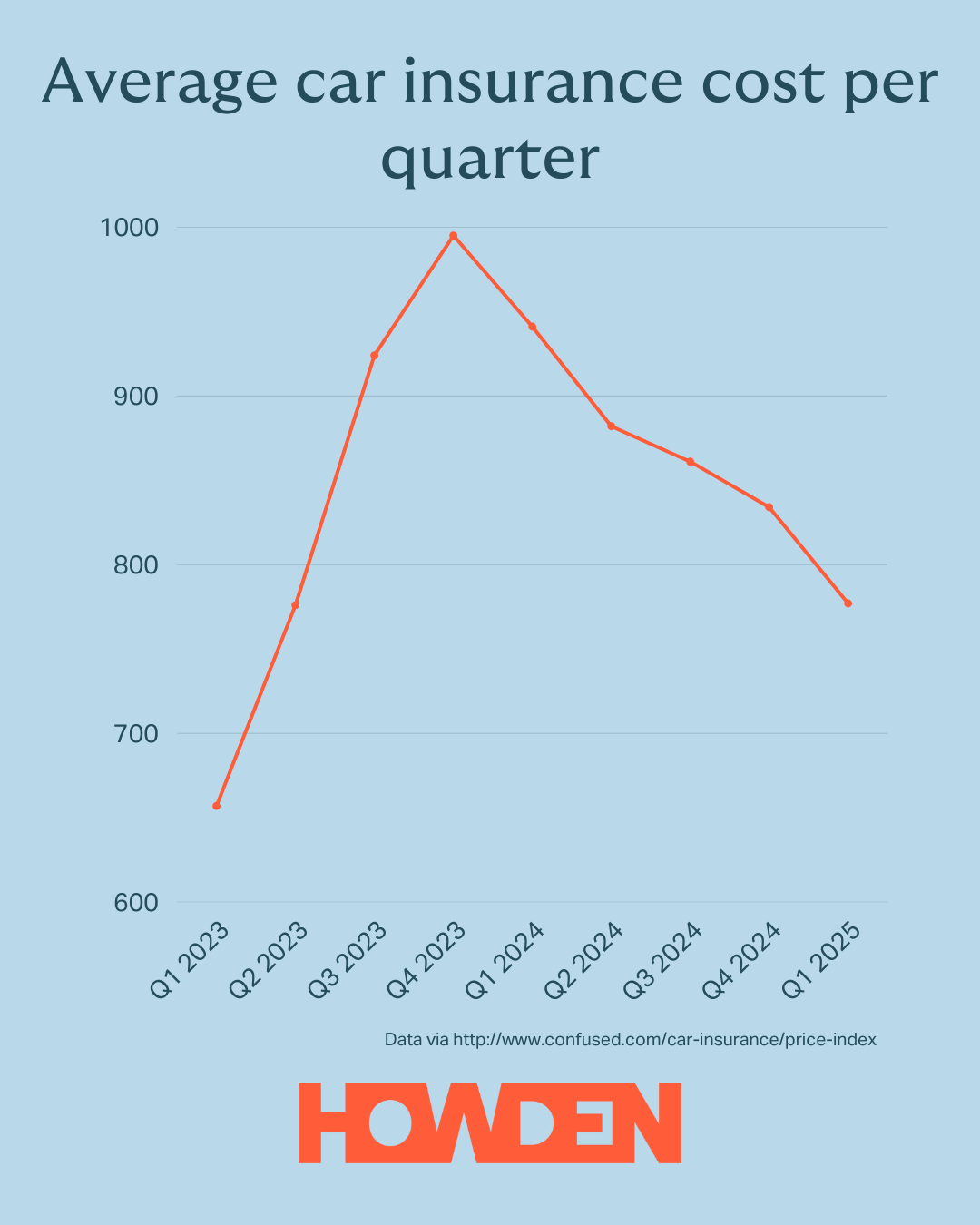
    Here’s the headline: the average UK car insurance premium is now £777. Not exactly cheap, but definitely better than the near-£1,000 figure we saw at the end of last year.

    And it’s not just national data showing a drop—our own client data for 2025 so far is show positive signs. Over half (56%) of our clients are seeing lower renewal quotes this year—at least 5% cheaper than 2024. And only 10% are facing those painful hikes of 25% or above.

    Compared to last year? It’s a big improvement!

    Let’s rewind to the end of 2023, when the average car insurance premium hit a whopping £995. That was a record-breaking high, and it really stung.

    Fast forward to now, and premiums are down by £164, or about 17% compared to March 2024. Things have been gradually improving since early last year, after a tough period of inflation, supply chain chaos, and rising repair costs sent premiums soaring.

    We’re still not back to the prices we saw pre-pandemic, but the downward trend is clear—and very welcome.

    Biggest wins for younger drivers

    Good news if you’re just getting behind the wheel: younger drivers are finally catching a bit of a break. Those aged 17–20 are seeing some of the biggest drops in premiums. Here’s what that looks like:

    • 18-year-olds are now paying around £2,434, which is £711 (23%) less than they were this time last year.
    • 17-year-olds are shelling out £2,258, down £661 (also 23%) from 2024.

    Sure, those prices are still eye-wateringly high compared to older drivers—but this is the lowest they’ve been for nearly two years.

    Read more about insuring young drivers here.

    But why are some people still paying so much?

    If your quote came in higher than expected, you’re not alone. Not everyone is benefitting from the drop—and there are still some big pressures keeping prices up.

    In 2024, UK insurers paid out £11.7 billion in motor insurance claims. That’s a huge strain on the industry. The average claim rose by 13% to £4,900, and repair costs alone hit a record £7.7 billion—a jump of £1.5 billion from 2023.

    Modern vehicles are more complex, which means they’re more expensive to fix. And as electric cars become more common, specialist repairs are pushing costs even higher. So while premiums are coming down overall, it’s not happening equally for everyone just yet.

    How can you save on your car insurance right now?

    There are ways to make your premium work harder for you—especially when it’s time to renew. Here are a few tips that could help trim the cost:

    Consider a black box

    AKA telematics, this can be especially useful for young drivers looking to save on their premium.

    Check your mileage

    If you’ve been working from home more or driving less, make sure your policy reflects that.

    Adjust your voluntary excess

    Just make sure it’s still affordable if you need to make a claim. You could also look at excess protection, which could see your excess refunded to you if you had to claim.

    Add a named driver

    A more experienced driver on your policy can sometimes reduce your premium. Just make sure that whoever owns the car and is driving it the most is the policy holder, to avoid fronting.

    Speak to a broker

    A broker, like us here at Howden, can help you find the best value for your specific driving needs, and even find policies and deals that you won’t online.

    So, is this the start of a positive trend?

    We certainly hope so. After months of doom and gloom around rising costs, it’s refreshing to see car insurance heading in the right direction. Whether you’re a new driver or have been on the road for decades, there’s a good chance your next renewal might be a bit less painful than the last one.

    And if it’s not? We’re always here to help you find ways to save.

    Sources: Which?, Confused.com, Consumer Intelligence, ABI

    You could also read:

    This is a marketing blog by Howden Insurance.
  • The best things to do this Easter!

    The best things to do this Easter!

    It’s nearly Easter and we’re very much looking forward to enjoying some guilt-free chocolate eggs. We’re also looking forward to taking part in community activities, as well as taking a more homely approach over the long weekend.

    We round up several of our team’s suggestions, ranging from arts and crafts to some well-known Easter egg hunts! And please do share your own suggestions, we’d love to add more to our list.

    What’s on this Easter?

    Here are some of our team’s top ‘day out’ recommendations ranging in price – to give you an inspiration. If they are too far afield, simply search for something similar closer to home, there will be plenty of activities going on in your local area too.  

    1. Explore nature trails in parks and nature reserves –Take a camera, get back to nature and seek out spring arrivals with the whole family.

    2. For the chocoholic grown up – spend a day exploring the ten best chocolate shops in London, and see if you can rise to the challenge of doing all of them! Could any of these tempt you?

    3. Visit a local farm – Support your local farm and find out whether they are participating in any seasonal activities, from petting zoos to egg hunts.

    4. Enjoy a National Trust Easter Egg hunt – did you know that every year the National Trust organises egg hunts across their locations? Find your closest venue here. Trails are just £3 to enter and most locations provide an activity sheet, pencil and of course, an Easter egg.

    5. Castle Easter egg hunts – if you’d prefer an atmospheric castle over a palace, you have plenty of choice, whether it’s Scarborough Castle, Warwick Castle, Oxford Castle or Sudeley Castle. This can be a great day out for all of the family. What’s more, with over 1,500 castles in the UK, there is bound to be one close to you!

    Staying home this Easter?  

    Whether you prefer to avoid queues, or are enjoying Easter on a budget, we have some fun activities you (and your neighbours) could take part in at home.

    Here are some of our team’s favourite budget-busting Easter activities you can take part in from home:

    • Cadbury’s virtual Easter egg hunt – did you know you can now hide virtual eggs anywhere in the world for friends and family for free? Sign up to the Worldwide Hide – hide your egg for free on Google Maps and send your loved ones a link which will help them to find it digitally, using the ‘eggometer’ as a guide! Leave a special message for them when they find it. What’s more, with every real Easter egg purchased on the Worldwide Hide website (via ‘hide an egg and gift a real one’), Cadbury’s are donating another egg to the Trussell Trust!
    • Host an Easter Egg hunt in your street – why not get together with the neighbours, chip in together, and agree on who sneaks out to hide the eggs and who helps with the hunt!
    • Easter crafts afternoon – get creative with paper, glue, and paint and make some colourful Easter crafts.
    Easy Easter Crafts - A-Plan Insurance
    Easy Easter Crafts – A-Plan Insurance
    • Homemade Easter cards – show someone you care with a handmade card. You can buy stencils and stickers to help with pictures or cut and stick some you could print in advance. Ideal for rainy days while nibbling chocolate eggs.
    • Plant an Easter Garden – Packets of seeds and small terracotta pots are pretty inexpensive – paint your pot just how you like it and plant your seeds. Remember, we’re giving away free seeds at our Howden branches! Tip: Keep your pot covered if you aren’t using waterproof paint!
    • Colour-in your own eggs – Get messy and colourful with a classic Easter activity: hard boil eggs and paint them with bright colours and designs. Think friendly faces, flowers and patterns!
    • Play ‘egg toss’ – why not get some fresh air (and run off some of that sugar) with a messy ‘egg toss’ competition. Whoever is the cleanest at the ends, wins and yes, we recommend adults join in too! Tip: Always make sure that your eyes are protected from shells as you play!
    • Bake Easter treats – whip up some festive Easter treats, such as hot cross buns, Easter cupcakes, bunny-shaped cookies or super-easy 3-ingredient Easter egg nests.

    Join in the fun at Howden

    There’s plenty going on at Howden for free this Easter! From charity fundraisers, to Easter Egg giveaways, to competitions, why not see what your local branch is up to?

    What’s more, we’re giving away wildflower seed packets at every branch. Stock is limited, so make sure you stop by your local branch and get yours before they go!

    Check out all our events on our What’s On page!

  • Insurance Easter Eggs: surprising things affecting your premiums

    Insurance Easter Eggs: surprising things affecting your premiums

    If you’re a film or gaming fan, you may have come across an Easter Egg or two in your time. And no, we’re not just talking about Easter chocolates! Rather, hidden secrets and references within content for eagle-eyed fans.

    In that spirit, we’ve decided to explore ‘insurance easter eggs’ AKA the little details or surprising things that can affect your premiums. After all, we’re all on the hunt for great value, especially in the current environment where costs are higher. So, let’s take a look at what could affect the price of your premiums.

    Your postcode

    When we’re choosing where to call home, an area’s general insurance profile isn’t really top of the list when you also need to consider your mortgage, work, schools and more! But insurers do tend to use postcode areas to determine risk factor on your home and motor policy.

    For example, living in a built-up area could increase your chance of an accident, purely due probability, since there will be more vehicles on the road. If you live in an area with high crime rates, the added risk of motor vandalism or theft could be reflected in the cost of your premiums.

    And it wouldn’t be the UK if the weather didn’t dampen things. Your postcode could see you placed within a flood-risk area, if you’re by the coast or a flood-prone river. But, these things can often benefit from a human approach, rather than just relying on maps and data. So it’s worth speaking to a flood insurance specialist who can consider your specific situation properly.

    Vehicle modifications

    If you’re a petrolhead and love working on your own car, then listen up! Modifications to the appearance or performance of your vehicle can impact the cost of your annual policy.

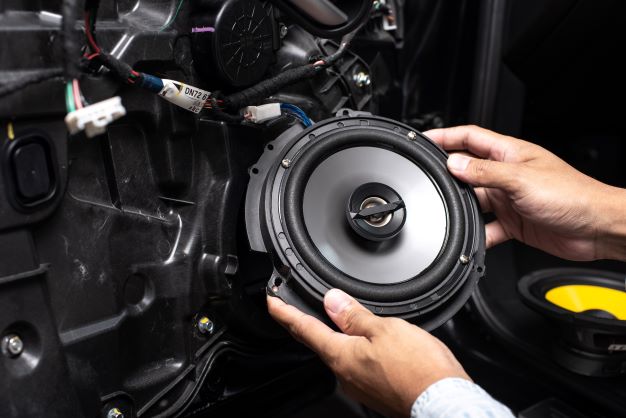
    A modification is anything that has changed after the car entered the market, even if what you are adding is a factory option, if it was fitted after-market then this needs to be declared as it deviates from the original spec. Things such as expensive speakers or in-car entertainment systems are a huge draw for would-be thieves, and you could see this extra risk reflected in your insurance quote.

    Not all mods, though, will mean a price hike. In fact, you could save money on your modified insurance by going to a specialist. Specialist insurers actively look to insure the enthusiast market and therefore build their products to suit this niche – whereas many standard insurers will target standard cars or even don’t have the facility to cover a modified vehicle at all. This is why you’ll notice a few stop quoting when you add your modifications on a comparison site quote.

    If you go to the right places, to insurers who understand that it’s not a few accessories but it’s a project built with blood, sweat and tears, not only could you find a policy that’s not going to penalise you for tailoring your car but you will find much more available in terms of enthusiast specific cover.

    The crucial thing to remember is that you need to declare all modifications to your insurance provider. This means that if you had to claim, you’ll avoid being underinsured or invalidating your policy and left to pay out of pocket yourself.

    Security precautions

    As we’ve discussed previously, vehicle theft has spiked in recent years, as the cost of new and second-hand cars boomed, and criminal gangs seek to profit from in-demand or specialist parts.

    That’s why things affecting the security of your car can impact your premium. Where you park can impact the price, such as inside a locked garage versus on the street. But it isn’t always cut and dry, and thieves can still steal a vehicle from your driveway.

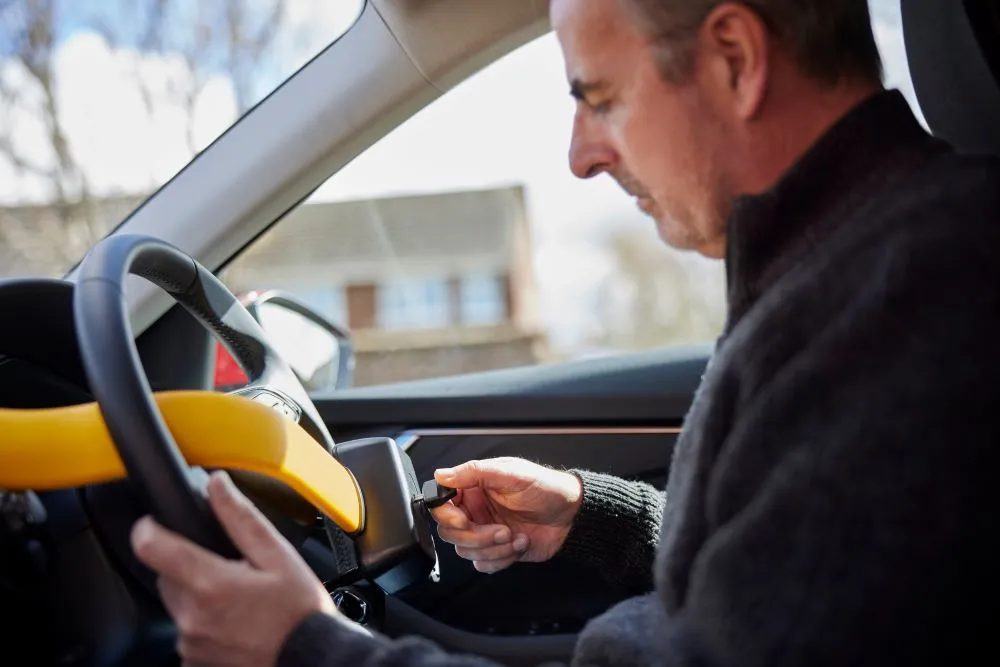
    Extra precautions such as immobilisers, steering wheel locks, and RFID pouches can all contribute towards protecting your vehicle, either as a visual deterrent for criminals or preventing them from gaining access and driving away in your car. It’s really worth speaking to an insurance expert on this front, as they’ll be able to advise you on how this could impact your premium.

    Timing

    Hands up if you’re guilty of waiting until the week that – or even the day before – your policy comes to an end to renew? We all lead busy lives, and it can be easy to put off your renewal! But waiting until the last minute could actually see you paying more for your premium.

    With your insurance, forward planning is key. Premium prices fluctuate, so to maximise your chance of finding a great deal, looking 3-4 weeks before your renewal date is ideal.

    Tailoring your policy

    We all lead varied lives, so one-size-fits-all shouldn’t really apply to your cover. Your home and vehicle policies should reflect your individual circumstances. You can absolutely find a policy that works for you, your lifestyle and your budget. There is a misconception that personlised cover costs more, but there are things such as limited mileage policies, specialist home cover, and excess protection, which could all save you money in the long-run.

    Just make sure that any decision you make are informed ones, by talking to an insurance expert that can take all your needs into account.

    Save on your insurance – not on the service

    Our branch advisors are insurance experts who are here to help when you need us the most – in person or over the phone. Whether that’s changing to direct debit to help manage your finances, or advising you on ways to tweak your policy, we’re here for you. Find your nearest branch here to speak with a local advisor who can help.

  • April cost crunch: 7 bills you’ll pay more for

    April cost crunch: 7 bills you’ll pay more for

    Yes, you read that title right! Next month has been dubbed ‘awful April’ with seven different bills all set to rise.

    While wages have been rising, so have everyday expenses, and this latest round of bill hikes could stretch our finances even further. With council services under pressure, tax thresholds frozen, and essential utilities becoming more expensive, many of us will feel the squeeze.

    So what exactly is changing? Let’s run down this not so magnificent seven, and what you can do about them.

    Water bills

    Every five years water companies propose their plans for the next half-decade, including proposed price rises and new infrastructure investments. And, as of 1 April, the average annual water and wastewater bill in England and Wales will rise from £480 to £603.

    While this represents an increase of roughly £10 a month, many households will see even bigger bill increases. It all depends on where you live and who your water supplier is. But Southern Water, South West Water and Thames Water have the largest predicted price rises for 2025/6.

    Check how much your water bill could be rising by here.

    Energy bills

    The energy price cap has once again increased. Regulated by Ofgem, it sets the maximum amount you can be charged for each unit of energy. But your actual bills depend on how much gas and electricity you use. So, with the cap set to rise by 6.4% in April, the average energy bill will go up by £111 to £1,849.

    Standing charges, which are fixed fees for maintaining your connection, will also adjust, depending on your region. While some predict potential price drops in July, considering a fixed tariff now might offer more immediate stability.

    Council tax

    April also marks when local authorities in England could increase council tax rates. Councils responsible for social care can raise rates by up to 4.99% without requiring a local referendum, while others can implement up to a 2.99% hike.

    Notably, areas like Bradford, Newham, Birmingham, Somerset, and Windsor and Maidenhead have been permitted to exceed the 4.99% cap, potentially leading to more significant increases.

    To add insult to injury, several councils are considering slashing bin collections with monthly pick-ups even proposed in some places! Alarmingly, one in four councils reported to the Local Government Association that they may need emergency funding to avoid ‘bankruptcy’ at some point in the near future – a growing trend among local authorities.

    Car tax (Vehicle Excise Duty)

    It’s bad news if you got your car after April 2017 – your vehicle excise duty (AKA ‘car tax’ or ‘road tax’) will go from £5 to £195 for the year from April.

    Another big change is that electric vehicles (EVs) will no longer be tax exempt. The standard rate will apply to EVs first registered after April 2017, while EVs registered after April 2025 will pay the lowest rate (£10).

    How much you pay for your road tax will depend on when your car was registered and what type of fuel it uses.

    Broadband, phone and TV license

    Telecom providers are set to increase prices in line with inflation and additional charges. For example, EE mobile customers with contracts taken out after April 2024 may see a £1.50 monthly increase, while Virgin Media broadband users could experience a 7.5% rise, meaning an extra £3.50 per month for recent contracts. These may not be the biggest rises, but everything adds up when you consider the whole picture.

    Additionally, the annual TV licence fee will increase by £5, reaching £174.50. If you watch live or recorded television, then you need to pay for a TV license – but if you’re only using streaming services, then you probably don’t need it. And you can pay your TV license is via direct debit, which can help spread the cost.

    Stamp duty

    Homebuyers in England and Northern Ireland will face changes in stamp duty thresholds. Starting in April, the duty will apply to properties over £125,000, a reduction from the previous £250,000 threshold. First-time buyers will see their exemption limit decrease from £425,000 to £300,000.

    Given typical property transaction timelines, even if you start a property purchase now, it may not complete before these changes take effect.

    Hidden tax rises (income tax and National Insurance)

    The government has extended the freeze on income tax and National Insurance thresholds until 2028. This “stealth tax” means that as wages increase, more individuals will find themselves in higher tax brackets, effectively raising their tax contributions without altering rates.

    Projections suggest that by 2028-29, nearly four million additional people will be paying income tax, with three million moving into higher tax brackets due to this policy.

    It’s not all doom and gloom!

    As these rising costs put extra pressure on household budgets, planning ahead has never been more important. While we can’t control energy prices or council tax hikes, we can help you protect what matters most—whether it’s your home, business, or livelihood.

    Why not pop into your nearest Howden branch? Whether you need expert insurance advice, want to explore your cover options, or just fancy a coffee and a chat, we’re always happy to help! Plus, take a look at our What’s On page to see all the free events, giveaways and initiatives we’re holding across our branches.

    Sources: BBC News, RAC, Uswitch

    You could also read:

    This is a marketing blog by Howden Insurance.