Category: Learner Driver

  • How much is insurance for a new driver?

    How much is insurance for a new driver?

    If you’ve just passed your driving test, you might have a long list of car insurance-related questions to answer before you can officially hit the road. Questions like: How much is insurance for a new driver? What’s the best insurance for new drivers? And what are the cheapest cars to insure for new drivers? 

    Well, you’re in luck. Here, we explore the ins and outs of insurance for new drivers, including what affects the price and how to get the best deal. 

    [ifso id=”63343″]

    How much is insurance for a new driver in the UK?

    Whether new or experienced, every single driver needs to be insured before they can legally drive on UK roads — and it’s your level of experience that will often dictate how much you pay for it.

    New drivers are deemed “high risk” due to their lack of driving experience, and will usually be charged higher insurance premiums (a monthly or yearly insurance cost) to offset that risk. 

    So, how much is car insurance for a new driver per month? It depends on a range of factors, which we’ll look at next, but it can cost around £170 a month, on average.

    However, it’s worth noting that car insurance can be cheaper if you choose to pay for the entire policy as a one-off, yearly cost. New drivers can expect to pay anywhere from £1,200 to £1,800 (and sometimes higher) a year, within 12 months of passing their test. 

    What else affects the average insurance for new drivers?

    In addition to your experience behind the wheel, insurers will look at several different factors when calculating car insurance for first-time drivers. Your age, gender, where you live, your job, the type of car you drive, and whether you’ve made any modifications to your vehicle can all influence the cost of your premium. 

    Let’s take a look at each of these in a little more detail:

    • Age: While it’s true that new drivers can be any age, younger drivers will typically have to pay more than older drivers. According to the Association of British Insurers (ABI), the average cost of car insurance for drivers aged 17 to 24 in the UK is significantly higher than the average cost for drivers over the age of 25. This is because of other risk factors associated with age, such as driving style and types of vehicles being driven by younger motorists. 
    • Gender: By law, car insurance providers cannot discriminate based on gender. However, women often end up paying less than men for car insurance. Again, this comes down to related factors that tend to affect men more than women, such as vehicle choice and occupation. If you drive a fast, powerful car or work in a high-risk job category, such as a fast food delivery driver, you may end up paying more for car insurance. 
    • Postcode: Where you live (and how you store your vehicle overnight) can also significantly affect your car insurance costs. If you live somewhere with a high crime rate, or you park your vehicle on the street rather than in a garage, it could push up your premium.
    • Job: Certain professions, such as bookkeeping, teaching, and civil service jobs, are considered low-risk by insurance providers and attract lower premiums. On the other hand, if you need to drive a lot for work, or you’re in a high-risk job category, you may be charged a higher premium.
    • Vehicle type: Alongside your personal details, insurers will consider the make and model of your car, including its engine size and overall value. 
    • Vehicle modifications: If you’ve made changes to your car, this can positively or negatively affect your car insurance premium. Tinted windows or changes to the exhaust or engine could result in higher premiums as your car might seem riskier to an insurer. On the other hand, if you’ve made safety and security changes, such as adding a GPS tracker or using an immobiliser, it could lower your insurance costs. 

    What’s the cheapest insurance for new drivers?

    When you start shopping around for car insurance as a new driver, you’ll often have a choice between comprehensive and third-party cover. 

    • Comprehensive car insurance (also referred to as “fully comprehensive” or “fully comp”) is the broadest level of coverage you can get for your vehicle. It pays out if you damage your car or someone else’s car or injure someone in an accident. 
    • Third-party car insurance is the minimum level of coverage required to drive in the UK. As the name suggests, it only covers third parties (other drivers or passengers, including your own) in the event of an accident. However, unlike comprehensive cover, it doesn’t cover damage to your vehicle or the cost of your medical expenses following an accident.

    Because it’s the minimum required, third-party insurance can be popular with younger drivers. However, it’s not always the cheapest. Younger drivers often fall into higher-risk categories, which means insurers may be more likely to have to make payouts following an accident. As a result, third-party policies can sometimes be more expensive than comprehensive coverage. 

    So, it’s always a good idea to compare quotes from different providers and across varying levels of coverage to find one that works for you. Note: an insurance broker can help here! 

    5 ways to lower insurance costs for new drivers

    There are several ways that new or younger drivers can lower their first insurance premiums and get cheaper car insurance. Let’s take a look at five of the best:

    1. Complete a Pass Plus course: The Pass Plus Scheme is a training course for people who want to build their experience so they can drive safely in challenging situations. During the course, a registered driving instructor will take you through some scenarios you might not have experienced during your first set of lessons, such as driving on the motorway.

      In theory, the course could help you become an even better driver. This has led some car insurance companies to offer a reduced rate to people who complete Pass Plus. However, the discount isn’t automatic across the board, so you’ll need to check with the insurance provider if Pass Plus is considered. 
    1. Insure a car with a smaller engine: Generally speaking, the more powerful the car, the riskier it is to drive and the more expensive it is to insure. If you want to lower your first car insurance premium, consider buying a car with a smaller engine. In the next section, we share some suggestions for the cheapest cars to insure for new drivers. 
    1. Park your car somewhere safe: Where you park your car when it’s not being used can also affect your car insurance premium. If you park on the street, it could be a target for thieves or suffer damage from passing vehicles or vandals. But if you keep it in a secure garage or CCTV-covered car park, it could be considered lower risk by insurance providers.
    1. Sign up for named young driver insurance: This is a special type of insurance for drivers aged between 17 and 27. It allows them to be insured on their parent’s car and enables them to start earning their own no-claims discount. Learn more about Howden’s Named Young Driver Insurance here.
    1. Sign up for black box car insurance: Black box insurance (also known as “telematics insurance”) uses a special tracking device to monitor and record your driving habits. The technology allows insurers to assess your driving style and tailor the insurance premium based on your actual driving performance. In short, the more responsible you are behind the wheel, the better your chances of earning cheaper car insurance premiums. Learn more about Howden’s Black Box Car Insurance here.

    What are the cheapest cars to insure for a new driver?

    The cheapest cars to insure for new drivers all have the same thing in common: they tend to be small, affordable, safe, and reliable, with small engines and no outlandish modifications. Models like the Vauxhall Corsa, Nissan Micra, Citroën C1, and Ford Fiesta have all proven popular with new drivers over the years. 

    Better yet, if you can pair a small engine with the latest security features and park your car somewhere safe overnight, you could lower your insurance costs further!

    See our list of the top 20 best cars to insure for new drivers here.

    In summary: How much is car insurance for a new driver?

    To recap, how much can you expect to pay for car insurance as a new driver? Well, the short answer is it depends. Car insurance quotes will almost always differ from one driver to the next and any number of factors can push your premiums up or down. 

    Being a new driver will make you seem a bit riskier in the eyes of some insurance providers, but if you follow our tips above, you could lower your first car insurance premiums. 

    Looking for a competitive car insurance quote? 51% of our new car insurance clients saved an average of £196 between August 2023 and January 2024. Find out more here.

    Also read:

    Our motor insurance products:

  • What to know about driving test insurance

    What to know about driving test insurance

    You’ll need the right insurance every time you get behind the wheel of a car, including on the day of your practical driving test. Lots of learners sit their test in their instructor’s car on their driving instructor’s insurance, but if you’re planning to use your own car, it’s important to make sure you have driving test insurance in place before you arrive at the test centre. 

    If you’ve practised your driving skills, manoeuvres, and “show me, tell me” questions outside of your official lessons, you probably have learner driver insurance in place. But although some provisional driver policies cover you on the day of your test, others might not. 

    Here, we ask, “What insurance do you need for your driving test?” and explain how to find out what’s included in your learner driver cover. We’ll also look at some other things to consider if you’re planning to drive your own car on your test day, and what to do about your car insurance when you pass your test. 

    [ifso id=”63343″]

    Do you need special driving test insurance? 

    Although you must be insured to take your driving test, there’s no such thing as official insurance for a driving test. 

    People sitting their driving test will usually be covered in one of two ways: 

    • Driving tests will be included in the instructor insurance policy their driving school uses
    • Their own car insurance (either for their car or as a named driver on, for example, their parent’s insurance) will cover them while they sit the test with the examiner in the passenger seat

    From an insurance point of view, it’s often simpler to sit your test in your instructor’s car. You already know it fulfils all the test centre’s requirements for test vehicles (more on these later), and you know your insurance will cover you if something goes wrong and you damage the instructor’s vehicle or someone else’s property. 

    On the other hand, learners who want to practise in their own car (or their parent’s or friend’s car) need insurance for provisional licence holders. These policies often include clauses that, for example, protect the owner’s no claims bonus if the learner has an accident while driving. 

    But while these policies are generally perfect for learners and the people accompanying them, not all learner insurance includes insurance for your driving test.

    How to find out if your learner driver policy covers your practical test 

    If you don’t know whether your car insurance will cover you during your driving test, the easiest way to find out is by reading the small print of your insurance policy documents. You can also contact your insurance company and ask directly — just like you would if you wanted to find out your car insurance expiry date

    Likewise, if you’re asking, “Does my insurance cover a learner driver?” your first ports of call are your insurance certificate and your insurer’s customer support team. 

    It’s a good idea to organise car insurance for your driving test quite far in advance of your test day (and, if possible, to consider whether the insurance will cover the test when you’re initially comparing plans). Although the problem is relatively easy to fix, nobody wants to add extra stress to their lives in the final days before their driving test. 

    What to do if your learner driver insurance doesn’t cover your test

    If you’re planning to sit your driving test in your own car, and you find out that your insurance won’t cover the test, you need to get additional insurance. 

    Remember, if you have an accident, cause an injury, or damage the car or any other property during your test and you aren’t covered, you’ll have to cover the cost of repairs, medical treatment, or compensation out of your own pocket. You’ll also face a large fine for driving without car insurance

    Because of the severity of the consequences, the test centre should ask for proof that your vehicle has valid insurance before the test begins. They will turn you away if it’s not. 

    Thankfully, it’s not too difficult to get insurance to cover your driving test. 

    You might be able to contact your car insurer and bolt on some driving test cover to your existing policy. If this isn’t possible, you could also get temporary provisional driver insurance with another company that includes driving tests in their policy. You can often pay for instant cover or arrange a policy that only lasts for the 12 hours when you sit your test. 

    Contact Howden Insurance to ask an expert about provisional driver insurance or temporary learner driver insurance now. 

    Should you sit your driving test in your own car? 

    Although it can be a bit more complicated when it comes to car insurance, plenty of people decide that using their own car for their driving test is the easiest option. There are several good reasons to do this: 

    • You might not have access to your instructor’s car, either because you haven’t had formal lessons or because your instructor isn’t available on the day your test is booked. 
    • You might not want to pay the additional fee for using your instructor’s car, which is usually the equivalent of two or three lessons to cover the hour of the test and the journey there and back. 
    • You might have practised a lot in your car and you have a better sense of how big it is and where the bite point is, so you might feel more confident during manoeuvres like parallel parking. 

    It’s perfectly legal to use your car for your driving test in the UK. It doesn’t need to have dual controls for the examiner, and with some small checks and adjustments, most roadworthy cars with four wheels are suitable for a category B driving test. For example, it’s your responsibility to make sure: 

    • Your car is taxed, with a valid MOT, and insurance that covers your driving test
    • Your dashboard is free of warning lights
    • The passenger seat has an appropriate headrest for the examiner 
    • The examiner has an additional rearview mirror to use (you can buy these online)
    • Your car has regulation L plates on the front and back 
    • Any devices that record video or audio inside the car are switched off
    • Your car is smoke free

    Some cars are automatically excluded from driving tests because they don’t give the examiner a full view of the surroundings from the passenger seat. This list includes a lot of small convertibles, such as the Ford KA convertible, the BMW Mini convertible, the VW Beetle convertible, the Toyota IQ, and the Smart Fortwo. 

    If you have questions about whether your vehicle is suitable for a driving test, contact the test centre where you’ve booked your appointment to confirm. If your car doesn’t meet the requirements, your test could be cancelled when you arrive. 

    Can I drive after passing my driving test on the same insurance? 

    You’ll be covered by learner driver insurance (either your own or your instructor’s) while you sit your test, but it’s important to know that, if you pass, your insurance will become invalid as soon as you pull back into the carpark at the end of your test. Once you’re a qualified driver, you’ll no longer have a provisional licence, so your provisional driver insurance will no longer cover you. 

    You have a few options if you pass your practical test and go home as a qualified driver. 

    • You can get your instructor to drive you home. Most instructors would insist on this even if there wasn’t an insurance issue, since they don’t want the adrenaline high of the good news to distract you on the road. 
    • You can get a friend or family member to pick you up and drive you home (or take you out to celebrate). 
    • You can drive yourself home in your own vehicle, as long as you arrange car insurance to give you instant cover before you leave the test centre. 

    Many insurance companies offer instant short-term cover that protects you during your drive home. You’ll then be able to shop around for the best deal for new driver insurance later. 

    Remember, if you fail your test, you’ll still be able to drive home on your provisional insurance, as long as the person in the passenger seat fulfils the normal conditions for supervising a learner driver

    Insurance for driving tests: A summary

    Your journey to becoming an independent driver begins with the right insurance — from your first lesson, to your practice sessions, to the day you pass your test and beyond. 

    When it comes to your practical test, you might have the most peace of mind if you use your instructor’s car — at least from an insurance point of view. But if you’d rather use your own car for your driving test, and it’s eligible according to your test centre, you can get learner driver insurance that covers driving tests either as part of your long-term policy or as temporary car insurance. 

    Don’t forget, as soon as you pass your test, you’ll need a new policy to go with your new licence. Contact Howden Insurance for more information about car insurance for new and young drivers

    Also read: 

    Our motor insurance products:

  • How many driving lessons do I need?

    How many driving lessons do I need?

    One of the most common questions learner drivers ask is: “How many driving lessons do I need?” 

    The truth is, there’s no set amount of time or magic number of lessons required to learn how to drive. It all depends on how quickly you pick up new skills and how confident you are behind the wheel. 

    Here, we explain what affects the number of lessons you’ll need, share ways you can make the most of your lessons, and answer some learner-driver FAQs. Ready? Let’s dive in. 

    [ifso id=”63343″]

    How many hours of driving lessons do I need in the UK?

    According to the Driver and Vehicle Standards Agency (DVSA), the average amount of driving lessons needed to become test-ready is 44 hours, plus an additional 20 hours of supervised practice. 

    However, it’s worth remembering that this is just an average. Some learner drivers will need more lessons and practice, while others will get by with less. 

    What affects the number of lessons I’ll need?

    A few different things will impact the number of lessons you’ll need before you’re ready for your driving test. These include:

    • Your age: Stats gathered by the DVSA show that the younger you start learning to drive, the better your chances of passing quickly. The pass rate for 17-year-olds is 55.8%, and for 19 to 26-year-olds, it’s around 48% (the national average). Meanwhile, learners in their forties pass 35% of the time, and for those in their sixties, it’s 32%.
    • Your driving instructor’s experience: An experienced instructor should help you progress weekly, while teaching new skills, minimising errors, and building your confidence as a new driver. This could help you reach a test-ready standard in a short amount of time. 

    An inexperienced instructor, on the other hand, could potentially slow your progress with unclear directions and inefficient teaching methods. This could result in you needing more lessons to get test-ready.

    The best way to find a good driving instructor is to ask for recommendations. If you’re a young learner, you may have friends who are learning or have recently passed. Ask if they’d recommend their instructor and why. 

    Alternatively, you can type your postcode into the DVSA database to find qualified instructors near you.

    • Your learning pace: We all learn at different speeds. You might take to driving like a duck to water, or it might take you a little longer to get to grips with life behind the wheel.

      Many instructors will offer an assessment as part of your first lesson together to determine your existing skills. You may require fewer lessons if you’ve had lessons previously or practised with a friend or family member. 

    How much should I pay for driving lessons?

    The cost of driving lessons varies depending on where in the UK you’re learning to drive. Generally, you can expect to pay around £25 to £35 per hour. The fee covers the fuel and car insurance along with your instructor’s time and expertise. 

    If the average learner needs around 44 hours of driving lessons to prepare for a test, you’ll need to budget between £1,100 and £1,540. Of course, you may end up paying more or less depending on the number of lessons you require.

    It’s worth noting that many instructors will let you book in blocks rather than pay per lesson, which may help you save money in the long run.

    How to make the most of your driving lessons

    As we’ve discovered, learning to drive is a huge investment of both time and money. If you want to improve your chances of passing quickly, there are a few things you can do to make the most of your lessons.

    1. Make sure you attend your lessons consistently

    Driving a car is a bit like riding a bike. The more you do it, the more confident you become, and the skills you learn stay in your brain as muscle memory. 

    However, if you don’t attend your lessons consistently and let weeks pass between them, you’ll find it harder to build the skills you need to pass your test. 

    2. Squeeze in regular practice between lessons

    Just like learning any new skill, practice makes perfect. The time with your instructor will be dedicated to teaching you essential driving skills, but it’s up to you to gain extra experience between your lessons. 

    Research shows you’re 1.5 times more likely to pass your test when you combine private practice with driving lessons. So, if you can, get behind the wheel with a friend or family member to build your confidence. Heads up: they must be over 21 and have held their licence for at least three years to help you practise. 

    And remember, whether you’re practising in your own car or someone else’s, you must be covered by some form of insurance:

    • If you’re driving in someone else’s car, you’ll need to make sure you’re covered as a learner driver under their standard car insurance policy.

    3. Spend more time on tricky skills and manoeuvres 

    Once you’re comfortable with the fundamentals of driving, use your lessons to focus on the skills and manoeuvres you find the most difficult. This is especially important if they’re likely to feature during the test. Parallel parking and hill starts, for example, often take some practice.

    Your instructor should help you identify areas for improvement, but if there’s anything you’re worried about or feel like you need extra guidance on, don’t be afraid to speak up and ask for help. 

    Learning to drive FAQs

    How quickly can you learn to drive?

    Everyone learns to drive at a slightly different pace. 

    If you hit the average of 44 hours of lessons plus 20 hours of private practice before being test-ready, you could sit your test within four months (based on three one-hour lessons a week). 

    However, if you want to cut that down further, you could arrange an intensive driving course. Depending on the course provider, you’ll spend one to two weeks learning, with lessons lasting between two and five hours a day. 

    Intensive courses are a good idea if you have a deadline for learning to drive (for a new job, for example). That said, you need to ensure you have the availability to commit to such a tight schedule. 

    Is 20 driving lessons enough?

    Whether 20 lessons is enough depends on how long the lessons last, your instructor’s experience, and how quickly you pick up new skills. 

    For instance, 20 two-hour lessons with an experienced instructor would give you 40 hours of driving instruction. This could be enough if you and your instructor agree you’re ready.

    How do I know if I’m ready for my driving test?

    Assuming you’ve already passed your theory test, your instructor will tell you when they think you’re ready to sit your practical test. However, you’ll probably feel it yourself as your confidence grows. 

    Once you agree that you’re ready, your instructor will put you through a mock test a few weeks before the real thing to help you know what to expect on test day.

    Can I take my driving test without taking lessons?

    In theory, yes. There’s no minimum number of lessons to complete before booking and taking your practical driving test. You could simply practise with a friend or family member and then book your test when you feel you’re ready. 

    However, taking at least a few hours of professional lessons is often a good idea before deciding you’re test-ready. A qualified driving instructor can help you avoid picking up bad habits that might count against you in the test, while also taking you through the ins and outs of the test itself. That way, you won’t have any surprises on the day. 

    What if I fail my driving test the first time?

    Don’t worry if you fail! Depending on your age, anywhere from 45% to 70% of your peers will fail the first time, so you won’t be alone. 

    While it’s frustrating to hear that you’ve failed, it’s important to stay positive. You can rebook your test straight away (although there may be waiting lists) and get back to practising with your instructor to iron out the parts of your driving that need the most improvement.

    What if I’m unhappy with my driving instructor?

    If you’re unhappy with your driving instructor’s service or behaviour, you can complain to the DVSA. You should contact them if your instructor:

    • Keeps cancelling or arriving late for lessons
    • Provides shorter lessons than agreed
    • Fails to provide lessons you’ve already paid for
    • Uses their mobile phone while you’re driving
    • Shouts or swears at you
    • Uses inappropriate language (in person or in messages)
    • Uses unnecessary physical contact

    To recap: How many driving lessons should I take? 

    The average learner will need around 64 hours of driving experience to pass the driving test — 44 hours of lessons plus 20 hours of practice.

    However, this is only an average. You might need more time and instruction, or you could be ready with fewer lessons. It all depends on you, your instructor, and how much you practise in between lessons.

    The important thing is to take your time and take the test when you’re ready. 

    And remember: If you’re learning to drive in your own car, you need learner insurance before you hit the road. Contact Howden to get a learner driver insurance quote today

    Also read:

    Our motor insurance products:

  • Could AI catch distracted drivers using their mobile phones?

    Could AI catch distracted drivers using their mobile phones?

    For law-abiding road users and pedestrians, drivers who carelessly scroll, tap, or text on their mobile phones while behind the wheel can be frustrating, if not downright scary. Mobile phones are the reason for an alarming number of near-misses, accidents and even fatalities on UK roads.

    Now, a new development in road camera technology could make you breath a sigh of relief – or if you’re a distracted driver, make you sit up and pay attention!

    The UK has now seen the introduction of the world’s first AI speed camera, which has the ability to scan drivers inside their cars if they are caught speeding. Crucially, as well as detecting how far over the speed limit a driver is travelling, the 4D radar and high-resolution cameras can capture those behind the wheel who are using a mobile phone.

    Installed on the A23 in Lambeth, South London, the AI-based technology can also detect if people aren’t wearing their seatbelts, or if there are too many people inside the vehicle. It can monitor up to six lanes of traffic and will be used in conjunction with other cameras on the roads.

    There has been some initial criticism levelled at this type of camera, questioning how intrusive the level of surveillance is, and linking to wider uncertainty about Artificial Intelligence. However, the RAC has reassured drivers that, if they obey the laws of the roads and stick to the speed limit, they will have nothing to worry about.

    What’s more, drivers are broadly supportive of camera-based technology being used to enforce the law. And, for distracted driving, the data speaks for itself!

    How dangerous is using your mobile phone when driving?

    The latest report from the Department for Transport (DfT), there has been a sharp rise in the number of road deaths in Britain, up by 8.7% in 2022 compared to the previous year. But how many can be attributed to mobile phones?

    Government research shows that, worryingly, mobile phones are a growing presence in motorists’ journeys, with motorists describing an increasing dependence on their mobile phone. Some 12% of drivers reported needing to see notifications or calls coming through on their device while driving, in order to respond quickly, and the same number agreed they need to use their phone while making long journeys to “fill the time”. What’s more, 14% of those surveyed thought using their phone while driving doesn’t distract them.

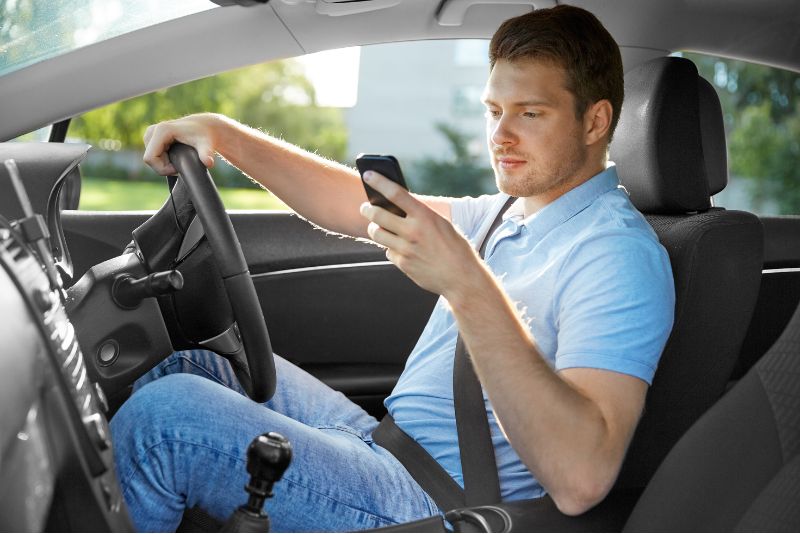
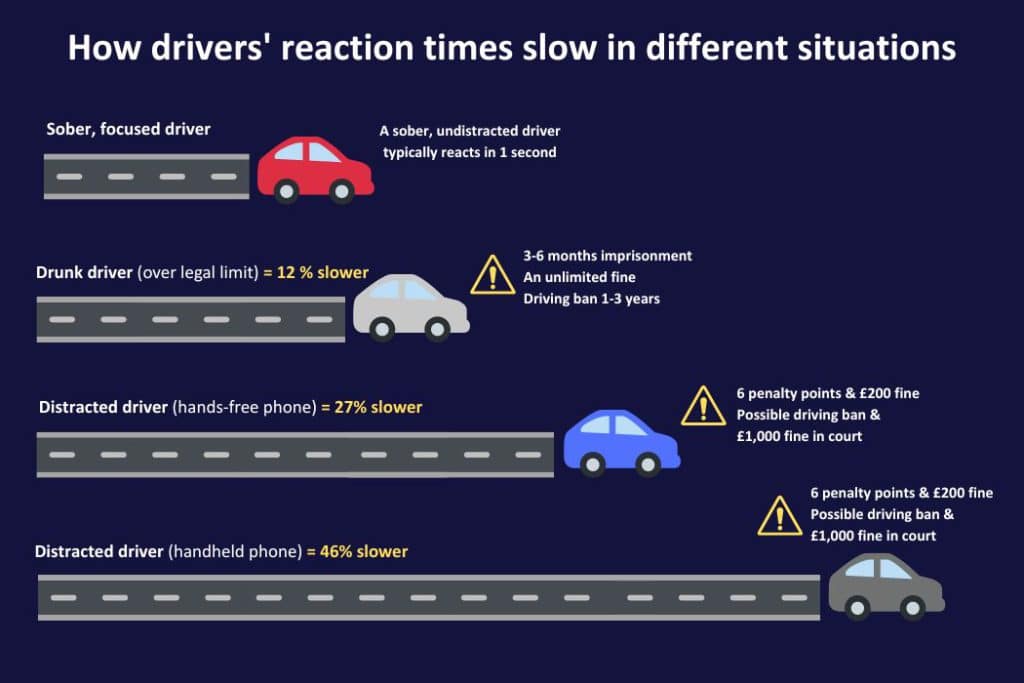
    But this simply isn’t true; drivers using either a hands-free or a handheld mobile phone have slower hazard-recognition and slower reactions. You are four times more likely to be in a crash if you use your phone when driving.

    It doesn’t matter how careful you are – a split-second lapse in concentration by being distracted by a call or text can result in a crash. At 30mph, a car can travel 100 feet in just 2.3 seconds, which is more than enough time for a hazard to emerge.

    What are the rules for using your mobile phone in a vehicle?

    As of January 2022, drivers are banned from holding their mobile phones for any reason. This means that you cannot touch your mobile phone to answer a call, and you are not allowed to use your device when waiting in queues or at traffic lights. If you are supervising a learner driver, you cannot use your mobile device either.

    There is no law preventing you from ‘tapping’ your phone while it’s on a fixed mount – however, the police can still charge you for driving without due care and attention or careless driving. You are only legally allowed to answer calls if your mobile is already set up with hands-free capability.

    Similarly, sat-nav is permitted, but only if it has already been set up as hands-free before you set off on your journey. It must also be securely mounted in a holder that doesn’t obstruct your view of the road. So, you can’t just prop your phone up on the dashboard – if your vehicle doesn’t have a navigation system built in, purchasing a mounted sat-nav could be worthwhile. It means you won’t have to rely on your phone battery and data, or get distracted by other notifications popping up on the screen!

    The only time when you can use your mobile phone in your hands while driving is to call 999 or 112, if it isn’t safe to stop. You are also permitted to use your mobile to make contactless payments at a drive through or tollbooth when your vehicle is stationary, and also when safely parked and with your engine switched off.

    What’s the cost of using your mobile phone while driving?

    If you’re caught using your mobile phone illegally while behind the wheel, there are serious personal consequences, as well as the severe danger that you pose to other road users and pedestrians.

    You will face a £200 fine and 6 points on your licence if you’re caught. If you already have points on your licence, you risk losing it altogether if you receive a total of 12. That means that being caught just twice in three years could see you lose your licence. In extreme cases, you can be taken to court and face a fine of £2,000 and disqualification from driving.

    New and learner drivers should also take heed; you’re only allowed to rack up 6 penalty points within two years, so if you’ve been driving for less than two years you could lose your license. Learner drivers caught using their mobile phone will be automatically banned from driving.

    Even if you are adhering to the rules about holding your mobile phone, you can still be fined if the police believe you are distracted by your device and not in proper control of your vehicle. So, if you find yourself easily or frequently distracted with your phone while driving, try switching on flight mode or turning it off altogether. Just note that you can still be prosecuted for holding your mobile phone, even if it is turned off or in-flight mode.

    Many of us strive to be good drivers, but we should all be aware of potential dangers and refresh our knowledge of the road and safety laws. We urge you to share this article with friends and family, to help spread the message that using your phone while driving is incredibly dangerous and has serious repercussions.

    Our friendly local insurance advisors are experts in all things car insurance, including mobile-phone related claims. Feel free to give them a ring or head into your local branch to get the advice you need.

    You could also read:

    Sources: RAC, Police.UK, Think!, Gov.UK

  • Your Complete Guide to ‘Show Me, Tell Me’ Questions

    Your Complete Guide to ‘Show Me, Tell Me’ Questions

    “Show me, tell me” questions are your chance to prove your understanding of basic car safety to the examiner. There are 21 possible questions, but you’ll only be asked two.

    There’s a lot to learn to become a safe driver. Of course, you need to know how to drive carefully, but car safety goes beyond moving from A to B. Car maintenance and understanding how a car works are important, too. And that’s what “show me, tell me” questions and answers are all about.

    Here, we’ll take a look at the two sets of car safety questions and explain how — and when — you’ll be expected to answer each type.

    How many ‘show me, tell me’ questions and answers are on a test?

    There are only two “show me, tell me” questions for driving tests. Your examiner will ask you one “tell me” question at the start of your test, before you begin driving. The second, “show me” question is asked while you’re driving. 

    As the names suggest, “show me” questions need to be answered with a demonstration. “Tell me” questions only need a detailed description for the answer. You’ll need to understand the basic workings of a car to be able to answer these confidently. Questions about checking the oil, what anti-lock braking systems are and how to tell if they’re not working, and demisting windscreens before you drive are likely to come up.

    Each of the questions is designed to let you share your safety knowledge about cars and driving. When answering the “show me” question, keep your eyes on the road and try not to be distracted while you answer.

    Can you fail your driving test on the ‘show me, tell me’ questions?

    The quick answer is no. The safety questions you’re asked both before you start driving and while you’re driving can’t add up to cause you to fail on their own. However, the answers you provide will count towards your points for passing your test.

    If you answer one of these safety questions wrong, you’ll receive one minor fault against your score. Even if you get the second question wrong, you’ll still only receive one minor fault for the safety questions. You’re allowed 15 minor faults before you fail your driving test.

    But if you become distracted from driving when answering the “show me” questions, and lose control of the car, you could land yourself in trouble. If that happens, you’ll be given a major fault. Major faults will cause you to fail your driving test straight away.

    ‘Tell me’ questions

    “Tell me” questions are the first type of questions you’ll encounter when you take your practical driving test. 

    There are 14 different “tell me” questions. They can feel a little tricky because of the way they’re worded, but remember, you only need to explain a process with these questions. No demonstration is necessary. Be as detailed with your answer as you can.

    1. Question: Tell me how you’d check that the brakes are working before starting a journey.

    Answer: The brakes should feel firm, not spongy or slack. This should be checked before setting off. Once moving, if it’s safe, a firm press of the brakes should pull the car up short without it pulling to one side.

    1. Question: Tell me where you’d find the information for the recommended tyre pressures for this car and how tyre pressures should be checked.

    Answer: The car’s manufacturer’s guide has information about the correct tyre pressure according to the weight that is being carried. This information is also sometimes found on the car’s petrol cap, or on the inside of the driver’s or passenger’s door.

    Tyre pressure can be checked with a reliable pressure gauge and should be done when the tyres are cold by removing the valve caps, checking and adjusting the pressure and then replacing the valve caps. The spare tyre should also be checked regularly.

    1. Question: Tell me how you make sure your head restraint is correctly adjusted so it provides the best protection in the event of a crash.

    Answer: The head restraint needs to be adjusted (where possible) so the ridgid part is at least as high as the eyes or top of the ears. It also needs to be as close to the back of the head as comfort allows. Some restraints might not be adjustable.

    1. Question: Tell me how you’d check the tyres to ensure that they have sufficient tread depth and that their general condition is safe to use on the road.

    Answer: Check the tyre walls for cuts and bulges, and check for the minimum 1.6mm of tread depth across the central three-quarters of the breadth of the tyre, and around the entire outer circumference of the tyre with a ruler or twenty pence piece. If the words “twenty pence” are covered by the tread depth, there is enough tread, if not they need replacing.

    1. Question: Tell me how you’d check that the headlights and tail lights are working. You don’t need to exit the vehicle.

    Answer: Describe how you would operate the switch, and then watch for the reflection of your lights in windows and cars, walk around the vehicle, or have someone watch for these while you operate the switch. (As this is a “tell me” question, you don’t need to physically check the lights.)

    1. Question: Tell me how you’d know if there was a problem with your anti-lock braking system.

    Answer: Explain the type of warning light that would appear on the dashboard if problems with the anti-lock system were detected.

    1. Question: Tell me how you’d check the direction indicators are working. You don’t need to exit the vehicle.

    Answer: Explain how you would turn the indicators on (by turning the ignition on first, if necessary). Then, that you would check the dashboard lights were showing that the indicator lights were working, watch for reflections, and walk around the vehicle or have someone else check the exterior lights for you. (As this is a “tell me” question, you don’t need to physically check the lights.)

    1. Question: Tell me how you’d check if the brake lights are working on this car.

    Answer: Explain how you would apply pressure to the brake pedal while looking for reflections of the lights in nearby windows and cars, or by having somebody watch the rear lights for you.

    1. Question: Tell me how you’d check the power-assisted steering is working before starting a journey.

    Answer: There are two simple checks that can be made before a journey. Maintaining gentle pressure on the steering wheel, while the engine is started, should result in a slight but noticeable movement as the system warms up. The second check involves turning the steering wheel just after moving off to get an immediate indication that the power assistance is working.

    Feeling that the steering is getting heavy when driving also indicates there could be a problem developing, so it would be a good idea to have this checked before your next journey.

    1. Question: Tell me how you’d switch on the rear fog lights and explain when you’d use it/them. You don’t need to exit the vehicle.

    Answer: Switch the fog light switch (turn on the dipped headlights and ignition if necessary), and explain the circumstances in which fog lights should be used.

    1. Question: Tell me how you switch your headlights from dipped to the main beam and explain how you’d know the main beam is on.

    Answer: Switch the headlight switch, with the engine running, and check the high-beam warning light on the dashboard controls.

    1. Question: Open the bonnet and tell me how you would check that the engine has sufficient oil.

    Answer: Find the dipstick and withdraw it from the engine. Wipe the oil off on a rag or tissue and then reinsert the dipstick into the engine. Withdraw it a second time and check the oily mark is between the maximum and minimum marks on the dipstick.

    1. Question: Open the bonnet and tell me how you would check that the engine has sufficient engine coolant.

    Answer: Find the header tank, or radiator filler cap, and locate the maximum and minimum markings. Then describe how to top up the engine coolant. This will be slightly different for different makes and models of cars.

    1. Question: Open the bonnet and tell me how you’d check that you have a safe level of hydraulic brake fluid.

    Answer: Find the hydraulic fluid container and check the level against the minimum and maximum markings.

    If you’re answered questions 12, 13 or 14, you need to open the bonnet and tell the examiner how you’d do the check.

    Obviously, the answers to each of these questions will vary between the makes and models of cars. Because of this, it is a good idea to learn the answers to each of these questions based on the car you intend to take your test in.

    ‘Show me’ questions

    Remember, this is when you need to demonstrate the answer. It can help to talk through the demonstration so you don’t forget any details. It also shows the examiner that you know exactly what you’re doing. 

    There are seven “show me” questions that the examiner can choose from. It’s a good idea to get familiar with all of them. Not only so you’re prepared for any question that comes your way, but also so you know how to ensure the vehicle is safe to drive.

    1. When it is safe to do so, can you show me how you would wash and clean the rear windscreen?
    2. When it is safe to do so, can you show me how you wash and clean the front windscreen?
    3. When it is safe to do so, can you show me how you’d switch on your dipped headlights?
    4. When it’s safe to do so, can you show me how you’d set the rear demister?
    5. When it is safe to do so, can you show me how you’d operate the horn?
    6. When it is safe to do so, can you show me how you would demist the front windscreen?
    7. When it is safe to do so, can you show me how you’d open and close the side window?

    As with the “tell me” questions, answers to the “show me” questions will be specific to the car you’re doing your test in.

    Is there an app for the ‘show me, tell me’ questions?

    Fortunately, there are several apps available that you can practise your “show me, tell me” questions. Both the Google Play Store and Apple’s App Store have driving lesson apps that will help you practise the theory and safety question elements of your driving test.

    It’s a good idea to get familiar with all of the driving test questions before you book your test. It will increase your chances of passing on your first try!

    Also read:

  • How Many Questions are in the Theory Test?

    How Many Questions are in the Theory Test?

    How many questions are in a theory test? How long do you have to answer them? And how many do you need to get right in order to pass?

    Here, we look at everything you need to know about your driving theory test. Read on to find the answers to your questions. 

    What is the driving theory test? 

    The driving theory test is one of two exams set by the Driving and Vehicle Standards Agency (DVSA) that you’ll need to sit to be legally allowed to drive in the UK:

    • The driving theory test. This tests your knowledge of driving, car safety and maintenance, and the rules of the road. It comes in two parts: multiple-choice questions and hazard perception. We explore these in more detail below. 
    • The practical driving test. Once you’ve passed your theory, you’ll sit a practical test where an examiner will check your driving ability. You’ll have two years to pass your practical after you’ve passed the theory test. 

    So, to get your full driving licence and be able to drive any vehicle—whether a car, motorcycle, van, coach, or lorry—the first thing you need to do is book and pass your theory test. 

    Here’s what that involves.

    What does the driving theory test involve? 

    The driving theory test takes 1 hour and 20 minutes, in which you’ll need to complete two main sections. You’ll need to pass both parts to pass the test as a whole.

    You’ll sit the driving theory test on a computer at a test centre. When you enter the centre, you’ll have 15 minutes to get used to how the computer works and how you answer the questions. Then you’ll kick off the first part.

    Multiple-choice questions

    In the first part of the test, you’ll have 57 minutes to answer 50 multiple-choice questions. (This may sound like a lot, but you should find that you have more than enough time.) You’ll need to answer them all and every question has only one correct answer. 

    Expect to be asked about everything you need to know to drive a car safely, including: 

    • Types of road signs 
    • The Highway Code
    • Cars and the environment
    • Safety and car maintenance
    • Stopping distances and speed limits
    • The controls of your car

    Of those 50 questions, you will also be asked three questions about a video you’ll be shown. This video will involve an everyday driving situation.

    There are thousands of possible questions that you may be asked in your driving theory test. This means it’s really important that you prepare well so you’re not caught out by a question you weren’t expecting. 

    If you’re unsure about any question, you can flag it and go back to it later — and you can double-check all your answers at the end.

    Hazard perception

    The second part of the test is known as hazard perception and it works a little differently. Rather than questions testing your knowledge, you’ll be shown video clips in which you’ll need to spot what are called “developing hazards”. 

    Before you sit the test, you’ll be shown a video explaining how the test works. You can watch that here.

    This part of the test takes 20 minutes, and you’ll see 14 different video clips in this time. These clips feature everyday driving situations, from the point of view of the driver. 

    Your job is to identify a developing hazard in each of the videos. A developing hazard is essentially something on the road that requires you to take some sort of action. For example, another car might start indicating in front of you or a pedestrian might step out into the road.

    You can get a maximum of 5 points for each hazard. To get the highest score, you’ll need to click as soon as you see the hazard developing. Watch out, though. Each clip has at least one developing hazard, but one clip has two. 

    Unlike the multiple-choice test, though, you won’t be able to go back to check your answers — just as you wouldn’t have a second chance in real life. Make sure you pay close attention!

    How many questions can you fail on the theory test?

    You don’t need to get every single question right on your theory test to pass. But you will need to pass both sections to pass the test as a whole. 

    • To pass the multiple-choice section, you’ll need to get 43 questions right out of the possible 50. That means you can get 7 questions incorrect. 
    • To pass the hazard perception section, you’ll need to get 44 points out of a possible 75. That means you’ll need an average of at least 3 points per hazard to pass, which would take you to a total of 45 points. 

    It can be quite frustrating to fail your test. However, it’s more common than you might think. According to government data, 50.1% of people who sat the test passed in 2022.

    That’s why it’s really important to practise for your driving theory test. But if you do fail, don’t worry, you can easily sit your test again. 

    How to prepare for your theory test 

    So now you know a bit about the questions to expect in the driving theory test. But how can you boost your chances of passing? 

    Let’s consider three things to know before you sit your test: how to book, how to revise for your test, and what to take with you. 

    Booking your driving theory

    Booking your theory test is really easy to do online. All you need to do is head to the government’s book your theory test website and follow the instructions. 

    Be aware, though, that not everyone can do it. Before you book, you must:

    • Typically be 17 years old: If you want to drive a moped, or if you receive a Personal Independence Payment (PIP), you can sit the test from your 16th birthday. 
    • Have a provisional driving licence: You can apply for a provisional licence from the age of 15 years and 9 months. 
    • Meet the minimum eyesight rules: Simply, you must be able to read a car number plate from 20 metres. Find out more here
    • Have lived in the UK for at least half a year before the test date. 

    To book your test, you’ll need to pay £23 and select a date and time. Then you’re ready to go. 

    How to revise for your theory test

    It’s really important that you’re properly prepared for your theory test.

    The best way to get yourself familiar with both the information you need and the form of the questions is to revise. In fact, the DVSA, which runs the exams, recommends a minimum of 20 hours revision to prepare you for your test.

    Luckily, there are many ways you can revise:

    What to take to your test

    When it comes to the day of your test, there are a couple of things you should remember to take with you. 

    • Bring your driving licence: You won’t be able to sit your test unless you have your UK photocard driving licence with you.
    • Don’t bring headphones, a bag, or your phone into the test room: This is so that you don’t have access to any information that might help you in the test. The rules are quite strictly enforced and cheating is taken very seriously. 

    What happens after your theory test? 

    Now you’ve sat your test, what happens next? That depends on how you did in the test. 

    • If you pass, you can book a practical driving test straight away. You have two years to pass your practical before the result of your theory test is no longer valid. You can book a practical test up to 24 weeks in advance and it costs £62.
    • If you fail your theory test, you will have to sit it again. This means that you’ll have to rebook and pay for another test. 

    In summary: How many questions are in the theory test?

    To summarise, there are two parts of your driving theory test, each with a different number of questions:

    • Multiple-choice questions, with 50 different questions on all the knowledge you need to drive a car safely. 
    • Hazard perception, with 14 different developing hazards to identify in video clips. 

    Remember, you have 1 hour and 20 minutes to complete the test, and you can revise as much as you would like to before you sit it. 

    Good luck!

    Also read:

  • How to check if a car is insured

    How to check if a car is insured

    Despite car insurance being a legal requirement, the Motor Insurers’ Bureau (MIB) estimates that there are around one million uninsured drivers on UK roads. Furthermore, 2020 saw the two millionth vehicle seized by the police since new enforcement powers were introduced in 2005.

    If you are found to be driving without valid insurance, having your car seized is not the only possible outcome. You can also face penalties such as 6 points on your driving licence, fines, and in extreme cases, a driving ban. But even with the threat of such penalties, knowing whether your car insurance is still valid and remembering to renew your policy can prove difficult.

    Thankfully, you can take steps to avoid your vehicle becoming uninsured. In this article, we’ll explain how you can check the car insurance status of your vehicle and others, how to find out when your insurance policy expires, and how to ensure that your car is always correctly insured.

    So, let’s jump in!

    [ifso id=”63343″]

    How can you check if your car is insured?

    The easiest way of checking whether your car has valid insurance is to take its registration number and run it through the Motor Insurance Database’s insurance checker, askMID. The MID is a national database that holds information on all the insured vehicles in the UK. It’s available to all registered insurance companies and car owners to check insurance information. It’s also used by the police and the Driver and Vehicle Licencing Agency (DVLA) to enforce vehicle insurance laws.

    The MID does not resell its data to other organisations, so you will not be able to access it unless you use its askMID service. Searches on the database are free, but there is a fee if you require more specific information, such as the name of your insurance company and more specific insurance details.

    Can you check if someone else’s car is insured?

    Yes, you can check if someone else’s car is insured. This is useful if you’re in an accident and want to check whether the other party has car insurance.

    Running an insurance check on someone else’s vehicle is as simple as checking your own — you’ll need the vehicle’s registration number and access to the Motor Insurance Database. If you only need the name of the other insurance company, there will be no charge for using the service. However, if you require further details about the other party’s insurance, there will likely be a fee.

    How can you check which company your car is insured with?

    It can be easy to forget which insurance company you’ve taken out a policy with, particularly if you have other insurance policies on the go, such as home insurance, or if you switch insurance providers regularly. Fortunately, there are some easy ways to identify which company your car is insured with:

    • Search your emails: enter ‘car insurance’ in your email search bar and check the results to see whether you’ve received any emails from your car insurance provider. You may also need to check your trash and junk folders as well.
    • Check bank statements: look through previous bank statements for outgoing payments to a car insurance provider. To narrow it down, look at the time frame your insurance is due.
    • Log into quote comparison sites: if you usually compare insurance quotes online, log into the comparison site and see if you can find the quote.
    • Submit a Subject Access Request: you can request your insurance history from the MIB and identify which provider you have taken out your policy with. However, unlike the other methods of checking, you may be charged a fee for using this service.

    How can you check when your car insurance runs out?

    Looking at your insurance documents, you can check when your car insurance expires. Some insurance brokers allow you to create an online account when you take out a policy with them. You can then use your login details to sign in and access these documents. Alternatively, you can also contact your insurance provider and ask them for the policy’s expiry date.

    Your insurance provider may also send you a renewal reminder a month before the policy expires. It’s worth regularly checking your emails so you don’t miss them — remember to check your spam or junk folder.

    What happens if my car shows up as uninsured on the database when it is insured?

    You may be surprised to know that this is a pretty common occurrence. So if you’ve searched for your car using the askMID service and it’s showing up as uninsured even though you know it has valid insurance, don’t panic.

    The askMID service is updated every few hours, so if there has been a recent change to your insurance, it may be worth checking back later to see whether this sorts the issue. However, if you haven’t altered your insurance, the more likely cause is that some of the details have been entered into the database incorrectly. The best course of action is then to contact the MID directly and ask them to check the details and amend them as necessary. You could also contact your insurance provider to make sure that all the details they have are correct.

    Does your car need to be insured?

    The rules for vehicle insurance differ depending on whether your car is in use and if you are a motor trader. In this section, we’ll cover the rules for:

    • Vehicles in use
    • Vehicles not in use
    • Exceptions: motor traders

    Vehicles in use

    If you intend to use your car on roads and in public places, you need to insure it with a minimum of Third-Party motor insurance.

    If you are found to have an uninsured vehicle, you could face:

    • Your car being clamped, seized, or potentially even crushed
    • Court prosecution, with the possibility of a £1,000 fine
    • A fixed penalty of £100

    You’ll still have to pay for your insurance and any fines you receive.

    It is also worth noting that the rules for the UK state that it doesn’t matter who is driving the car. Even if you aren’t driving the vehicle, you can be penalised for being the registered owner of an uninsured car.

    Vehicles not in use

    In the UK, there is a rule known as Continuous Insurance Enforcement (CIE), which means that the registered keeper must insure all their vehicles at all times. However, there is an exception which allows you to declare your car off-road if you are not using it and don’t plan to for some time — this also is known as a Statutory Off Road Notification (SORN). A SORN states that your car is officially not in use, and it exempts your car from needing an MOT certificate, car insurance or road tax until you decide you want to use it on public roads again.

    If your vehicle is not in use and without valid insurance, you must declare it off-road – to do this, you’ll need to notify the DVLA and apply for a SORN.

    Exceptions: motor traders

    If a vehicle is between registered keepers or registered as ‘in trade’ with the DVLA, the Continuous Insurance Enforcement rule does not apply, provided it is not kept for personal use.

    What happens if you drive a car without valid insurance?

    Driving a vehicle on the road or in public places without valid insurance (minimum Third-Party) is against the law. Even if the vehicle you are driving is insured, you can still be penalised if you’re not correctly insured to get behind the wheel.

    If you are found to be driving without the proper insurance, you face the following penalties:

    • Six penalty points on your driving licence
    • A fixed penalty of £300
    • The car being seized, or potentially even destroyed

    You may also be taken to court, in which case you could receive an unlimited fine and a disqualification from driving.

    What kind of insurance do you need for a car?

    As previously mentioned, you must have the legal minimum of Third Party insurance for your car. This said, there are three main levels of car insurance that you can choose for your vehicle depending on your personal requirements. These include:

    • Third Party: the legal minimum for car insurance. This level only covers damage to the other party’s vehicle in the event of an accident and injuries to the other driver. This means there is no cover if you are injured, or your car is damaged.
    • Third Party, Fire and Theft: the next level of insurance covers you for the same things as Third Party insurance, as well as providing protection in the event of your car being stolen or damaged by fire. Damage caused by fire includes deliberate and accidental.
    • Fully Comprehensive: the highest level, Fully Comprehensive offers you the most coverage for your car. This is particularly useful if you have an expensive vehicle or require additional extras, such as protection against chipping, scratching, or accidental damage.

    It is a common misconception that Fully Comprehensive car insurance is the most expensive level of cover. Furthermore, you can get specialist car insurance policies that will cover you for vehicles such as classic cars and modified cars. Here at A-Plan, we have specialists who understand the implications of owning such a vehicle, so if you’re unsure which car insurance is right for you, we can help you get the best option for your needs.

    How can you check if a car is taxed and has an MOT?

    Unless your vehicle has a SORN, you need to ensure it has vehicle tax and a valid MOT certificate before you can drive it on public roads. If you’re not sure whether your car is taxed and has an MOT certificate, you can check using the government’s free car check service.

    Can you legally buy an uninsured car?

    Yes, you can legally purchase a car that does not have valid insurance. Many car dealers offer a 7-day ‘drive-off’ insurance so you can drive your new vehicle home — this starts the second you leave the dealership. You’ll then need to sort out your own insurance to cover the car once the seven days have elapsed.

    However, if you are purchasing a car from a private seller, there is unlikely to be any temporary insurance available. In this case, it is your responsibility to insure the car immediately after you buy it. The easiest and safest way to do this is to stay with the car off the road and phone your insurance company to sort out an insurance policy. Once you have done this, you can drive home with peace of mind knowing you’re properly covered for the journey.

    Are you insured to drive other cars if you have insurance?

    This will depend on your car insurance policy. Many standard insurance policies will not cover you if you drive someone else’s car. So, before you borrow a friend or relative’s car, check with your insurance broker to see how far your policy extends.

    How to help make sure your car is always insured

    Remembering when your insurance policy needs renewing can prove tricky. To help ensure your car is always properly covered, here are some things you can do:

    • Set up auto-renewals: the majority of insurance providers offer auto-renewals which means that your policy will automatically be renewed unless you contact your broker.
    • Schedule a reminder on your phone: once you have taken out an insurance policy, set up a phone reminder to notify you in 11 months’ time that you need to renew your policy. This will give you ample time to consider your current policy and compare car insurance quotes to get the best option for you.
    • Write it in your diary: if you also have a diary or calendar, write yourself a reminder for the month before your policy expires.

    Summary

    There is never an excuse to drive an uninsured car. If you are found to be driving an uninsured car, you face the following penalties:

    • 6 points on your driving licence
    • A fixed penalty of £300
    • Your car being seized or even destroyed

    If you’re not sure whether your insurance is still valid, you can run the registration number through the Motor Insurance Database checker, askMID. You can also use their services to find the insurance details for other vehicles, which may be useful if you’ve been involved in an accident.

    To avoid your car becoming accidentally uninsured, set up a reminder on your phone and write a memo in your diary when you know which month your insurance expires — do remember to allow yourself ample time to renew your policy.

    Also read:

    Our motor insurance products:

  • How to Manage and Overcome Fear of Motorway Driving

    How to Manage and Overcome Fear of Motorway Driving

    Do you meticulously plan car journeys to avoid travelling on motorways? Find yourself driving miles out of your way on winding B roads? Or taking the train, even when you’re laden with luggage and holiday paraphernalia?

    If you have a fear of motorway driving, you’re not alone. A 2009 survey found it was an anxiety shared by 1 in 7 drivers. There’s even a name for it: motorway anxiety disorder.

    For some people, it’s a mild discomfort that makes driving a hardship instead of a pleasure. For others, even the thought of motorway driving can bring on sweats and palpitations.

    But however severe your motorway anxiety, it doesn’t have to run your life. We’re going to look at how to get over the fear of driving on a motorway, and regain your confidence.

    [ifso id=”63343″]

    Is driving on a motorway scary?

    It’s not irrational to be nervous about driving on a motorway. The traffic is fast. There can be lots of manoeuvring. And if you passed your test in the UK before 2018, you won’t have had a lesson on a motorway beforehand.

    So if you’re anxious about motorway driving, that’s okay. But it doesn’t mean you’ll always have to feel this way.

    How do I get over my fear of driving on a motorway?

    When it comes to how to overcome a fear of motorway driving, there are lots of different approaches. 

    Some people find it reassuring to understand more about the levels of risk. For others, learning and practising the practical aspects of motorway driving makes them more confident behind the wheel. And in some cases, techniques for reducing anxiety can be the answer. 

    There’s no right or wrong approach. And you may find that combining all these strategies is the key to overcoming your fear.

    Understanding the risks

    You might be surprised to hear that, statistically, motorways are very safe in comparison to other types of road.

    In 2020, accidents on motorways accounted for just 2.8% of all road accidents. In contrast, the figure for roads with a 30 mile per hour speed limit was 57%.

    And the higher speeds on motorways don’t necessarily translate to more serious incidents.

    In 2020, motorway accidents accounted for 5.4% of accidents where there were fatalities. Again, the proportion is much higher for 30 mile per hour roads, which accounted for 33.6% of such accidents. 

    It’s true that if an accident happens on a motorway, the chances of a fatality are higher than on slower roads. But even so, deaths in motorway accidents are rare. In 2020, 2.9% of motorway accidents sadly resulted in someone losing their life.

    How do you gain confidence on the motorway?

    In lots of ways, motorway driving is the same as driving on other roads. The key is to know the rules of the road (more on that in a moment), and to be alert to what’s happening around you. 

    These days, drivers of all levels of experience—including learners—can get motorway driving lessons. That will give you the security of driving besides a qualified instructor and in a car with dual controls. And it can be a great way to build your confidence.

    Driving safely on the motorway: 10 tips

    Here are some practical tips to help you get to grips with motorway driving.
    Here are some practical tips to help you get to grips with motorway driving.

    1. Give other vehicles room

    Stopping distances increase the faster you’re travelling, so make sure you leave enough room between you and the car in front. That will allow you time to react if the unexpected happens, giving you the best chance of avoiding a collision.

    The Highway Code says you should leave a gap of at least two seconds.  Time it by waiting until the vehicle in front of you passes a stationary object. Then count the time until you pass it too. If it’s less than two seconds, reduce your speed.

    2. Take extra care with large vehicles

    Large vehicles tend to move more slowly, and their drivers will have limited visibility. Give them extra room and remember: if you can’t see their mirrors, they probably can’t see you at all.

    3. Give other drivers time to react

    Just as on any other road, remember the drill of “mirror, signal, manoeuvre”.  Make sure you give other drivers plenty of notice of your intentions. And remember to turn off your indicators after you’ve completed your manoeuvre.

    4. Keep left

    Good lane discipline helps keep you and other road users safe. Stick to the left unless you’re overtaking. And when you’ve finished overtaking, pull back in. Don’t overtake on the left unless you’re in a queue that’s moving faster than the lane on your right.

    5. Watch your speed

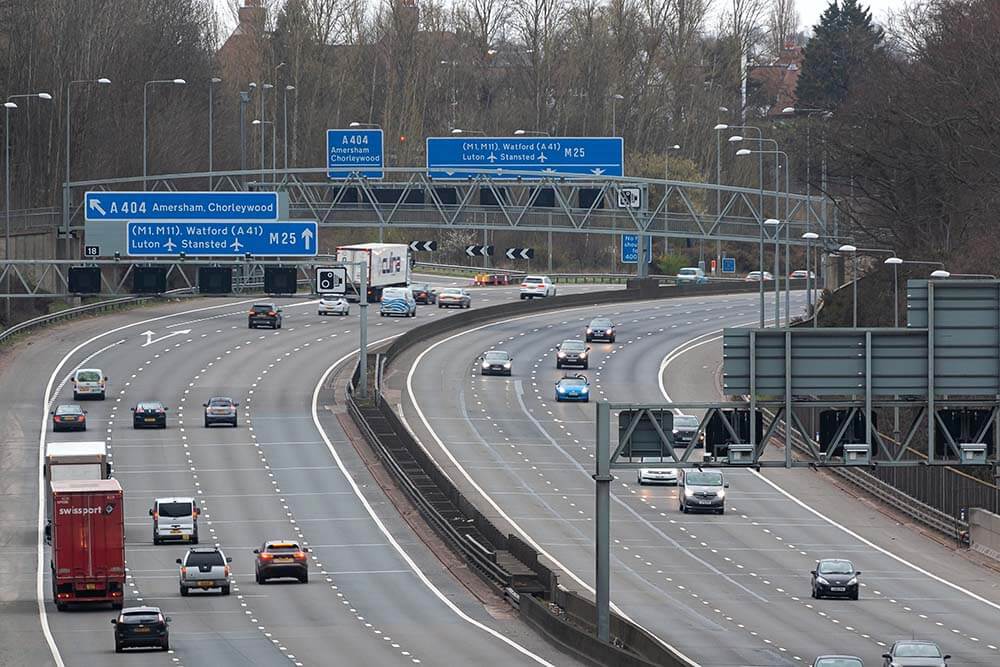
    Keep an eye on your speed. The motorway speed limit is usually 70 miles per hour, but it can vary depending on the conditions. Watch out for changes to the limit displayed on overhead gantries.

    On smart motorways, speed limits can be varied to regulate the traffic flow. Just as with other motorways, the changes will be displayed on signs on gantries. They’ll be enforced by speed cameras too—so ignoring lower limits will be expensive as well as dangerous.

    6. Look ahead for hazards…

    Scan the road ahead to give yourself time to react to changing conditions. Watch out for brake lights on the cars ahead, messages on gantries, and obstructions on the hard shoulder.

    7. …and look behind too

    Things can change on the road behind you, as well as in front. And remember, everything moves faster on motorways. Check your mirrors regularly, even more often than you would on other roads.

    8. Only use the hard shoulder in an emergency

    The hard shoulder is a refuge for emergency use only. Don’t move into it unless it’s absolutely necessary. The only exception to this is on a smart motorway, where the hard shoulder can sometimes be turned into a running lane to ease congestion. Watch out for signs telling you when this is the case.

    9. Take regular breaks

    Stay alert while you’re driving by taking regular breaks. Aim to stop before you feel tired.

    10. Know what to do when you run into trouble

    Knowing what you’d do if things went wrong can be a very effective way of managing anxiety. And it also means you’ll be well prepared to respond to unexpected events—including problems with your car.

    The Highway Code has detailed guidance on what to do if your vehicle breaks down. That includes extra rules for breakdowns on the motorway.

    Investing in good breakdown insurance will also help give you peace of mind.

    Getting calm—and staying that way

    As we’ve seen, there are lots of practical ways to manage the fear of motorway driving. But what if your anxiety is still off the charts? 

    Panic attacks while driving on motorways are a real concern for some drivers. And here, stress management techniques can be very helpful. 

    Planning ahead, visualising your journey, and avoiding caffeine before you get in the driving seat can all help. And while you’re driving, try deep breathing and listening to calming music. Bringing along a trusted friend or relative can also help keep your anxiety levels in check.

    Some people find a technique known as “commentary driving” very effective too. This is when you narrate your journey as you drive, describing what you’re seeing and doing. It can help shift your focus from the anxiety inside your head to the world outside.

    And if you’re sharing your vehicle with little ones, keeping them occupied can be key to managing your stress levels. Check out our blog for tips. 

    Remember, too, that you don’t have to do all this on your own. There are some excellent specialists out there who offer driver therapy to overcome fear of motorway driving. You can book a single session or a whole programme, depending on your needs. 

    Why do I get panic attacks on the motorway?

    The reasons behind panic attacks when driving on motorways can be many and varied. In some cases, they might be connected to a traumatic event. In others, they can have a physical cause.

    Driving therapy can help you identify the triggers for your anxiety. And it can give you strategies to help manage it.

    Handling your fear of motorway driving

    A fear of motorway driving isn’t unusual, and it’s nothing to be embarrassed about. 

    There are lots of tools and techniques you can use to overcome your fear. And don’t be afraid to ask for help. Motorway driving lessons can build your confidence, and driving therapy can help you find ways to manage your anxiety.

    Stick with it, and one day your fear of motorways will be a distant speck in your rear view mirror.

    Also read:

    Our motor insurance products:

  • What’s the right car insurance for a learner, new or young driver?

    What’s the right car insurance for a learner, new or young driver?

    The right insurances will always depend on individual circumstances, but here we cover a couple of different options.

    Flexible short-term learner car insurance

    Acing a test usually comes down to how much study, revision or practice we’ve put in, and passing a driving test is really no different. Plenty of lessons AND plenty of private practice is the best combo. If a learner has a willing and eager driver to help them, then this is a great option.

    Flexible short-term learner car insurance is an add-on to the car owner’s own car insurance that covers the learner driver to practice in that car with a supervising driver. It’s cheaper than adding a learner as a named driver and it protects the car owner’s No Claims Discount.

    Best insurance for learner driver - A-Plan Insurance

    Whether you’re looking for cover for yourself, or another learner, you can usually find flexible cover from one to six months at a time with the option to cancel or extend cover as needed.

    And if you or the other learner passes early, you may well get a refund for any months that aren’t used. So it’s worthwhile checking.

    Some even offer a relatively low excess from £250 so in the event of an unfortunate incident, there’s no huge up front excess to pay.

    Learner driver black box insurance

    For learners with their own car, this option means that learner drivers can start earning their own No Claims Discount and they can earn money back when they drive safely. A black box is either fitted by an engineer that will come to you, or you’ll get sent a black box to plug in (it’s usually super easy so no expertise is needed!).

    Having a black box usually means regular driving feedback, which is a big plus for a new driver to be able to keep an eye on how they’re doing.

    Some black box car insurance providers set a curfew, so it’s always worth checking the detail of the policy to ensure that it meets your needs. This is particularly relevant for those that might have an evening job or expect to travel to a friend’s house or back home again in the evening.

    Black box car insurance

    Although black box car insurance was built with young drivers in mind to help reduce the cost of that first year on the road, it’s possible to get black box car insurance if you’re in your 40s, as not everyone passes when they’re 18!

    The concept is pretty similar to learner black box car insurance, except it’s for drivers who’ve already passed:

    The policy holder will most likely get a black box to plug in or an engineer will come and fit the black box, what black box you get depends on what’s compatible with the car.

    Regular driving feedback keeps drivers up to date on how they’re doing and if they’re on track for some good driving rewards.

    Young driver insurance - A-Plan Insurance

    Our insurer, ‘ingenie’, offer price reviews, where good drivers can earn up to 21% of what they paid for their insurance back. So if you drive well, you can end up paying less! But other black box car insurance companies tend to do things a little differently. So it’s always best to compare and find what incentive works for the driver.

    It may be that car insurance isn’t always the most fun topic to learn about, but hopefully this has helped explain a few of the options that are out there, including ours, through Ingenie. You can find a number of guides on their website that may help you, including their ‘Young Drivers Guide‘ and the all-important ‘Parent’s Guide to Driving‘.

    There is always someone at your local A-plan branch to talk face-to-face or over the telephone who will be able to explain all the policy details and options in a clear, concise way, and set you on the right track.

    Find out more about our learner driver and young driver insurance products and get in touch with your local branch to find out more.

  • UK provisional driving licence – A complete guide

    UK provisional driving licence – A complete guide

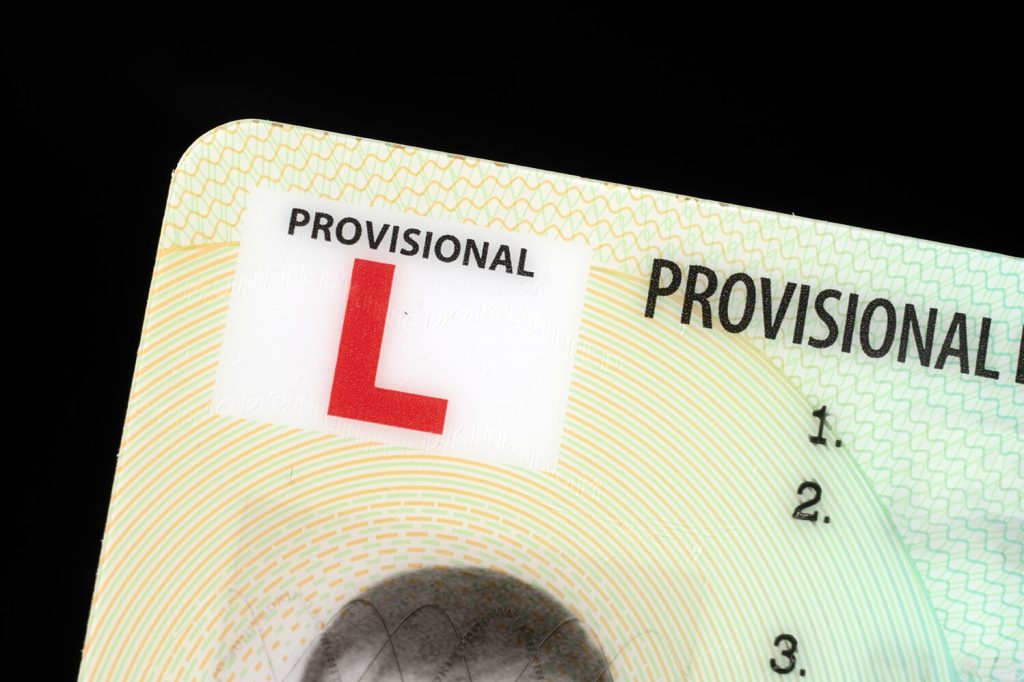
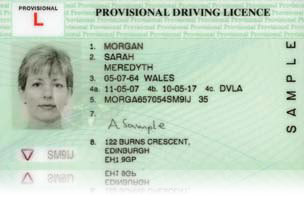
    A provisional driving licence allows you to drive on all UK roads except motorways before you pass your driving test. But you must be supervised by your driving instructor or any other driver over the age of 21 who has held a full driving licence for at least three years.

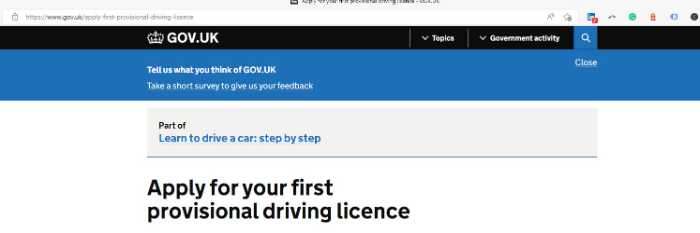
    If you want to apply for a provisional licence, you must be at least 15 years and 9 months old. You will need to fill out an application form and send it along with supporting documents and the correct fee to the DVLA.

    Once your application is processed, you will receive it in the post. This typically takes about two weeks. We recommend you check the DVLA website for turnaround times.

    You can start learning to drive as soon as you receive your licence but cannot take your driving test until you are 17 years old (remember you must be supervised by another driver over the age of 21 who holds a full driving licence for at least three years).

    1. What is a provisional driving licence?
    2. How to apply for a provisional licence?
    3. How much does it cost to apply for a provisional licence?
    4. Can I drive a car without a provisional licence?
    5. How long does a provisional licence last in the UK?
    6. Can you drive on a provisional licence without a theory test?
    7. What information appears on my provisional licence card?
    8. What are the restrictions on a provisional driving licence?
    9. Can you get points on your provisional driving licence?
    10. Do you need car insurance for provisional driving?
    11. Can I get provisional insurance if I have points on my licence?

    [ifso id=”63343″]

    What is a provisional driving licence?

    A provisional licence is a temporary licence that allows you to drive on all UK roads except motorways before you pass your driving test and receive a driving test pass certificate.

    How to apply for a provisional licence?

    If you’re a first-time driver in the United Kingdom, you will need to apply for it before you can start learning to drive.

    You can apply online via the Gov.UK website or you can complete a D1 from which you can obtain from your local post office and send that by post.

    To apply for a provisional licence, you must:

    • Be a resident of the United Kingdom
    • Be at least 15 years and 9 months old
    • Have a parent or guardian consent if you are under 18
    • Meet the minimum eyesight requirement
    • Not have any medical conditions that would prevent you from driving
    • Not be banned from driving
    • Have an Identification document like your passport or national insurance number
    • Have evidence of your address, where you’ve lived for up to the last 3 years
    • If you apply by post you need to include passport-sized photo

    Once your application is processed, you will receive your provisional licence in the mail. This typically takes around four weeks (sometimes longer so do check on the Gov.UK website). Postal applications usually take longer to process. Once you have your provisional licence, you can start taking driving lessons.

    Beware: There are many “unofficial sites” out there so be careful when you search on Google and make sure you go to the official Gov.UK DVLA website before you submit or apply.

    DVLA / Gov.UK Provisional Licence Website

    How much does it cost to apply for a provisional licence?

    A provisional licence currently costs £34 to apply online or £43 if you apply by post. You will need to pay this fee when you apply for your licence and it can be paid online.

    Can I drive a car without a provisional licence?

    No, you cannot drive a car without a provisional licence in the UK. A provisional licence is a temporary licence that allows you to drive on all UK roads except motorways before you pass your driving test. But you must be supervised by your driving instructor or any other driver over the age of 21 who has held a full driving licence for at least three years.

    When does a provisional licence expire in the UK?

    Your provisional licence is valid until you pass your driving test, or for a maximum of three years. After that, you will need to renew it.

    You can apply for a provisional licence up to three months before your 16th birthday. However, you will not be able to actually start driving until you are at least 17 years old.

    [product_cta]

    Can you drive on a provisional licence without a theory test?

    You cannot drive on a provisional licence without first passing your theory test.

    Once you have passed your theory test, you can then take your practical driving test. If you pass your practical driving test, you will be issued with a full licence. Provisional licences are only valid for a certain period of time, so it is important to make sure that you pass your tests as soon as possible.

    There is no set time limit for how long a provisional licence is valid for, but it is generally recommended that you take your tests within two years of passing your theory test. Provisional licences can be renewed if they expire before you have passed your tests.

    What information appears on my provisional licence card?

    The following details will appear on the licence card:

    Front of the licence card:

    • Your personal details (name, surname, date of birth)
    • Date licence was issued, expiry date, and issuing authority
    • Your driver number
    • Licence holder photo
    • Licence holder address

    Back of the licence card:

    • Pictogram entitlement categories (types of vehicles you allowed to drive)
    • Valid from and valid to dates
    • Information codes and restrictions
    Provisional drivers licence card sample

    What are the restrictions on a provisional driving licence?

    There are several restrictions placed on provisional driving licences. The most notable restriction is that you cannot drive on motorways. Other restrictions include a limit on the number of passengers you can carry, and a limit on the types of vehicles you can drive. You also cannot tow a trailer or caravan while on a provisional licence. Finally, you must always be supervised by a licenced driver when driving on a provisional licence.

    Can you get points on your provisional driving licence?

    Yes, you can. If you’re caught speeding, not wearing a seatbelt, or using a mobile phone while driving, you’ll get points on your provisional licence. These points will stay on your licence for four years. If you build up 12 or more points within that four-year period, your provisional licence will be revoked. This means you’ll have to reapply for a new provisional licence and take your driving test again.

    Do you need car insurance for provisional driving?

    You need to have car insurance to drive with a provisional licence. You can insure yourself as the main driver or named driver on your parents’ or guardian’s insurance policy. The minimum insurance cover you must have is ‘Third Party’. This will cover damage to other people’s property and vehicles, but not yours.

    Can I get provisional insurance if I have points on my licence?

    Yes, you can get provisional insurance if you have points on your licence. However, the cost of your insurance will be affected. You may also find it difficult to get insurers to cover you. It’s important to disclose any points or endorsements on your licence when you apply for insurance.

    What do I need to do if I lose my provisional licence?

    If you have lost your provisional licence, you will need to contact the DVLA online as soon as possible to request a replacement. You can do this by phone or online. There is a £20 fee for replacing a lost provisional licence. Once you have received your replacement provisional licence, you will need to take it to a driving test centre in order to have your photograph taken and updated on the licence.

    If you do not replace your provisional licence, you will not be able to drive legally in the UK. This could result in a fine or points on your driving record if you are caught driving without a valid licence.

    So, there you have it – everything you need to know about provisional driving licences in the UK. We hope this guide has been helpful and gives you a better understanding of what is required in order for you to obtain your licence. Remember, always drive safely and within the law. Good luck!

    You could also check out:

    Our motor insurance products: