If you want to learn more about tyre pressure, read our guide here.
Blog
-
F1 accelerates race to net zero carbon emissions
The second in our series focusing on synthetic fuels highlights the 2026 Formula One season’s new regulations
‘If Formula One can show using sustainable fuels is possible for racing, we can show the world it’s possible for everyday life and give people confidence’ – BTW Alpine F1 Executive Technical Director David Sanchez
Cutting edge engineering and design has always defined Formula One but this year the sport’s new era of technical regulations leads the way using sustainable fuel in smaller, lighter cars.
Every one of the 11 teams has had to build their car from scratch for 2026 so it will be an exciting start to the season for established teams such as Ferrari and McLaren through to new team Cadillac.
One team looking to take advantage of the new rules are BTW Alpine – after finishing bottom in the 2025 Constructors’ Championship.
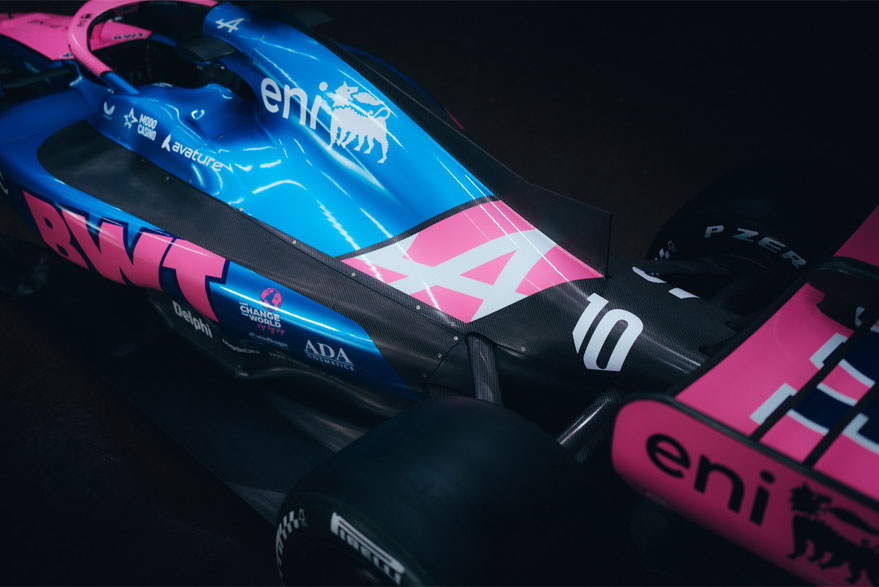
At the launch of BWT Alpine’s new A526 car, hosted on cruise ship MSC World Europa, in Barcelona on Friday (January 25), Team Principle Flavio Briatore made clear his expectations for the new season.
He said: “This year is not an excuse anymore, we have an amazing car for growth and I believe we have the best power unit in the business.
“It has been a relentless few months at the Enstone factory in preparation for the season, designing and creating the A526, together with Mercedes-AMG who will supply the new power unit and gearbox; a partnership we are very excited about.”
The team’s Mercedes-AMG power units will use advanced 100 percent sustainable fuel and this transformative shift marks the sport’s journey to net-zero carbon emissions by 2030.
David Sanchez, Executive Technical Director of BWT Alpine, says ‘the objective is the maximum performance possible’.
He said: “The team’s car power unit is developed with its own fuel but from the drivers’ perspective, they’re not going to have to worry about the fuel. Of course, as teams, we do because we need to put in the right amount of fuel before going racing, the right amount before qualifying.

“There are a lot of incentives towards sustainable energy and biofuels and if we can show in Formula One that it’s possible for racing, we can show the world for sure it’s possible for everyday life and give people confidence.”
‘Innovations and inventions end up into road cars’
With the aim to use less fuel than previous F1 cars, the 2026 version aims to deliver the same, if not better performance with the fuel designed to deliver a minimum of 65 percent greenhouse gas savings.
Commentators have also been watching the progress closely and F1 correspondent Dan Moxon says ‘it feels inevitable that the use of sustainable fuel in Formula 1 will eventually lead to the technology becoming more prevalent in road cars’.
He added “F1 teams have had the money and the competitive desire to innovate and the inventions that have come from their R&D efforts always end up making it into road cars if there is a use for them.
“Sustainable fuels aren’t nearly accessible enough to everyday road-users. Assuming F1 showcases them successfully with no detriment to performance, as has been the case in F2 and F3, the global reach of the sport will surely give sustainable fuels a higher profile which could lead to more investment in projects, speeding up the scaling of the industry.”
Drivers in the spotlight
Over and above the performance of the car and fuel Sanchez says ‘we also need the performance of the driver’. He said: “The final beat is done by the driver.”
On stage, in Barcelona, BWT Alpine drivers Pierre Gasly, 29, and Franco Colapinto, 22, who is preparing for his first full-time championship, heard Flavio Briatore make it clear he wants them to go into battle.
Briatore said: “Pierre and Franco are friends, working very hard together. For the moment they are friends. After two or three races, maybe the friendship is a little bit broken, maybe bigger than that. So we expect two good drivers.”

‘We took some pain last year’
Sanchez conceded that Alpine ‘took some pain last year’ while focusing ahead on the 2026 car. He said: “Everyone kept their head down and seeing the car complete, coming out of the box on Wednesday (January 20) at Silverstone, was a great moment.
“But, that great moment is short-lived, we need to keep everyone’s feet on the ground; we have a car, but we need a fast car and we need to keep developing the car.
“Whoever has a fast car almost always wins. If they sit back and think, oh, we have a fast car, and not do anything, they will very quickly drop back.
“The A526 is a completely new car from front to back, chassis to power unit. The size and weight have significantly reduced, the dimensions by 200mm in length, the width by 100mm and the kilos shaved off by 30kg.
“The focus has to be the best we can for the launch car – but we keep working hard from the beginning of the testing until Round One in Melbourne.
“The car is going to grow, you have to have a strategy of how you’re going to upgrade the car. If you spend all your budget in the first five races it’s not going to be good.
“And depending on what we see during testing in Barcelona this week (January 24-26), we either stick to our strategy or we’ll shift to be flexible.
“The big challenge was to make sure we design a car which is harmonious. You need aerodynamics to work well with the mechanical side of the car and you need all the chassis to integrate well with the power units.”
Advanced simulators to understand car sensitivities
Formula One teams invest heavily in advanced simulators. These Driver-in-the-Loop (DiL) rigs are used for vehicle development, set-up optimisation and track familiarisation. They have a chassis, cockpits and steering wheels on motion platforms to replicate the car’s behaviour, allowing drivers virtual testing of new parts and strategies.
Sanchez explained: “From the simulation point of view early on it’s very much about understanding what you’re working with; the main sensitivities.
“But some of the basic aspects like aerodynamics, new characteristics, energy management, how can we blend these aspects together, you don’t need to know exactly what the car will be like in the end of the process, but you need to evaluate how the elements influence each other.
“You just keep building your understanding so the car is maturing, then you can make your suspension choices, your architectural choices.
“The drivers have been very much involved in the simulator in the process because one of our objectives is to give them the most driveable car.”
Sanchez says the car will be different to drive. Last year the cars had so much downforce, getting the car to the limit, it was very much like driving on the knife edge. The new cars with less downforce may be a bit more predictable. If the cars are sliding a little more, that will be a challenge for the driver.
“But if it’s predictable and if the car is very drivable, I think it will be quite fun.
“For the car to go fast, it needs grunt, it needs downforce and it needs power. But the driver has to use it. If you give a lot of downforce to the driver, he doesn’t have the confidence to go and push towards the peak of performance.
“Ultimately, the car is shorter and narrower than recent years with some aerodynamic freedom to explore. We have the return of active aero where we have the ability to have movable front and rear wings, something the majority of the drivers on the grid will not have experienced. The reduction in downforce and drag is expected to bring better racing, which I am sure all fans will be intrigued to watch.”
Pierre Gasly, now in this fourth season with Alpine,drove the A526 car for couple of laps on the shakedown at Silverstone on Wednesday, January 21 and said ‘it’s something quite spectacular’.
He said: “We’re giving ourselves the best chance to do well this year. “The sacrifices we made last year made a painful and long season for us. Now it’s important to deliver because we know that we as a team are helping to be in a much better shape than last year.
“This is the first time in my career where the entire car has had such significant changes but I‘m confident in the work the team has done. Every team is trying to figure out how the shakedowns are going. In a few weeks’ time, we’re going to go flat out in Australia and no one will hide anything anymore.
“The engine feels different. It’s probably going to need a different approach. We’re going to have more time spent in the corners, probably faster arriving speed in some tracks. So whether it’s going to suit my driving style a bit more, I don’t know, but I’ll have to adapt to whatever makes us fastest (alpinef1.com).
So why an F1 car launch on a cruise ship?
MSC WORLD EUROPA is the world’s largest LNG-powered cruise ship and set new standards for environmental sustainability at sea when it launched in 2022. The cruise line is committed to achieving net-zero greenhouse gas (GHG) emissions for its marine operations by 2050.
MSC Cruises joined forces with BWT Alpine Formula One Team as a Premium Partner in 2025, both looking to ‘celebrate performance, sustainability and the spirit of innovation’.In fact, while the 6,762-passenger ship was moored in MSC Cruises’ dedicated terminal at the Port of Barcelona for the car launch it connected into shoreside power to achieve net zero emissions on the launch day.
For BWT Alpine’s Flavio Briatore it was not the first time he had been on the ship. He said: “I was on MSC World Europa at its launch in 2022. It’s an amazing ship, it is a city. I brought MSC Cruises to Formula One and now it is a pleasure to launch our new car on this ship.” (msccruises.co.uk).

Formula One in 2026
After pre-season testing at Circuit de Barcelona on January 26 and two three-day sessions in Bahrain, the new F1 cars will be on the track during 24 Grand Prix weekends, including six F1 Sprint races, starting in Melbourne on March 8.
The British Grand Prix takes place at the Silverstone Circuit on July 5 (formula1.com). -
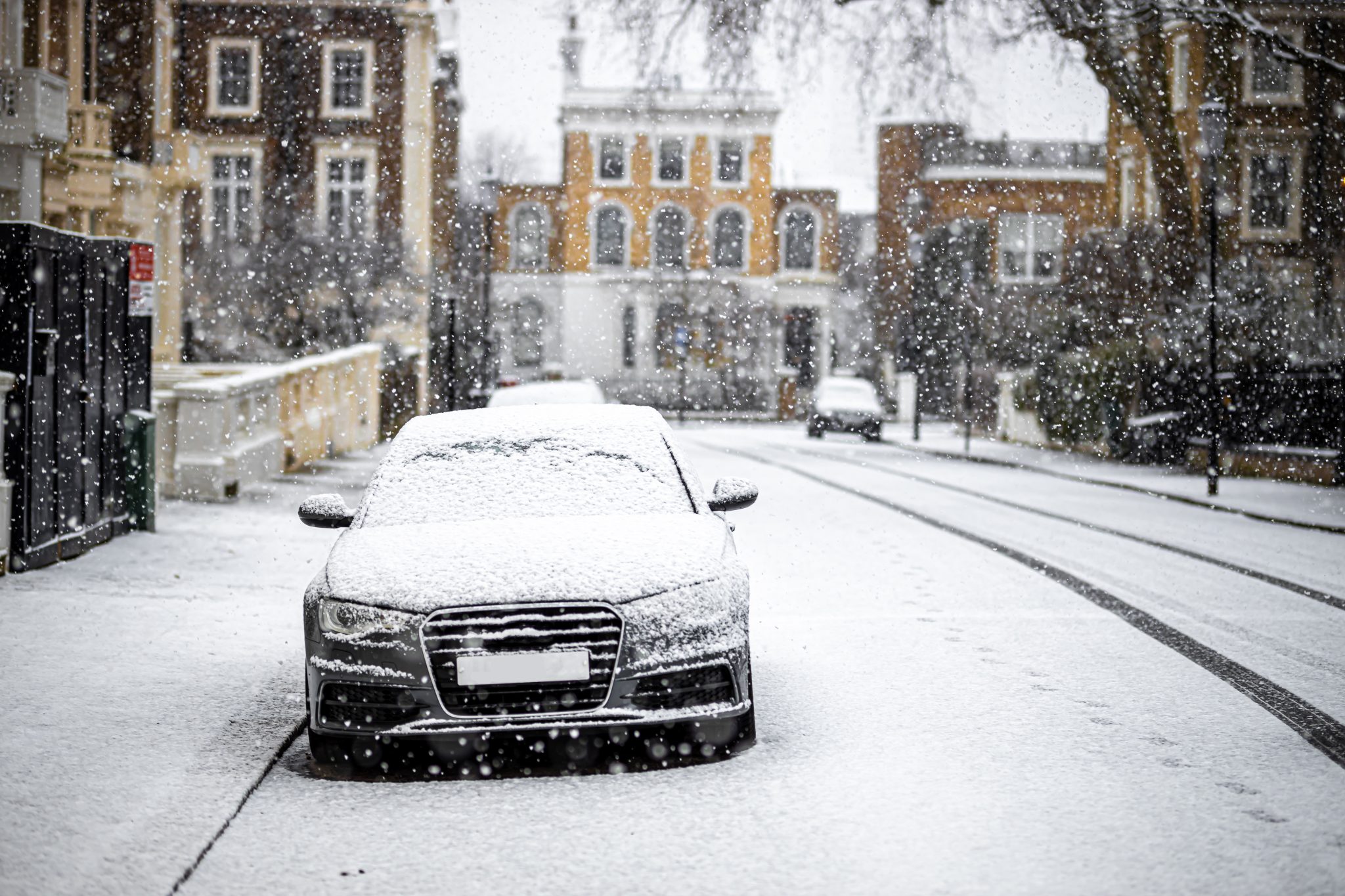
Why you should check your tyre pressure this winter
As temperatures drop across the UK, most drivers will be aware of the dangers of snow and ice on the road. Standard tyres tend to struggle on cold, slippery surfaces, making steering and braking feel a bit more lively than usual.
Cold weather can also affect the pressure in your tyres. Tyre pressure is one of the simplest things to overlook, yet it shapes the way your car handles every journey. Regular checks during the colder months can make all the difference, improving your grip and traction on icy roads, reducing fuel consumption and most importantly keeping you safe on the road this winter!
How does the cold affect your tyres?
Your tyre pressure tends to fall once the cold weather sets in. As temperatures fall, the rubber becomes firmer and less flexible. At the same time, molecules move less actively and “huddle together,” causing the air to become denser and take up less space. This exerts less force against the interior walls of the tyre, leading to a lower pressure reading.
You’ll often sense this before you see any warning light – the car might feel a little heavier on a frosty morning or the steering may feel less responsive. As a rule of thumb, when the temperature decreases by about 10°C, tyre pressure drops between 1 to 2 PSI, or 0.07 and 0.14 bars.
All tyres let out air over time, so a quick monthly top up keeps them working as they should, whether they are summer, winter or all season. Checking them regularly also makes it easier to notice if one tyre is falling behind the rest, which can be a sign of a leak.
The dangers of driving with low pressure tyres
Driving with underinflated tyres comes with its own unique set of risks, which can include:
- Longer braking distances: Soft tyres spread out more on the road. This reduces grip and means the car needs more space to stop, especially on wet or icy surfaces.
- Reduced handing and control: Low pressure affects how the tyre supports the car’s weight. Changes in the size of the tyre’s contact patch will affect how much grip you have and how the car responds.
- Tyre wear: low pressure can cause uneven wear, leading to faster tyre damage and punctures.
- Higher fuel consumption: A softer tyre creates more drag. The car works harder to move, which increases the amount of fuel you use on each journey.
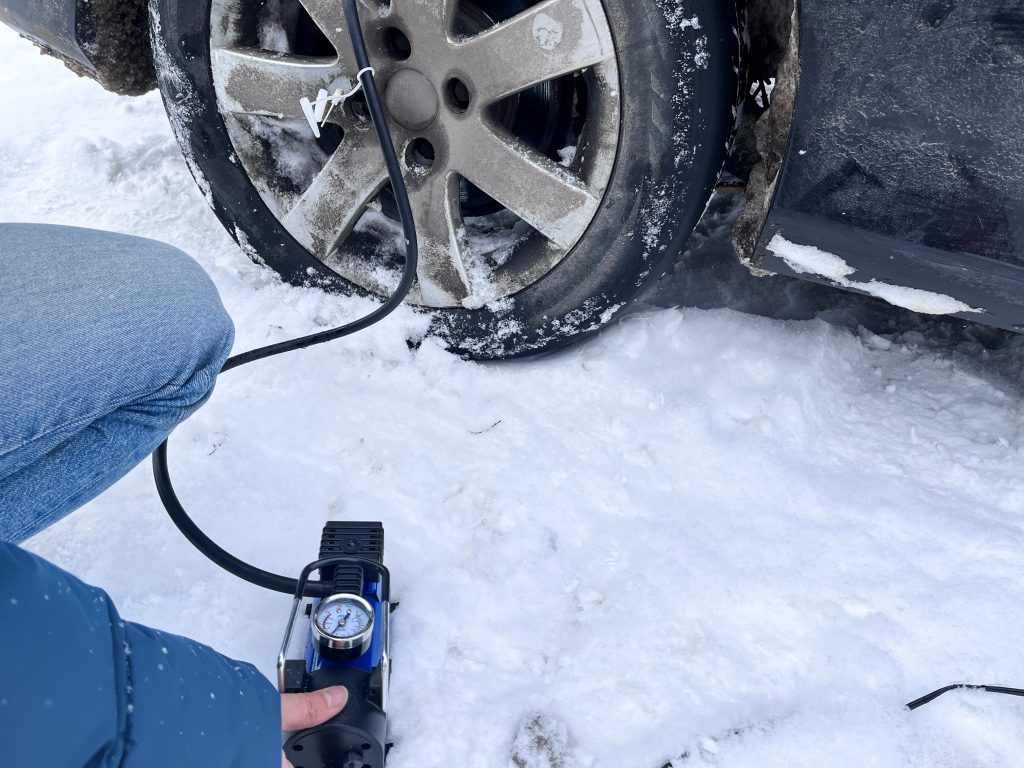
How can I tell that my tyres need inflating?
A pressure gauge is the simplest way to check, but if you don’t have one to hand here are some easy ways to tell that your tyres might be underinflated:
- Dashboard warning light: your tyre pressure monitoring system (TPMS) will warn you if there is an issue with your tyre pressure, although it shouldn’t be a replacement for manual checks.
- Steering feels ‘sluggish’, unresponsive or pulls to one side
- Visible checks: look for tyres that appear to bulge or sit lower to the ground
Tip: Even if your tyres look fine, a tyre can be under‑inflated before anything is obvious to the eye. That’s why it’s always good practice to check them regularly and inflating your tyres to the level set by your car manufacturer, whatever the weather decides to do.
If you’re unsure what pressure your tyres should be, there are several ways to find out:
- Inside the driver’s door
- In your vehicle handbook
- The inside of your fuel cap
How to check and adjust your tyre pressure
As inflation tends to drop with the temperature in cold weather, it’s important to check your tyre pressure every two weeks, or at the very least once a month. Here’s what you need to do:
1. Start with cold tyres
You’ll get the most accurate reading when the tyres have not been driven on for a while, such as first thing in the morning. Once the tyres warm up on the road, the pressure rises slightly, which can make the reading less reliable.
2. Use a reliable pressure gauge and air compressor
You can pick up a good‑quality gauge or small compressor from most auto stores. Many petrol stations also have both available, which makes it easy to check your tyres whenever you stop for fuel.
3. Check the pressure and make any adjustments
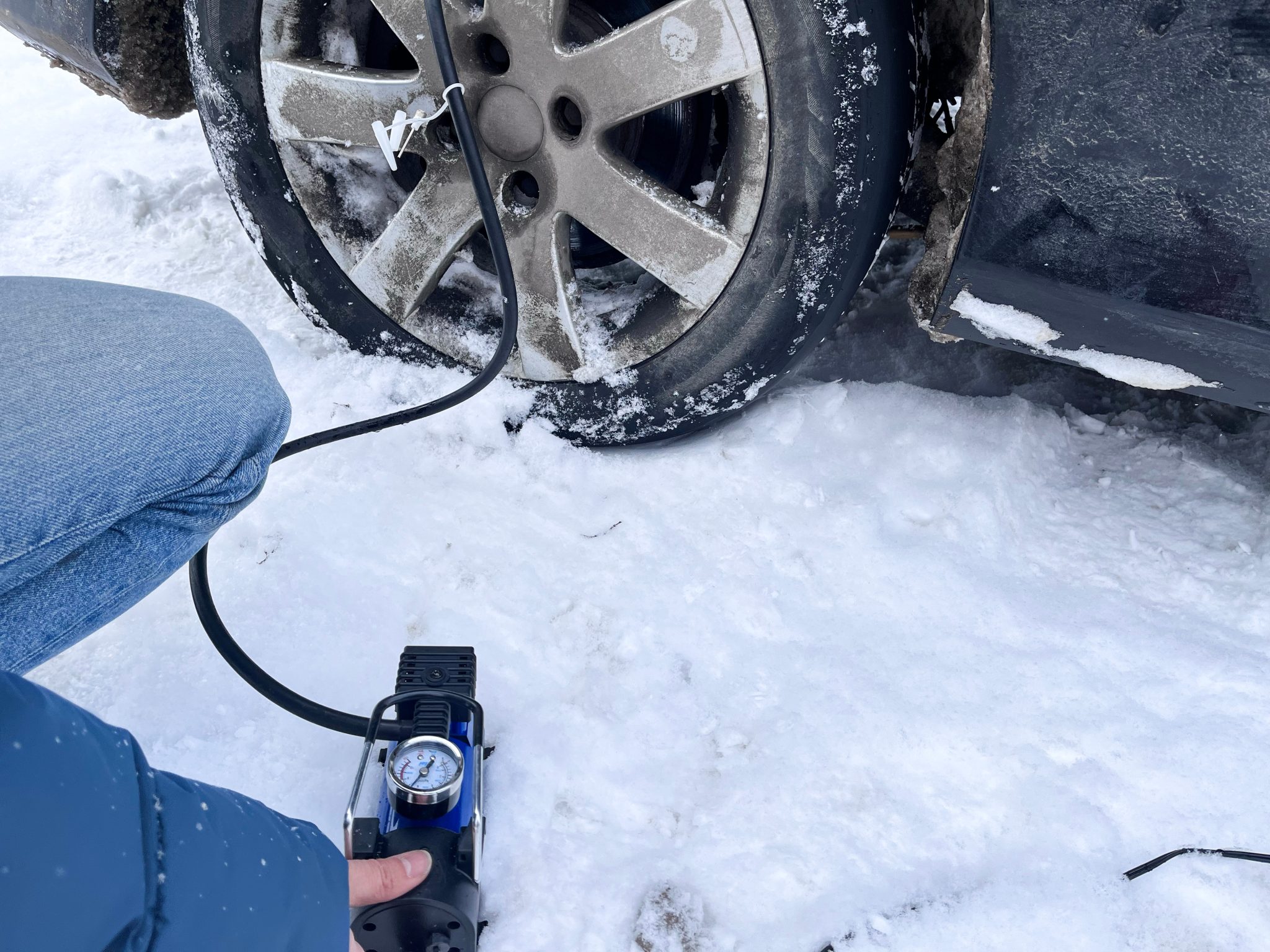
To check the current pressure of your tyres, remove the dust cap from the tyre valve and place the gauge firmly onto the valve stem. Hold it in position until any brief hiss of escaping air stops. The gauge will then show your pressure in PSI or bar. Compare this reading with the number in your handbook.
- If the pressure is too high, gently press the valve to release a small amount of air.
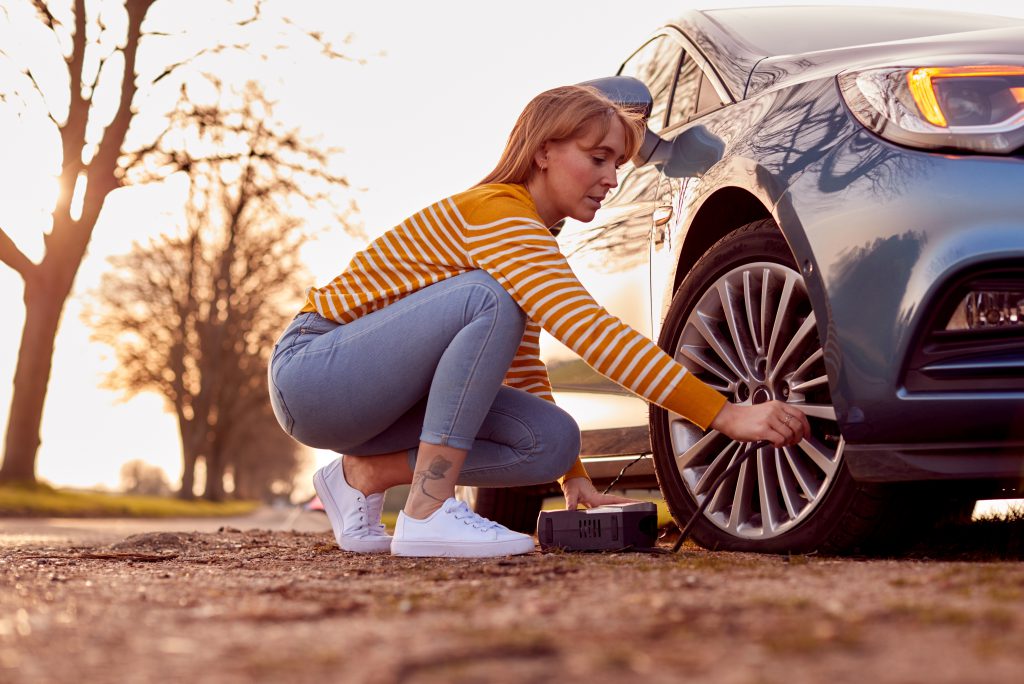
- If it is too low, attach the compressor and inflate the tyre until it reaches the recommended level.
While you’re checking pressure, take a moment to look at the tread depth. It needs to sit well above the legal minimum of 1.6 mm across the central three quarters of the tyre, around the entire circumference. Good tread gives you stronger grip when the roads turn slick.
Final thoughts
It’s easy to underestimate the effect cold weather has on your tyres, but with a little TLC you can keep them in good shape through the colder months. Winter driving can feel like enough of a challenge, so regularly checking your tyres is an easy win. Pop it on your winter to‑do list so you can stay safe on the roads, whatever the weather brings!
You could also read:
- Turning ‘likes’ into ‘leads’ – how to use social media to generate new business
- The van models most likely to fail their MOT
- The true cost of accidents abroad
- Don’t let winter weather stop your home renovation plans!
- Fraudsters turn to AI to fake insurance claims
- Burglary hotspots in the UK
This is a marketing blog by Howden.
-

The Men’s European Football Injury Index
Welcome to the fifth edition of Men’s European Football Injury Index — a no‑nonsense look at what’s really happening to players’ bodies across Europe.
This year’s report digs into five years’ worth of injury trends across the top men’s leagues, then zooms in on the 2024/25 season. There’s also a section on how the expanded FIFA Club World Cup 2025™ has piled even more pressure on players.
The big picture is simple – the workload on elite footballers keeps going up, and their bodies are paying the price.
The numbers this year show clear changes in both how often players are getting injured and how much those injuries are costing clubs. It’s a topic that’s sparking plenty of debate about how the game should protect its players. The report is designed to give clubs, players and decision‑makers the facts they need to make proper calls about the future, and we hope is of interest.
Premier League – five years at a glance
Across Europe’s top leagues, there were 22,596 injuries in the last five seasons — costing clubs £2.97bn. The Premier League alone accounts for nearly a quarter of those injuries, with clubs paying out over £1bn in wages to sidelined players.
Chelsea, Liverpool, Manchester City and Manchester United all spent above the league average on injury costs every single year. United topped the lot in the 2024/25 season, with £154.51m lost to injuries over the five‑year period.
FIFA Club World Cup™ impact
During June–July 2025 the nine European clubs involved picked up 25 injuries, the same as the year before. But the real damage came afterwards:
- Chelsea, who won the tournament, suffered 23 injuries between June and October — a 44% jump from the previous season.
- Manchester City had no injuries during the tournament itself but racked up 22 injuries in the three months that followed.
It’s the classic story: the job gets done, but the wear and tear shows up later.
2024/25 season highlights
Injuries went up slightly across Europe (+27) but the overall cost to clubs actually dropped by around £138m.
In the Premier League:
- Manchester United had a rough season on the pitch (finishing 15th), but oddly enough recorded their lowest injury count in five years.
- Liverpool, the champions, kept their injury costs low — around £12.69m — compared to Manchester City’s £35.53m, likely because their highest‑paid players stayed fit and on the field.
And what about Europe?
- Only Bayern Munich, PSG and Real Madrid broke the €40m mark for injury costs in a single season.
- Bundesliga clubs pick up the most injuries, but at a much lower cost — roughly €115.95m per season.
- Over five years, Real Madrid spent €168.76m on injuries, compared to Barcelona’s €122.99m.
- PSG is the only French club with above‑average injury numbers every year — nearly 300 injuries in total.
- In Italy, Juventus and AC Milan consistently recorded above‑average injury counts, with Juventus failing to win the league in any of those five seasons.
If you want a full breakdown the complete report has all the details.
You could also read:
- The van models most likely to fail their MOT
- The true cost of accidents abroad
- Don’t let winter weather stop your home renovation plans!
- Fraudsters turn to AI to fake insurance claims
- Burglary hotspots in the UK
This is a marketing blog by Howden.
-

Turning ‘likes’ into ‘leads’ – how to use social media to generate new business
You’ve heard business owners say this sort of thing before: “I know social media helps, but I don’t know what to post.” The truth is far simpler – social media works best when you treat it like a digital version of word of mouth. Consistently and regularly sharing what you do, showing who you are, and giving people a reason to trust you is the best way to generate enquiries and get new business.
Here are our top tips for harnessing the power of social media:
1. Start by showing the real work
People love seeing specialist trades and professions at work. It builds confidence and gives them a “before and after” moment they can trust.
Try mixing:
- Short videos of a job in progress
- Quick photos of transformations or tidy finishes
- A simple walk through of how you solved a problem
These posts show competence and reduce the perceived risk for new customers, meaning viewers feel reassured making them more likely to get in touch.
2. Highlight the problems you prevent
Many homeowners and small businesses only realise they need help when something goes wrong. When you explain the risks in advance you become more than a service provider; you become a preventative safeguard.
You might post about:
- Wiring issues you fixed before they caused damage
- Security weaknesses you spotted on a site
- A badly fitted installation you had to put right
This positions you as someone who protects people’s property and livelihoods. It also sets expectations about why quality matters and why your pricing reflects skilled, safe work.
3. Use customer stories to build trust
Future customers rely on evidence of the quality of your work. Social platforms give you a quick way to provide it without feeling like you’re begging for reviews.
Share:
- A short quote from someone you’ve helped
- A brief description of a job and why the client called you
- A photo of the finished result
Real life stories like these create social proof and reduce the chance of time wasters, because serious clients already know what you’re capable of.
4. Keep your online presence safe
Social media creates opportunity, but it also brings risk if you’re not careful.
Build sensible habits:
- Avoid sharing location details while on a job
- Blur anything that reveals a client’s address or valuables
- Keep business accounts separate from personal ones
- Use strong passwords and multi factor authentication
- Make sure you’ve got cyber cover
When your online behaviour shows professionalism and respect for privacy, your reputation naturally strengthens.
5. Stay on top of regulations and standards
Competency messaging does wonders for attracting high value clients. Small posts about proper certification, safe working practice, or changes in regulations reassure people that you take your trade seriously.
For example:
- Mention that you’re accredited with the right body
- Explain a new regulation and how it affects customers
- Share a photo from a training day or toolbox talk
Simple touches like these help clients choose a trusted professional over the cheapest one.
6. Use your posts to filter out the wrong clients
Social media can be a magnet for bargain hunters unless you set expectations early. You can avoid that by including details that reflect your pricing, standards, and way of working.
Consider posts that say:
- What types of work you specialise in
- Typical timescales for enquiries
- The areas you cover
- The quality level you deliver
Clear communication makes customers self-select, which can save time and boosts profitability.
7. Turn social engagement into real bookings
Once your content is working better, you’ll start seeing more comments and messages. Engage with people who engage with you and guide them towards the next step, so they know how to hire you.
Use:
- A link to your quote form
- A pinned post explaining how to book
- Quick replies that ask a few key questions
When your process feels smooth, people make decisions faster.
8. A few easy content ideas to keep things flowing
If you ever get stuck:
- Share the “tool of the week” and why you trust it
- Explain a simple maintenance tip people can do safely
- Post a photo at the end of each job
- Ask your audience a question
- Reveal a behind the scenes moment
Consistency of posting builds familiarity, and familiarity leads to enquiries.
Social media isn’t about dancing videos or being an online celebrity. It’s about being visible, trustworthy, and easy to contact. When business owners combine practical content with professional habits they attract better clients, reduce risk, and create a steadier flow of work.
At Howden, we’re here to support you whatever business you’re in, while you focus on what you do best; getting the job done.
You could also read:
- The van models most likely to fail their MOT
- The true cost of accidents abroad
- Don’t let winter weather stop your home renovation plans!
- Fraudsters turn to AI to fake insurance claims
- Burglary hotspots in the UK
This is a marketing blog by Howden.
-
Which vans have the highest recall rates?
When your van is your livelihood, reliability isn’t just a nice-to-have – it’s non-negotiable. But even the most trusted models can hit a bump in the road. Recent data from the UK Government Vehicle Check Recalls Service reveals which vans have faced the most manufacturer recalls between 2020 and 2024. Spoiler alert: some big names feature heavily.
The vans with the most recalls
Mercedes Sprinter – 32 recalls, 246,724 vehicles
The Sprinter tops the charts by a long way. Across four years, Mercedes-Benz issued 32 separate recall campaigns for this model, affecting nearly a quarter of a million vans. Issues ranged from software glitches to mechanical concerns.
Ford Transit – 13 recalls, 119,113 vehicles
A staple of UK roads, the Transit isn’t immune to problems. Thirteen recalls impacted over 119,000 vehicles, covering everything from electrical wiring to seat mechanisms.
Vauxhall Vivaro – 13 recalls, 21,576 vehicles
Sharing second place for recall frequency, the Vivaro saw fewer vehicles affected overall, but still enough to make the list.
Peugeot Expert – 11 recalls, 35,534 vehicles
From electronic system faults to safety-related fixes, the Expert had its fair share of issues.
Ford Transit Custom – 9 recalls, 119,113 vehicles
Another Ford favourite, the Transit Custom, rounds out the top five.
At the other end of the scale, the Volkswagen Crafter and Ford Transit Connect had just one recall each – affecting 104 and 9 vehicles respectively. Other low-recall models include the Renault Trafic, Peugeot Partner, and Vauxhall Combo.
What do these numbers really mean?
A high recall count doesn’t automatically spell disaster. In fact, recalls often show that manufacturers are proactive about fixing problems before they become serious. Still, if your van is on this list, it’s worth checking whether any outstanding recalls apply to you. You can do this quickly via the https://www.gov.uk/check-vehicle-recall.
Are repair times costing you more?
Here’s the kicker: even if your van goes in for a routine fix, it might be off the road longer than you’d expect. According to Epyx data, average repair times have grown year-on-year:
- 2021: 1.63 days
- 2022: 1.74 days
- 2023: 1.91 days
And it’s not just repair time. The wait from booking to scheduled maintenance has jumped from 11.87 days in 2021 to 13.74 days in 2023. That’s nearly two weeks before your van even hits the workshop.
So why all the delays? Well, there seems to be two big reasons.
- Parts shortages: Newer models often lack established supply chains, meaning longer waits for components.
- Skills gap: Vans are more complex than ever, and there’s a shortage of technicians trained to handle advanced systems.
Fleet downtime is rising, and according to the Arval Mobility Observatory, the number of fleets reporting longer repair times has increased by a third in the past year. For businesses, that’s more missed jobs, more lost revenue, and more stress.
How can you stay ahead?
You can’t control recall rates or supply chain delays – but you can protect your van and your business from the fallout. The manufacturer may offer you a courtesy vehicle, and with the right insurance, you’ll have options like breakdown cover to keep you moving when your main vehicle isn’t.
Sources: Bodyshop Magazine, The News Wheel, Gov.UK, Van Reviewer, Advanced Motoring
You could also read:
- The van models most likely to fail their MOT
- The true cost of accidents abroad
- Don’t let winter weather stop your home renovation plans!
- Fraudsters turn to AI to fake insurance claims
- Burglary hotspots in the UK
This is a marketing blog by Howden.
-

Annual vs single trip travel insurance
It’s the start of the year, and many of us are already dreaming about holidays… whether that’s a sun-soaked beach escape or a string of city breaks. While you’re planning where to go, it’s worth asking: do you need annual travel insurance or a single-trip policy?
Here’s what you need to know to make the right choice.
Single trip travel insurance
A single-trip policy covers one holiday, priced by the number of days you’re away. You choose the start and end dates, pay once, and you’re done. It’s usually cheaper than an annual policy because you’re covered for less time.
Who is it good for?
- Occasional travellers: If you’re only taking one or two trips this year, this is often the most cost-effective option.
- Those outside annual policy limits: If age or health conditions make annual cover tricky, single-trip policies can be easier to arrange.
- Budget-conscious buyers: If annual quotes are sky-high, single-trip cover could save you money.
Top tip: Buy your policy as soon as you book your holiday. That way, you’re protected straight away if your travel company goes bust before you set off.
Annual travel insurance policies
An annual policy covers you for a whole year, no matter how many trips you take. That could be one big holiday or several short breaks. You can choose European cover if you’re staying within the EU, or worldwide cover if you’re venturing further afield.
Who is it good for?
- Frequent travellers: If you’re taking two or more trips, an annual policy often works out cheaper overall.
- Convenience seekers: One policy, one payment, and you’re covered for the year.
But there are a few caveats:
- Age limits: Some annual policies cap at around 75.
- Medical conditions: Pre-existing health issues can push up prices—or even mean you’re declined. In these cases, a specialist insurer or a single-trip policy might be better.
As well as these options, you should also consider how the type of trip you’re going on plus any planned activities could impact your cover. For example, for extended trips backpackers cover may be more suitable – and better value.
Cruises, skiing or safari trips may also need more specific policies, so it’s worth checking the fine print of your policy or speaking to an insurance expert before you buy!

Is travel insurance mandatory?
Travel insurance isn’t a legal requirement. But no one wants their dream holiday turning into a nightmare of medical bills, lost luggage, and cancelled flights.
Typical travel policies include:
- Medical emergencies
- Lost or stolen belongings
- Trip cancellation due to illness, injury, or bereavement
- Delays (usually after a certain threshold)
Some insurers only cover specific events like strikes or adverse weather, while others offer broader protection for alternative travel and accommodation. Always check exclusions and keep receipts if you need to claim.
Many people skip it for short trips or assume it’s too expensive. In reality, forgetting to buy cover is far more common – and far riskier!
If you’re planning multiple trips, an annual policy could save you money and hassle. If you’re only going away once or twice, single-trip cover is likely the smarter choice. Either way, don’t leave it until the last minute – sort your insurance as soon as you book.
How to find the right travel policy? Howden. That’s how.
Ready to make your travel plans stress-free? At Howden we’ll help you find cover that fits your adventures, whether it’s a quick city break, a family getaway, or the trip of a lifetime.
Speak to your local Howden expert today, in branch or over the phone, and travel with confidence.
Sources: MoneySuperMarket, Forbes.
You could also read:
- The true cost of accidents abroad
- Don’t let winter weather stop your home renovation plans!
- Fraudsters turn to AI to fake insurance claims
- Burglary hotspots in the UK
- The new EU rules: what you can (and can’t) bring home!
This is a marketing blog by Howden.
-

What can you do to stay healthy this flu season?
While fever-pitch fears of a full-blown flu epidemic of COVID levels may have cooled down since Christmas, according to a leading epidemiologist, here in the UK we’re still “a long way from the end of the flu season”. Health Secretary Wes Streeting added his voice in January 2026, saying that as a nation “we’re not out of the woods yet”. Norovirus and COVID figures were high overall, and the over-85 cohort remain the most vulnerable to serious conditions such as RSV (respiratory syncytial virus), which often results in time in hospital.
So while both those temperature sweats and news stories rage on, are we doing enough to protect ourselves… and what about those old-school prevention methods? From keeping up with vaccinations to slurping up a bowl of grandma’s chicken soup, here’s our fast guide to flu avoidance and remedies for recovery.
1. Get your flu and COVID vaccinations
Having delivered more than 18.6m flu vaccines across the UK this season – which is an increase of more than half a million people over last year – the number one message remains… if you can, get your jabs. While the injection may give you an “ouch”, or even a small window of feeling ‘under the weather’ as your body adjusts, the long-term benefits outweigh short-term issues. The vaccine ‘recipe’ is tweaked on an almost-annual basis so it successfully recognises new strains of flu and triggers the protective antibodies that protect you for around six months from the worst part of the illness. In conclusion, we’d take a sore arm over a spell in hospital any day.
2. Be soothed by honey and lemon

We’d love to know who in history figured this one out, but a hot drink combo of honey and lemon at the very least has the ability to soothe a sore throat. Reducing that ‘chewing on broken glass’ feeling while reducing irritation, this sweet and citrus drink won’t make you feel worse and may not even prevent flu, but should be part of your ‘get better’ toolkit. Find the perfect blend here, with a dash of ginger.
3. Food to bolster your immune system
Before we look at the recovery foods, what should we eat to strengthen our natural defences? While we’ve already high-fived honey and lemon, upping your citrus intake may be the smartest and swiftest form of prevention. A daily orange or a couple of tangerines is instant vitamin C – and the more of that we have, the stronger the chances of fighting off flu (or at least minimising the effects)
Adding old-fashioned garlic into soup tops our lurgy-fighting list, alongside onions. Both contain natural compounds that give us a natural “oomph” while also reducing inflammation – and should form the basis for any soup or broth. All of which leads us perfectly to the ultimate warming classic…
4. The magic of chicken soup

Chicken soup’s more than just comfort food – it genuinely helps your body through illness. The warm, mineral-rich broth keeps you hydrated, which is essential when fever or congestion increases your body’s fluid needs. Because it’s easy to digest, it delivers gentle nourishment at a time when your appetite might be low. And there’s more… the steam rising from the bowl can also help ease congestion, while the warmth supports the body’s natural recovery processes.
Plan ahead – you may not feel like making it if you’re ill, so try this easy recipe today and freeze for future curative use.
5. And what about echinacea?
Echinacea (AKA coneflower) has long been a go-to cold and flu herbal preventative supplement and response remedy. Its naturally-occurring alkylamides, flavonoids and caffeic acid derivatives may help support the immune system and reduce inflammation. And even better, a number of lab studies suggest certain echinacea compounds can limit the replication of cold and flu viruses, potentially protecting you before flu gets a grip. While evidence is mixed, it may still play its part alongside vaccinations, good hygiene, and rest.
Need a little extra support this winter? Our Howden Health team is here for you. Search Howden Insurance to find your local branch, or get in touch with one of our Life & Health experts.
Sources: The Independent, NHS England.
You could also read:
- The true cost of accidents abroad
- Don’t let winter weather stop your home renovation plans!
- Fraudsters turn to AI to fake insurance claims
- Burglary hotspots in the UK
- The new EU rules: what you can (and can’t) bring home!
This is a marketing blog by Howden.
-
Who’s responsible for clearing up after a storm?
Storms don’t just make headlines – they make a mess! With extreme weather events on the rise across the UK, many people are asking the same question: Who’s responsible for putting things right? Let’s break it down.
Who handles the drains?
When heavy rain hits, drains work overtime. But who’s in charge when things go wrong?
Private drains: If the drain sits within your property boundary, it’s your responsibility to keep it in good shape. That means clearing leaves and debris to prevent blockages and flooding. Simple steps can save you a headache later.
Public drains: Drains on roads or public land are the water company’s responsibility. Never attempt repairs yourself – it’s dangerous and could land you with a bill. If you’re unsure whether a blockage is yours or theirs, call a drainage expert. They’ll pinpoint the problem and guide you on next steps.
Storm drains: Even if a storm drain is on your property, your local water company usually owns it. If there’s a serious problem, don’t try to fix it yourself – call them. They have the tools and authority to sort it safely.
Before you start clearing up, either indoors or outdoors:
- Take photos of any damage and the flood water line.
- Speak to your insurer before throwing anything away.
Flood water can hide hazards like broken drain covers or sharp debris. Most items can go in the bin if they’re not contaminated but check with your council for skips or extra collections. Ask your council how to dispose of any used sandbags.
If sewage or chemicals are involved, contact your council’s environmental health team. They’ll advise on safe disposal as hazardous waste.
Fences and walls: avoiding neighbourly storms
Fences and walls are often first to fall when the wind picks up – and they’re a common source of disputes.
If the fence is inside your boundary, it’s yours to fix. If it sits on the boundary, responsibility is usually shared. Check your property deeds or have a friendly chat with your neighbour before reaching for the toolbox. Clear communication now can prevent a storm of arguments later.
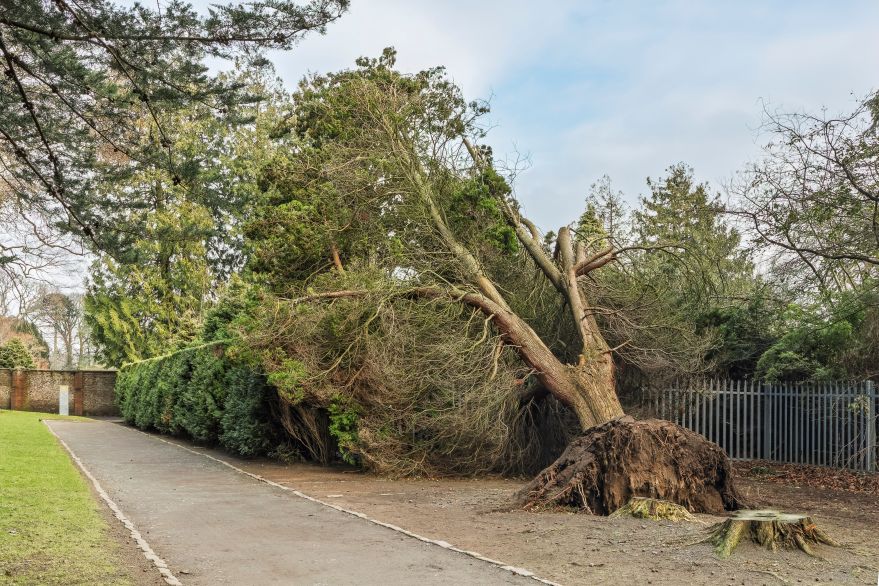
Fallen trees: who pays for the damage?
If a tree on your property crashes onto your neighbour’s, you’re generally responsible for the damage – and vice versa. But here’s the catch: home insurance only covers your own property. So if your neighbour’s tree damages your home, you claim on your policy, not theirs. You can ask them to cover your excess, but their insurer won’t pay out for your repairs.
If the tree came from public land, the council will remove it. They might cover costs if negligence played a part, but usually you’ll claim on your own insurance.
Landlords and tenants: knowing your responsibilities
Landlords are usually responsible for storm damage repairs to rental properties. Tenants should report any issues straight away – speed matters when water is involved.
Storm damage to rental properties may be included in your landlord insurance policy, but it’s not a definite so check your policy.
Where does insurance come in?
Most home insurance policies cover storm damage – but what counts as a storm? The Association of British Insurers defines it as violent weather with one of these:
- Wind gusts of 55mph or more
- Rainfall of 25mm per hour
- Snow at least 1ft deep in 24 hours
- Hail strong enough to damage hard surfaces or glass
Your policy may have its own definition, so read the small print. And remember, insurers will want evidence. Photos, dates, and details of the damage can make your claim smoother.
Storms can be stressful, but knowing who’s responsible – and what your insurance covers – makes recovery easier. Keep communication open with neighbours, councils, and insurers. And when in doubt, ask the experts, such as our Howden teams. A little preparation now can save a lot of hassle later!
Find your local branch here or search Howden Insurance.
Sources: GOV.UK, Leading Property Lawyers, Citizens Advice, Lanes Drainage Services UK
You could also read:
- The true cost of accidents abroad
- Don’t let winter weather stop your home renovation plans!
- Fraudsters turn to AI to fake insurance claims
- Burglary hotspots in the UK
- The new EU rules: what you can (and can’t) bring home!
This is a marketing blog by Howden.
-
Which cars have the highest recall rates?
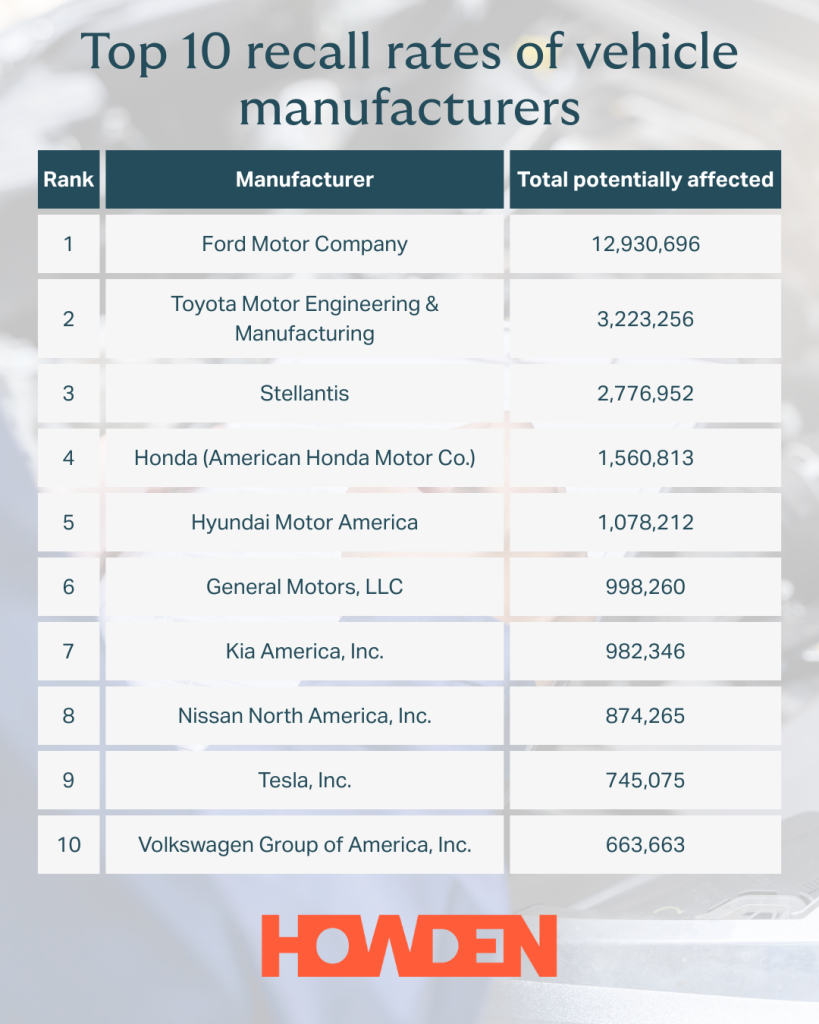
The numbers are in, and the National Highway Traffic Safety Administration (NHTSA) has revealed which carmakers topped the recall charts in 2025. While these figures make for eye-catching headlines, they don’t always tell the full story.
A recall doesn’t necessarily mean a car is unreliable – often, it’s about manufacturers acting fast to keep drivers safe. In fact, recalls can be a sign of a company prioritising safety over reputation. Still, if you’re curious whether your car made the list, here’s what the data shows.
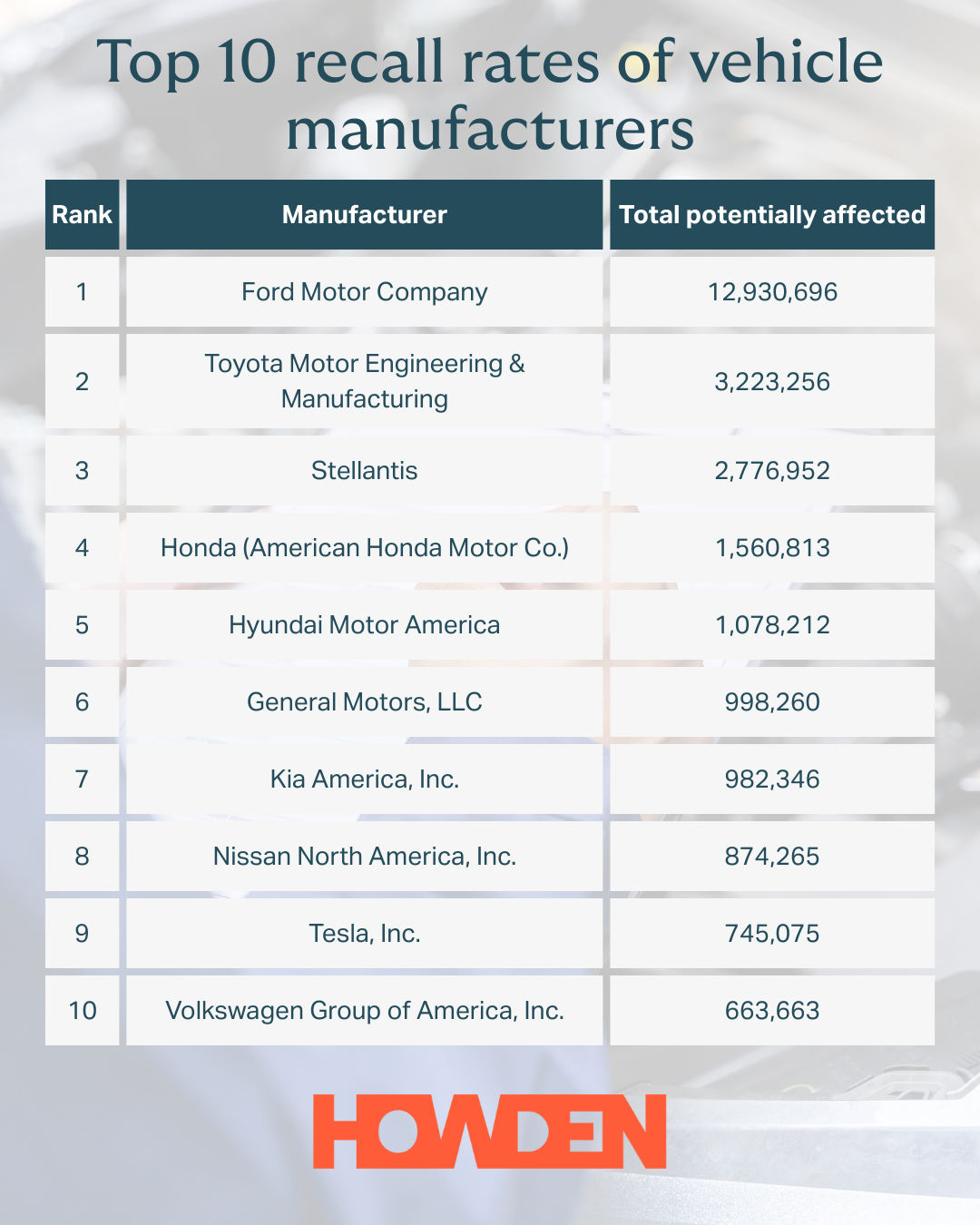
The top 10 car brands for recalls
1. Ford – 12,930,696 vehicles
Taking the top spot is Ford, which smashed through the 10-million mark. But don’t take that to mean their vehicles are poor quality. Last year, Ford issued a record 153 safety campaigns. CEO Jim Farley says this is part of a strategy to catch issues early, even if that means more recalls now to prevent bigger problems later.
2. Toyota – 3,223,256 vehicles
Toyota had far fewer campaigns (just 15), but each covered a huge number of cars. The biggest? A rear view camera defect affecting over a million vehicles.
3. Stellantis – 2,776,952 vehicles
Jeep Wrangler and Grand Cherokee 4xe plug-in hybrids were among those recalled for potential battery fire risks.
- Honda: 1,560,813 vehicles (including Civic alloy wheel issues)
- Hyundai: 1,078,212 vehicles (seat belt buckle concerns)
- General Motors: 998,260 vehicles (engine component defects)
- Kia: 982,346 vehicles (fuel tank fire risk)
- Nissan: 874,265 vehicles (engine failure risk)
- Tesla: 745,075 vehicles (biggest fix delivered via OTA update)
- Volkswagen: 663,663 vehicles (rearview camera and engine cover issues)
These figures highlight how a big recall count doesn’t automatically mean a car brand is unreliable. It’s a bigger picture reflecting how many issues there are, but also how they are identified, reported and addressed.
Are cars becoming less reliable?
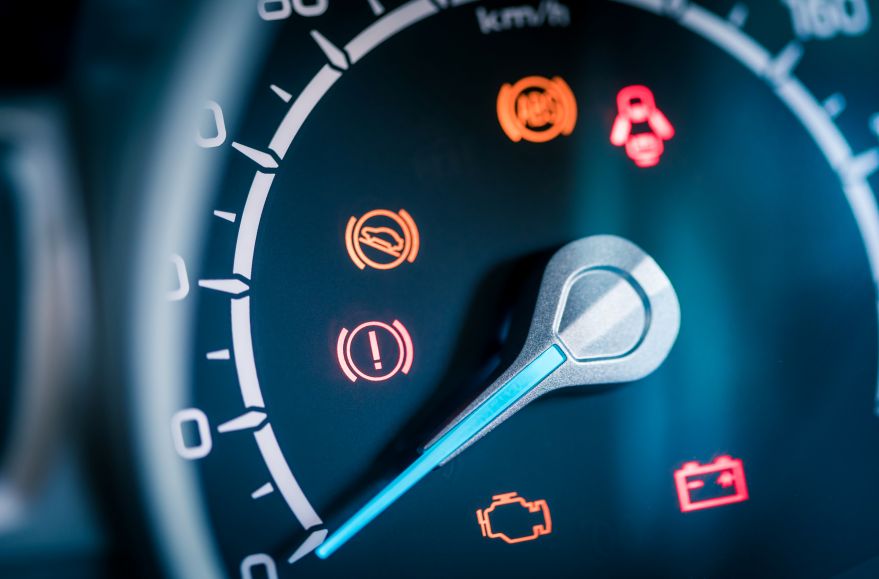
“They don’t build ’em like they used to.” You’ve probably heard it before – and there’s some truth behind the nostalgia. Modern cars are packed with tech: advanced infotainment systems, driver-assist features, and complex electronics. That’s great for convenience, but it also means more things can go wrong.
Here’s the surprising part: newer cars (0–4 years old) spend 20% more time off the road for repairs than older ones (5–9 years). But it’s not because they’re more unreliable, necessarily.
The same study found that older cars were, on average, only slightly more likely to have at least one fault in that same time: 31% of older cars had a fault compared with 25% of newer vehicles. So what’s causing the repair hold up?
- Parts shortages: Older models have established supply chains, and manufacturers have optimised their processes to build a stock of common parts. But for newer cars, that’s a bigger work in progress.
- Skills gap: Today’s vehicles are highly technical, and there’s a shortage of trained technicians to fix them quickly.
It’s not that new cars break down more often – both age groups have a similar 7% breakdown rate. But when something does go wrong, fixing a modern car can take longer.
What does this mean for you as a driver?
Cars are more advanced than ever, but complexity brings challenges. Longer repair times, software glitches, and parts delays are becoming part of the ownership experience. And with recalls on the rise, it’s clear that even big brands are struggling to keep pace with innovation.
While tech can let you down, it’s important that your insurance – or roadside recovery – is always there to support you when you need it. From breakdown cover to courtesy car options, Howden helps keep you moving – even when your car doesn’t.
Sources: NHTSA, Autoblog, Which?, CarBuzz
You could also read:
- The true cost of accidents abroad
- Don’t let winter weather stop your home renovation plans!
- Fraudsters turn to AI to fake insurance claims
- Burglary hotspots in the UK
- The new EU rules: what you can (and can’t) bring home!
This is a marketing blog by Howden.