If you want to learn more about the impact upgrades can have on your motor premium, read our guide here.
Blog
-

Poll: Are you considering moving this year?
If you want some top tips on buying a house or moving, read our guide here.
-

Travel disruptions amid Middle East conflict
Flights around the world have faced disruption after the closure of airspace due to widening conflict and in the Middle East.
The UK Foreign, Commonwealth & Development Office (FCDO) has issued travel advice to Britons who are in the region, specifically those in Bahrain, Kuwait, Qatar and the UAE.
Updated travel advice, complete with route maps, has now been published on how to depart Bahrain, Israel, Kuwait, Palestine, Qatar, Saudi Arabia and the UAE ‘if you judge it safe to do so’. The guidance includes details on flight options and road routes.
Furthermore, following a suspected drone strike on a UK base in Cyprus, new guidance for UK travellers has been issued and includes warnings of travel disruptions and advises “sensible precautions”.
This means there could be sudden airspace closures, flight cancellations or delays, and other unexpected disruptions. Travellers are strongly encouraged to sign up to FCDO travel advice email alerts, check with their airline before flying and keep an eye on both local and international news.
The FCDO has recommended against all travel to Israel, Palestine, and Iran, and also updated advice for the following countries, in addition to the aforementioned:
- Turkey
- Yemen
- Syria
- Saudi Arabia
- Oman
- Libya
- Lebanon
- Jordan
- Iraq
- Egypt
- Afghanistan
- Armenia
- Azerbajan
- Pakistan
- Turkmenistan
What are your rights if your flight is cancelled?
UK law protects passengers departing from the UK (on any airline), arriving in the UK (on a UK or EU airline), or flying into the EU on a UK airline. If your flight is cancelled under these circumstances, you can usually choose between an alternative flight or a refund. Beyond the EU or UK, you should check your rights based on your origin country’s laws.
Should I cancel my holiday now?
It depends on the destination, and what the FCDO says. For example, the FCDO is advising against all but essential travel to UAE and Qatar due to ongoing conflicts. But for other countries such as Turkey and Egypt, the restrictions are more border-specific.
If you’ve booked a package holiday to a popular hotspot and are thinking about cancelling, your first step should be to speak to your tour operator. Some may offer flexible options like rebooking for a later date, especially given the current uncertainty. It’s always best to check if your tour operator is ABTA registered as they must offer a refund or a suitable alternative when the FCDO advises against travel to a specific destination. Similarly, if you booked your trip through a travel agent then speak with them in the first instance.
For ‘DIY’ trips, where you have arranged your own flights, hotel and care hire separately, then your airline has a duty under air passenger rights rules, as explained above. However, your hotel and car hire booking are most likely something you would need to discuss with your travel insurance provider, if you wish to seek compensation because of FCDO advice not to travel there.
It’s important to note that unless the Foreign Office has issued official advice against travelling to that country, you’re unlikely to be entitled to a refund – and your travel insurance may not cover cancellation in these circumstances.
What does travel insurance cover?
Typical travel insurance includes cover for:
- Medical emergencies
- Trip cancellation due to illness, injury, or bereavement
- Lost or stolen belongings
- Delays after a certain threshold
Political unrest or military conflict is often excluded as a reason to cancel a trip, but the impact such as flight delays or the need for alternative accommodation might still be covered, depending on your policy. For example, if you’re delayed for more than a specified time (commonly 6–24 hours), some insurers may reimburse you for additional transport or accommodation.
Always keep documentation and receipts and be aware that insurers often won’t cover costs that can be reclaimed through your airline or travel provider. Crucially, if the FCDO advises against all but essential travel to a location and you go anyway, your insurance may be void. And always check the FCDO website before booking or travelling.
If you’re unsure what your policy covers or how the current situation could affect your trip, get in touch with our travel insurance experts at Howden. We’re here to help you travel with peace of mind.
Sources: BBC News, The Independent, The Sun, The Telegraph, Gov.UK.
You could also read:
- Why your home might be underinsured
- Can you be insured for ‘travel anxiety’?
- Avoid these holiday booking scams!
- Burglaries surge 48% in summer – is your home protected?
- Could you be fined for overpacking?
This is a marketing blog by Howden Insurance.
Information correct at time of writing.
-

The unexpected quirks of buying a house
Buying a house is rarely a straightforward process. There can be so many moving parts – before you even start moving your belongings: long onward chains, concerning survey results, frustrating contracts. In the end, when you’ve got the property you wanted, and you’re toasting to your new home, it’s all worth it. But that’s usually not without some bumps in the road.
There’s a saying that goes ‘you don’t know what you don’t know’. And it can certainly ring true when you’re buying property! Each home has a unique history, insurance needs, building regulations and more, and the only way to find out is by ‘doing’. Even if you’ve bought many properties over the course of your lifetime, you could still find yourself confronted with new circumstances. Let’s take a look at some of the unexpected quirks of house buying to have on your radar.
Hidden house buying costs
Most of the financial conversations around buying a home surround your deposit and your mortgage. But there are several other payments that you should factor into your budget. These include your:
Mortgage arrangement fee – what you pay your lender for arranging your mortgage loan. This can vary but expect to pay around £1,000. In some cases, this is non-refundable, even if the purchase falls through.
Valuation fee – what lenders charge for their valuation to check the property exists, and that it offers sufficient security for the loan. The cost can vary, but factor in around £400.
Legal fees – if you pay for your own conveyancing (it can sometimes be included if you purchase a new build home), budget to pay somewhere around £2,000 for a £350,000 property. The price will vary depending on the property and which solicitor you use, so it’s important to obtain quotes.
Stamp duty – you normally pay stamp duty when buying a property for more than £125,000. However, if you’re a first-time buyer, you pay zero stamp duty on the first £300,000 of any home costing up to £500,000. If you’re in Wales, there’s the Land Transaction Tax too.
Surveys – a crucial part of any purchase, to help you understand the property’s condition. Typically, these cost £400-1,500, but budget for two or three surveys, as your first one could reveal information that makes you rescind an offer.
Insurance considerations
The majority of home insurance policies are purchased by those who own the property. However, there are a few exceptions – one of which is when you’re in the midst of buying the home.
As soon as you exchange contracts, you become legally responsible for the property – even though you won’t be handed the keys until the sale is complete. It’s usually a condition of your mortgage lender to have buildings insurance, and even if you aren’t required to, the seller is under no legal obligation to keep the property insured once contracts are exchanged. The only exception is if the property is leasehold. Then you need to check with the freeholder what buildings cover they have, and whether it’s included in the service charge.
Taking on the building insurance before you’re through the door can feel counter-intuitive. But there is an upside for you, the buyer. Buildings insurance quotes could flag up any issues, such as flood risks, that could give you leverage on the price – or dissuade you from a risky investment altogether.
Buildings insurance covers the bricks and mortar of a property, and crucially how much it would cost to rebuild it from scratch. But how do you go about insuring somewhere that you aren’t living in? Your surveyor, solicitor or conveyancer can provide answers to insurers’ questions. Alternatively, your estate agent can check with the seller. Don’t just guess; the wrong information could invalidate your policy if you had to claim.
Property types
The type of property you buy can, understandably, mean you need to watch out for different ‘trip hazards’. For example, if you’re looking at buying an ex-commercial property, it may not have been fully converted for purpose, even boxes are ticked on paper. Pay close attention to the survey, to see if it has proper dampproof coursing, insulation and more that makes it suitable to live in.
Additionally, is the property you’re buying a leasehold? If it is, you need to know that it has at least 83 years left of the lease. When flats have 80 years or less left, extending becomes very pricey, and homes more difficult to sell. Estate agents may promise easy extensions, but they can’t guarantee it. You must have owned the flat before two years before you can extend. It takes between 3-12 months to extend, hence the vital 83-year figure.
And, if you’re considering a new-build with a leasehold, be even more wary. In 2016, a scandal broke about new-build leasehold houses where the freehold had been sold to an agency or investment company. This led to spiralling ground rent fees and rendered some properties virtually worthless. The Government announced new measures to tackle this problem, but it will take some time for these to become law. In the meantime, tread very carefully!
Mortgage refusals beyond your control
It’s common knowledge that you need your ducks in a row when you apply for a mortgage loan. That means having a healthy credit score to help you get a more favourable rate. You need to demonstrate that you can afford the property and ongoing payments. Lenders can refuse your application on a property if they deem it too risky.
But you can be refused for reasons beyond your control too. As one prospective buyer told BBC News, the bank declined her mortgage application on a flat, because too many other flats in the building were renting. Some mortgage lenders can be jumpy if there are lots of private rentals or Airbnbs in the building, as it means the property would probably be harder to resell if you aren’t able to keep up with payments. Other ‘risks’ for mortgage lenders can be the type of concrete a building is made from.
It makes sense to speak to a whole-of-market mortgage broker as they know each lender’s criteria inside out, including what types of properties they are happy to lend on and how much they are willing to lend. Their expertise can help mitigate the initial concerns and confusion often associated with looking for a new mortgage.
Paying up and pulling out
Until you have exchanged contracts, you and the seller aren’t legally bound to complete the purchase. You can pull out up until this point, and though you may have forked out for a survey and other legal costs, this is nothing compared to the price of changing your mind after exchanging.
Conversely, if the seller pulls out before you exchange contracts, you have no legal right to recover any costs from them. You can ask your solicitor about indemnity insurance for wasted costs, which could protect you in this case.
Until exchanging, you could be at risk of gazumping – a tricky practise by which another buyer offers more money than you, and your seller reneges on your deal. You can ask for the property to be taken off the market as a condition of your offer, but it’s not fool proof.
Exchanging explained
As we’ve iterated before, exchanging contracts is a very significant milestone in the house buying process. It’s also when you put down a portion of your deposit, and pulling out after this stage can be very costly indeed.
When you’re almost ready to exchange contracts, you need to get your deposit to your solicitor. Your exchange deposit is usually 10% of your total mortgage deposit and locks you into the deal. Your mortgage deposit affects your mortgage deal loan-to-value, or LTV, and equates to the portion of equity you’ll outright own.
Your exchange deposit is locking you into the deal – pulling out at this stage means you’ll incur major penalties.
Depending on where your savings are, you might find it easiest to marshal your deposit funds into one bank account (or two if you have more than £85,000 to deposit, so it’s protected by the FSCS) ready for when you need to send it to your solicitor. If you’re transferring more than £250,000, you’ll likely have to call your bank to arrange a Clearing House Automated Payment System (CHAPS). It’s worth notifying your bank anyway, as well as your solicitor when you plan to transfer the money. Triple check you have the right bank details for the transfer and email your solicitor once you have sent the money so they can monitor it and confirm they have received your funds.
Exchanging also means you agree a competition date, so it’s a sure step towards getting the keys in your hand and walking through the door as the new owner.
We’re here when you need us
Insurance is a key part of your home ownership journey, from the purchasing through to protecting your possessions once you’ve got the keys! And as a broker, we have great relationships with a wide range of insurers, to help find a tailored policy to suit you.
We also work closely with SPF, a whole-of-market mortgage broker who can help you find the most suitable and cost-effective mortgage for your circumstances. An SPF mortgage broker can manage the mortgage transaction on your behalf from start to finish, taking the stress out of the whole process.
To find your local Howden branch, search here and visit or ring our team. For more information on SPF and how they can help, visit www.spf.co.uk.
Sources: BBC News, MSE, Property Price Advice, HOA, Citizens Advice, The Law Society
You could also read:
-
The best – and happiest – places to live in the UK
Are you already settled somewhere wonderful, enjoying a lifestyle that feels just right? Or do you still find yourself scrolling through property sites, picturing a glasshouse by the sea, a cosy city apartment, or perhaps a peaceful cottage perched on a hill?
As we enter the prime property purchasing season, we look at what’s being rated as the best locations to live and how much this impacts levels of happiness and wellbeing.
With so much national and global research showing a dip in life satisfaction – and some areas feeling the impact more than others – many homebuyers are starting to look beyond the usual checklists. Increasingly, people are choosing places that offer a real sense of community, wellbeing and everyday enjoyment. In other words, location is becoming less about convenience alone and more about how a place actually feels.
So perhaps it’s time to look past the lure of shiny granite worktops or the latest set of bifold doors. Instead, let’s explore why a focus on wellbeing might just be the new secret ingredient in finding the perfect postcode.
Where are the happiest places to live in the UK and why?
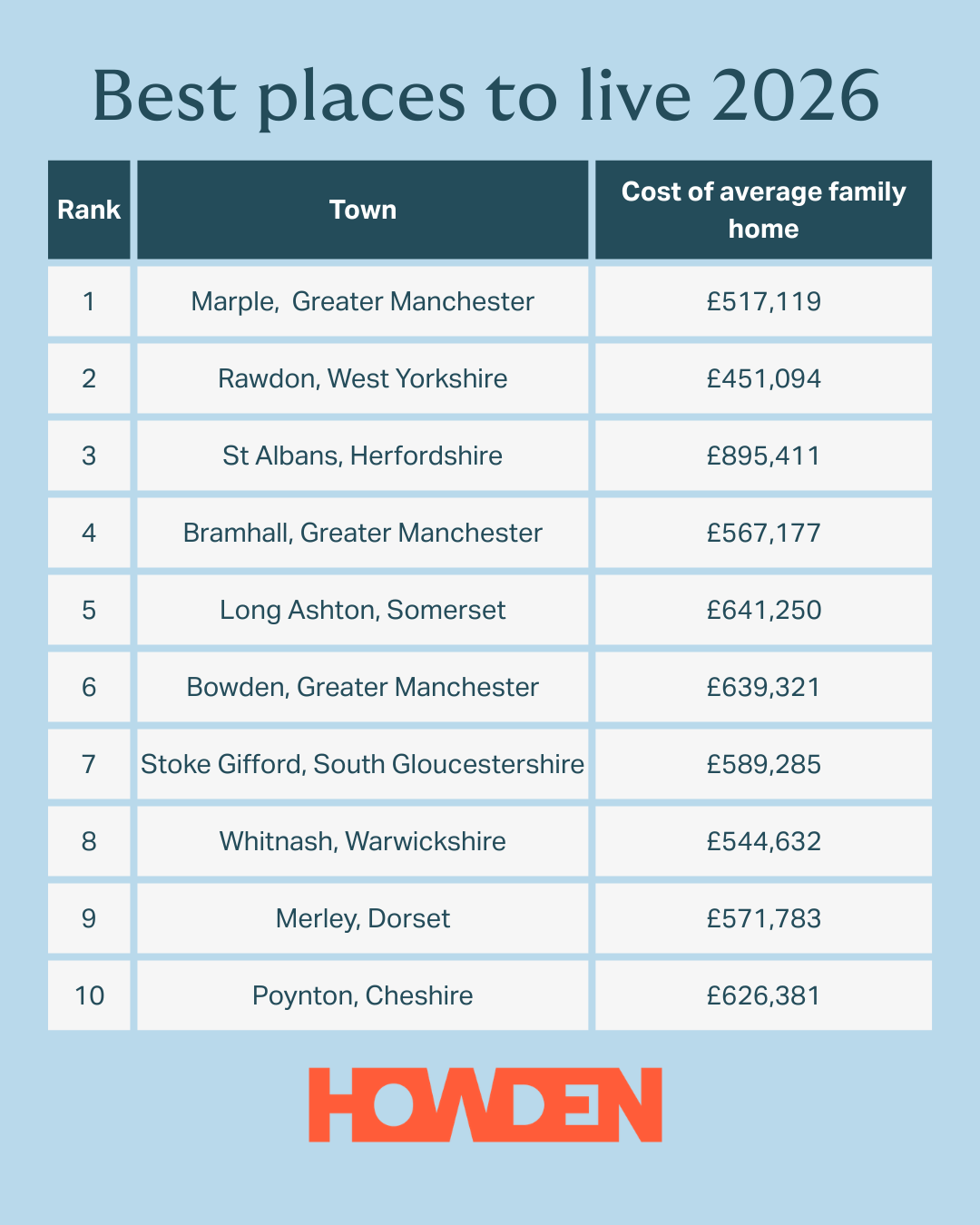
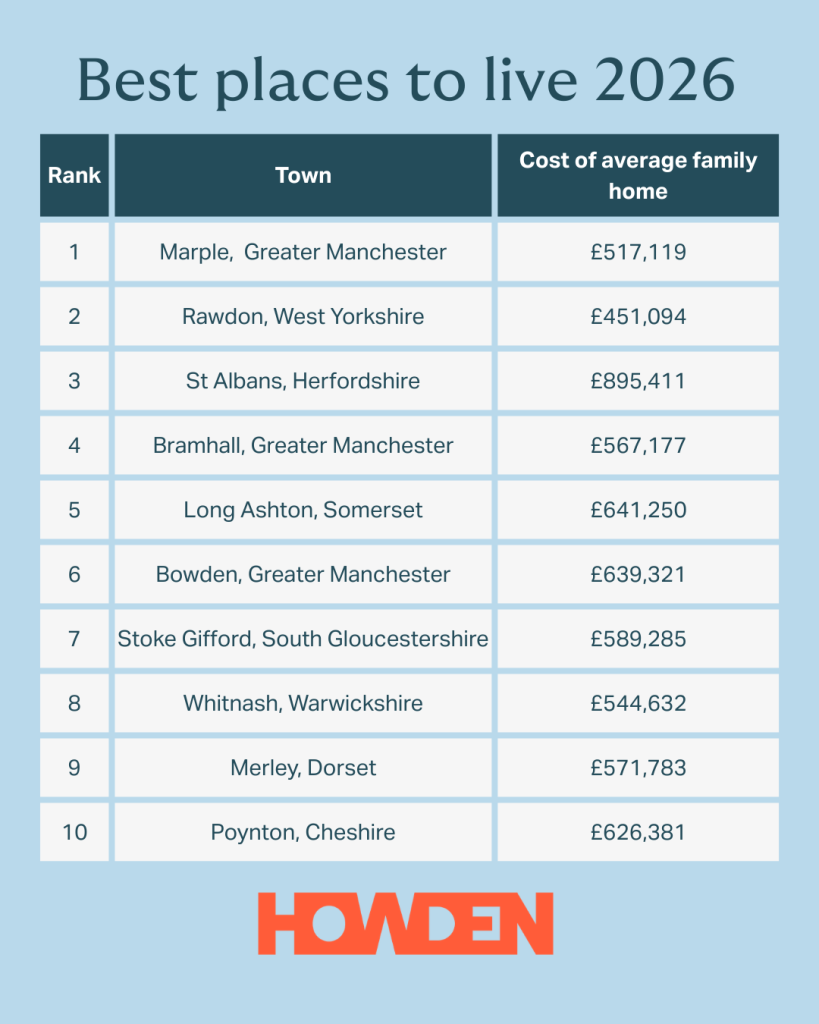
The latest market report has the picturesque small town of Marple in Cheshire in the top spot of best places to live. With the Peak District National Park providing endless green spaces and natural beauty, alongside highly-ranked schools and a much-talked about “community spirit”, it’s no wonder that people are clamouring to purchase a Georgian or Victorian property in the area.
The runner-up baton has been claimed by Rawdon, just outside of Leeds. This sweet spot combines a village-style sense of Yorkshire calm with swift access to the city and all the amenities that come with that. St Albans in Hertfordshire snags a very respectable third place. The ancient Roman city has an abundance of highly-ranked schools, large parks, and culture that has along appealed to Londoners seeking a more enriched lifestyle that promotes personal wellbeing.
The UK Wellbeing Report 2025 notes growing gaps not only between different regions but even within the same cities, stressing that quality of life is heavily influenced by access to reliable transport, amenities, and supportive neighbourhood structures. It’s why markets like the South West, parts of Scotland, and Northern coastal towns are seeing renewed interest: buyers aren’t just looking for homes – they’re looking for better lives.
How life satisfaction ties in with where you live
This may or not be a surprise, but the UK has dropped to 23rd out 147 in the 2025 World Happiness Report, its lowest ranking since 2017. This poor show immediately raises concerns and questions as to the “why?”
These stats say plenty about how we actually feel, which can vary hugely between regions and physical environments – for example, town versus rural living. Urban centres often report lower wellbeing scores due to affordability challenges, limited space, and weaker community ties. Coastal and rural areas, by contrast, tend to benefit from stronger social networks, more access to nature, and slower paces of life – all significant contributors to wellbeing and increasingly a draw for relocators.

Meanwhile, UK surveys indicate that the average happiness rating as of July 2025 was seven out of 10, with older adults reporting the highest scores (7.7 among people aged 70+). This trend reinforces why areas with older or more settled communities – often smaller towns, villages, and suburban pockets – are rising in demand: they naturally offer the social stability and sense of belonging that homebuyers are seeking.
There’s no place like a happy (and protected) home
Where you live shapes so much of your day‑to‑day experience – your sense of community, access to green space, and how supported and settled you feel – making it a powerful indicator of overall happiness. As more people choose places that offer connection, calm and a stronger quality of life, it’s clear that the right environment can meaningfully lift wellbeing.
And while finding that place is a big part of feeling happier, protecting it matters too. That’s where Howden comes in –with the reassurance that the home contributing to your wellbeing is covered, so you can focus on enjoying the life it helps you live.
Sources: University of Oxford, World Happiness Index, Garrington
You could also read:
- Who’s responsible for clearing up after a storm?
- Which cars have the highest recall rates?
- The van models most likely to fail their MOT
- Don’t let winter weather stop your home renovation plans!
- The true cost of accidents abroad
This is a marketing blog by Howden.
-

Renovating or relocating? How to add value to your home
You’re standing in your kitchen, eyeing the outdated cabinets and dreaming of more space – but with moving costs soaring and stamp duty changes looming, is it smarter to renovate or simply move on?
Whether it’s a swanky open-plan new kitchen, an away-from-it-all loft conversion, or a dream garden makeover, it’s tempting to believe every upgrade boosts your property’s value – but the reality is less Kirsty and Phil, and more difficult decision-making.
Some improvements genuinely strengthen your home’s appeal, increase its market price, and make life more enjoyable while you’re living there. Others cost more than they return, no matter how beautiful the end result is.
With moving costs rising and rising stamp duties becoming more of an issue, buyers are becoming more selective. This means knowing which renovations offer real value. Whether you’re planning to settle in for the long term or maximise your home’s selling potential, making informed choices now can pay off later.
What today’s property market means for your next move
Before diving into which renovations add the most value, it’s worth stepping back to look at the bigger picture of today’s property market.
With buyers split between wanting modern, move‑in‑ready homes and those seeking character-filled fixer-uppers, knowing what your future buyer wants can help you choose upgrades that actually pay off.
So, before you commit to months of dust or start browsing Rightmove with actual intent, it helps to know which improvements genuinely increase your home’s appeal – and which simply drain your budget.
1. A practical kitchen for today

The kitchen is one of the first rooms buyers look at, and a stylish, functional update can make your whole home feel newer.
Why it adds value:
A fresh kitchen is a big selling point – especially when it’s energy‑efficient, well‑lit, and easy to maintain.
Simple wins: Think induction hobs, soft‑close storage (who doesn’t love the silent swoosh of a drawer gently closing?), boiling water taps, and lighting that makes Sunday cooking feel like a Masterchef moment.
2. Bathroom refresh or total renovation
From a powerful wake-me-up shower to a big bath to relax in at night, your bathroom plays a major role in a happy house – and updates give you an immediate pay-off.
Why it adds value:
If you’re planning to sell, buyers love a clean, modern bathroom. Even small improvements, like new tiles or fixtures, give the smallest space an instant boost.
Top upgrade: A walk‑in shower adds a premium look without requiring major structural changes.
3. Converting the loft

If you’re looking for one of the biggest returns on investment… just look up.
Why it adds value:
While it one of the bigger reno jobs, a loft conversion adds usable space and major value – whether that’s a bedroom or home office – without increasing the horizontal footprint of your home, while offering a strong alternative to moving.
Bathroom bonus: An attic ensuite can boost value even further.
Find out why you need specific renovation insurance for a loft conversion here.
4. Improving energy efficiency
From insulation to double glazing, energy‑saving upgrades remain high on the reno priority list.
Why it adds value:
Homes that are cheaper to run and more eco‑friendly attract more interest – and usually a higher price if you’re selling.
Smart upgrades: Insulation, energy‑efficient boilers, and modern windows don’t just tick green boxes – they all make for a more comfortable environment.
5. Enhancing kerb appeal
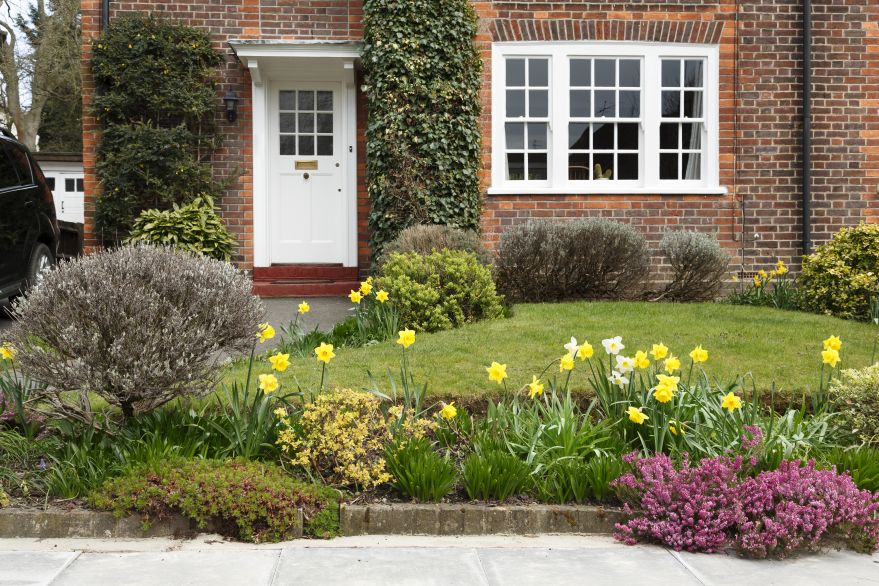
The outside aesthetic of your home sets the tone (and mood) before anyone even steps through the door.
Why it adds value:
A tidy exterior, well‑kept garden, and good lighting helps your property stand out from the rest of the road. And having a super-secure reinforced door plus a visible and working alarm system is good for potential buyers, and excellent for your home insurance if you’re staying put.
Think about: Exterior lighting, greenery, and landscaping that’s easy to maintain.
6. Creating open‑plan living
The trend for bright, flexible spaces that bring family and friends together isn’t going anywhere… so why not lean in to it and break through that fourth wall?
Why it adds value:
Removing walls (where safe to do so) makes rooms feel bigger and more contemporary – so ideal for entertaining. Ensuring you have that Building Regs certificate for sale is also essential and demonstrates the quality, commitment and legality of the renovation.
Top tip: Always check structural requirements before making changes, and make sure you have the correct renovation insurance arranged well ahead of lifting a sledgehammer. We also recommend consulting with Building Regs to stay on the right side of the law and to obtain a certificate for sale (this also avoids having to drop your price if you don’t have one).
7. Adding a dedicated home office
With hybrid and remote working now part of everyday life for millions of people, a workspace at home is not just an asset, it’s often a necessity.
Why it adds value:
Buyers appreciate having a private, comfortable space to work – whether it’s a converted spare room or a well‑insulated garden office.
Good to know: A clear, physical boundary between work and home helps with mental and emotional wellbeing too.
Ready to make smarter home‑improvement decisions?
Whether you’re renovating to fall back in love with your home or prepping it for a future move, protect every step with the right renovation insurance and SPF, part of Howden. Search Howden to find your nearest branch and speak to your local team.
Sources: Urban Big Data Centre, Heart Home Magazine, Renovation Plan
You could also read:
- Who’s responsible for clearing up after a storm?
- Which cars have the highest recall rates?
- The van models most likely to fail their MOT
- Don’t let winter weather stop your home renovation plans!
- The true cost of accidents abroad
This is a marketing blog by Howden.
-

10 new driving laws for 2026
2026 is one of those years where the road rules are getting a rewrite – and if you drive for a living, every change matters. From tougher safety measures to new taxes and London charges, these updates could affect your routes, your running costs, and even your workforce.
Here’s what’s changing, so you can plan ahead and keep your van costs manageable.
1. Seatbelt penalties are getting tougher
Most van drivers wear a belt as second nature, but the penalties for not doing it are about to tighten.
Fines for not wearing a seatbelt will stay, and soon, three penalty points on your licence could be added. Drivers remain responsible for making sure younger passengers are belted correctly.
If you manage a team, it’s a good moment to refresh training and check your vehicles’ seatbelt condition.

2. Drink-drive limit to be cut
England and Wales are expected to fall in line with Scotland’s stricter limit. This means the new limit could go from 35 micrograms to 22 micrograms per 100ml of breath.
That means the safest rule becomes the simplest one: if you’re driving, don’t drink – not even “just the one”.
3. Quicker drug‑driving tests
New roadside saliva tests for suspected drug-driving are expected, meaning faster decisions, fewer loopholes, and far less tolerance for anyone who gets behind the wheel under the influence.
A big win for road safety and for employers trying to keep teams protected.
4. Mandatory eyesight tests for drivers 70+
The current system relies on self‑declarations, but that looks set to change. Under new rules, drivers aged 70 and over will need an eye test every three years. If you’re approaching that age, or have friends, family members or colleagues that are, it’s a rule to keep an eye on!
5. Congestion Charge increases – and EV perks shrink
For vans and commercial vehicles entering central London, watch out for ULEZ increases:
- Daily charge increased to £18 (from 2 Jan 2026)
- Full EV exemption is gone
- Electric vans get 50% off – but only when registered to Auto Pay
- All EVs get 25% off – again, vehicles registered to Auto Pay only
Good news if you’re already electric. Less good if your routes don’t give you a choice.
6. Fuel duty could rise from September 2026
The long-standing freeze is expected to end. The current basic rate on diesel and petrol has been 52.95 pence per litre (ppl), which includes the 5ppl cut. From September 2026 onwards, that 5p cut will be reversed and fuel duty will increase annually in lines with inflation.
For high‑mileage van drivers and fleets, this could make a noticeable dent in running costs.

7. EV “luxury tax” threshold increases
The “Expensive Car Supplement” jumps from £40,000 to £50,000 for zero‑emission vehicles in April 2026.
That means more electric vans fall outside the charge and that switching to electric becomes slightly easier to justify on the balance sheet. Around half (51%) of new electric cars will fall out of the extra charge entirely, compared to the current 37%.
8. Changes to the Motability Scheme
An important one for disability‑adapted vehicles and community operators. High-end marques (Audi, BMW, Mercedes), coupes and convertibles are no longer eligible on the Motability Scheme.
- From July 2026, vehicles with Advance Payments will incur 20% VAT
- Most new leases will include 12% insurance premium tax
- Wheelchair Accessible Vehicles remain exempt
9. Benefit in Kind (BiK) rates rising
If you provide company vans or a company car as part of someone’s job package, take note. BiK rates increase by 1% from April 2026.
- EVs rise from 3% → 4%
- Higher-emissions vehicles rise up to 37%
It’s worth factoring into your fleet planning and your staff conversations.
10. Learner drivers get fairer test bookings
And finally, a relief for anyone trying to recruit new drivers. But driving instructors may have different views.
From spring this year, third‑party test slot reselling will be banned. Instructors can’t bulk book and there will be limits on how often a test can be moved.
The goal is shorter waits and a clearer path to getting new drivers licensed. Let’s see if it works.
Stay ahead of the 2026 changes
When your van is your livelihood, or your fleet keeps your business moving, staying on top of legal changes matters.
At Howden, we’re here to help you protect your vehicles, your team, and your peace of mind. If you want insurance that works harder for your business, speak to a specialist who genuinely cares at one of our local branches.
Search Howden Insurance or call our team here.
Sources: Nationwide Vehicle, Autotrader, Yorkshire Post, Simply Business.
You could also read:
- Who’s responsible for clearing up after a storm?
- Which cars have the highest recall rates?
- The van models most likely to fail their MOT
- Don’t let winter weather stop your home renovation plans!
- The true cost of accidents abroad
This is a marketing blog by Howden.
-
10 new driving laws for 2026
2026 is a year packed with rule changes that could hit your licence, your wallet, or your daily commute if you don’t stay ahead of them. From tougher road safety measures to new tax rules and EV updates, these reforms are set to reshape UK roads.
Let’s break down the key changes to help you stay confident, compliant, and fully prepared.
1. Stricter penalties for not wearing a seatbelt
Seatbelts have been the law for decades, but 2026 is the year the consequences get sharper. The government is expected to introduce tougher penalties, adding three penalty points to the usual fine if you or a passenger isn’t strapped in.
Right now, you’ll typically only get a fine. Soon, it could hit your licence too.

Drivers are responsible for making sure children are correctly belted. It’s a small habit that makes a big difference, so click in every time.
2. A lower drink‑drive limit
England and Wales are considering bringing their drink‑drive limits in line with Scotland’s, cutting the legal breath-alcohol limit from 35 micrograms to 22 micrograms per 100ml of breath.
For some drivers, this could mean that even one drink puts them over the limit. The clearest, safest rule still applies: if you’re driving, don’t drink.

3. Faster drug‑driving testing
Police are also expected to adopt new roadside saliva tests that can be used as evidence more often without needing a follow‑up blood sample.
This means faster investigations and fewer loopholes – and a clearer message: drive sober, or risk losing your licence.
4. Mandatory eyesight tests for drivers over 70
As part of an ongoing safety consultation, drivers aged 70+ may soon have to take an eyesight test every three years instead of simply declaring that their vision is good enough.
It’s a practical change designed to protect everyone on the road, and a reminder that regular eye checks are a smart idea long before you hit 70.
5. London Congestion Charge rises and EV discounts change
If you drive into central London, keep this one on your radar.
As of 2 January 2026, the Congestion Charge has risen from £15 to £18.
At the same time, the previous 100% discount for electric vehicles has ended.

Instead:
- EV drivers get 25% off if they use Auto Pay
- Electric vans, HGVs and quadricycles get 50% off
- Discounts only apply if you’ve registered for Auto Pay
If London is part of your commute, now’s the moment to double‑check your Auto Pay status – and maybe your budget!
6. Fuel duty could rise from September 2026
Fuel duty has been frozen for years, but that freeze is set to thaw. Plans suggest the government will begin reversing the 5p per litre cut later in the year, and fuel duty will start increasing in line with inflation again.
Put simply: petrol and diesel may get more expensive from autumn 2026. For high‑mileage drivers, that’s worth planning for now.
7. Electric car “luxury tax” threshold increases
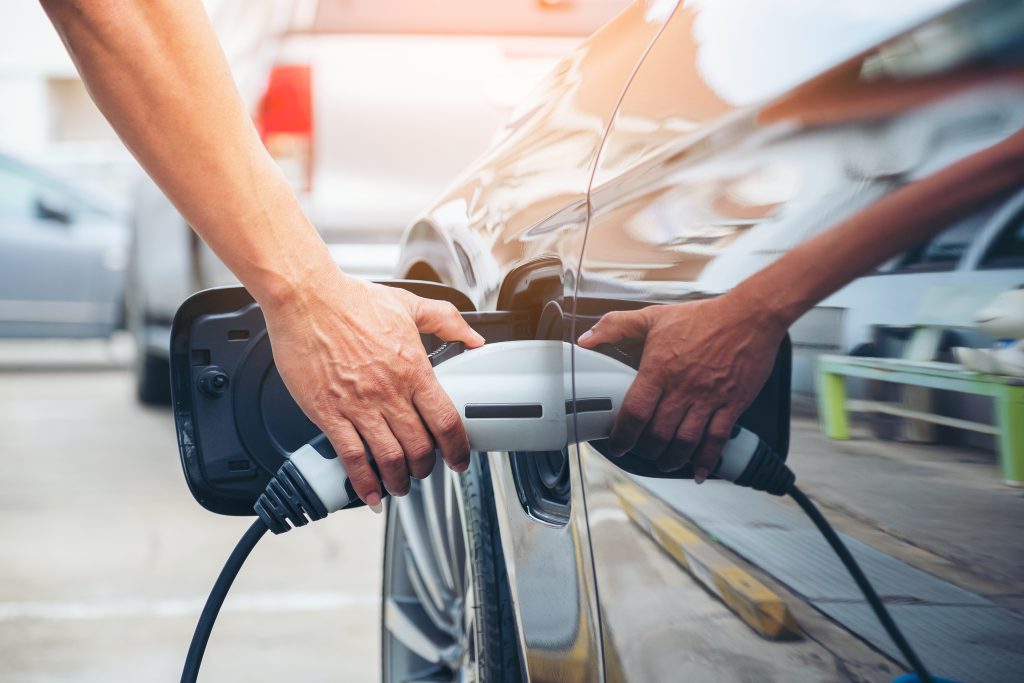
Good news for EV buyers: the Expensive Car Supplement – the extra tax applied to cars over £40,000 – will shift to £50,000 for zero‑emission vehicles from April 2026.
That means around half (51%) of new electric cars will fall out of the extra charge entirely, compared to the current 37%. A small win for cleaner driving.
8. Changes to the Motability scheme
From late 2025, high‑end cars, including many BMW, Audi and Mercedes models, as well as coupes and convertibles, are no longer eligible for Motability.
From July 2026, vehicles that require an Advance Payment will be subject to 20% VAT, and most new leases will include the standard 12% insurance premium tax.
Wheelchair Accessible Vehicles remain exempt from these increases, keeping essential mobility support protected.
9. Benefit‑in‑Kind (BiK) rates increasing again
Company car drivers, this one’s for you.
Benefit‑in‑Kind rates will rise again from April 2026 by one percentage point. Electric vehicles will move from 3% to 4%, with higher‑emissions cars scaling all the way up to 37%.
If you’re choosing your next company car soon, it’s worth checking how your emissions band stacks up before locking anything in.
10. Learner drivers get more control over test bookings
After months of frustration with bots, resellers and long waits, learner drivers will soon get a fairer system.
From spring 2026, third‑party reselling of test slots will be stopped, driving instructors won’t be able to bulk‑book tests and limits will be placed on how many times a test can be moved.
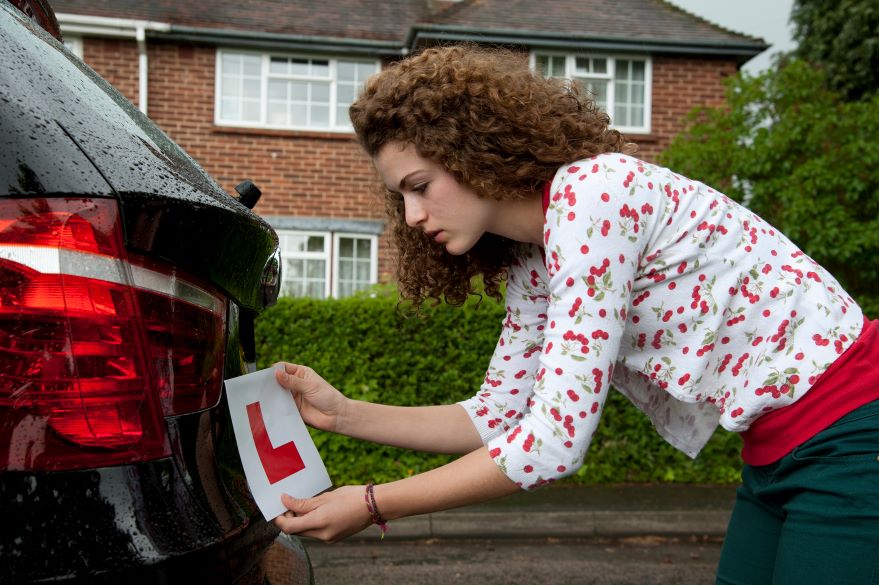
The aim is for shorter waits, less stress, and a smoother path to that pink licence. Let’s see if it makes a dent in the long backlog of learner drivers waiting for a test!
Stay ready for the road ahead
With so many changes landing at once, staying informed is the best way to avoid surprise penalties or added costs. And that’s where we come in.
At Howden, we’re here to help you protect what matters most, from your car to your peace of mind. If you want insurance that works harder for you, speak to a specialist who genuinely cares.
Sources: Nationwide Vehicle, Autotrader, Yorkshire Post.
You could also read:
- Who’s responsible for clearing up after a storm?
- Which cars have the highest recall rates?
- The van models most likely to fail their MOT
- Don’t let winter weather stop your home renovation plans!
- The true cost of accidents abroad
This is a marketing blog by Howden.
-

Client management hacks that save time and stress
Every trade business runs better when clients understand the boundaries, the process, and how decisions get made. Yet real life often feels messier – messages come through at odd hours, assumptions pile up, and a small change can turn into a whole new job. A few clever client management hacks will keep things running calmly, protect your profit, and reduce that creeping stress that builds during busy periods.
Below are practical tips you can use straight away on any project, large or small.
Use one communication channel for everything
When messages land across WhatsApp, text, email, and the occasional Facebook DM, something always gets missed. One channel keeps the project tidy.
Try this approach:
- Choose your preferred method at the start.
- Tell the client that updates will always come through that channel.
- Stick to it, even when a stray message appears somewhere else.
When the full job history sits in one thread, you save time, reduce confusion, and keep yourself covered if anything gets questioned later.
Set response times that work for you
Clients often expect an instant reply when they message, even if it’s Saturday afternoon. You can prevent this by managing expectations early.
A short line such as:
“I respond to messages between 8 and 5 on weekdays, and I’ll always get back to you within 24 hours.”
This creates breathing room and helps clients understand that you’re running a professional service, not a 24 hour hotline.
Create a template for common explanations
Tradespeople answer the same questions repeatedly. Clients ask about materials, timelines, guarantees, payment stages, and what happens if they change their mind halfway through the job.
By drafting a few useful templates, you save yourself from typing the same paragraph every week.
Examples include:
- How you handle variations.
- What your deposit covers.
- When they can expect dust, noise, or necessary pause in the work.
- What you need from them before work begins.
Templates make your replies consistent and fast, and they reduce the chance of you forgetting something on a busy day.
Use photos and videos to avoid misunderstandings
Clients make better decisions when they can see the issue. A quick video walk‑through of a problem area removes confusion and saves you multiple explanations.
It works especially well for:
- Highlighting hidden issues.
- Showing why something will take longer.
- Demonstrating why a certain option is better.
People process visuals much faster than long explanations, and this can help keep the job moving forward.
Write micro‑summaries at each milestone
A short summary every few days keeps clients informed without drowning them in detail. These updates can be as simple as:
“Today we completed X. Tomorrow we’ll start Y. No changes to cost or timeline.”
A small routine like this builds trust and stops clients from chasing you. It also creates a record that supports insurance or dispute situations if anything crops up later.
Use “the pause” when a client makes a mid‑job request
When a client asks for something extra during a job, take a moment before answering. A short pause lets you think clearly, check your schedule, and price fairly.
You might say:
“Let me take a quick look at what that involves, then I’ll give you the price and time impact.”
This simple pause stops you from agreeing automatically, which protects your margin and makes the client think about whether they genuinely want the change.
Offer structured choices instead of open questions
Asking “What would you like to do?” often leads to wandering conversations and indecision. A structured choice keeps things simple.
For example:
“We can go with Option A which fits your budget and keeps the schedule. Or Option B which looks smarter but adds a day and an extra cost.”
Clear choices speed up decisions and reduce back‑and‑forth messages.
Create a small “decision checklist” for clients
Some clients feel overwhelmed when asked to make choices, especially during larger projects. A short checklist removes friction.
You might include:
- Final colour or finish.
- Location of switches or fittings.
- Preferred materials.
- Budget flexibility.
- Anything they definitely do not want.
A checklist keeps the job flowing smoothly. It also reduces the chance of last minute changes, which often turn into expensive delays.
Put polite boundaries around freebies
Most tradespeople like to help, but free favours stack up quickly and eat into your day. A short script helps you stay friendly while protecting your time.
Try:
“I can do that for you, and I’ll add it to the extras list so you can approve it before I crack on.”
Something like this will hopefully help keep goodwill high.
Keep a “ready to send” wrap‑up message
Once a job finishes, a closing message keeps things tidy and protects your reputation.
It might include:
- A thank you to the client.
- Advice on maintenance or aftercare.
- A reminder of your guarantee period.
- An invitation to leave a review.
Wrapping up cleanly leaves the client feeling looked after, and will hopefully lead to repeat work and referrals.
Client management shapes your profit, your reputation, and your daily stress levels. When you use a few smart habits you create smoother jobs, happier customers, and far fewer headaches. Most of these hacks take seconds to apply, yet they save you hours of frustration over the course of a busy month.
At Howden, we’re here to support you whatever business you’re in, while you focus on what you do best; getting the job done.
You could also read:
- Who’s responsible for clearing up after a storm?
- Which cars have the highest recall rates?
- The van models most likely to fail their MOT
- Don’t let winter weather stop your home renovation plans!
- The true cost of accidents abroad
This is a marketing blog by Howden.
-

What the Building Safety Act means for tradespeople and why your role as a duty holder really matters
The Building Safety Act has reshaped how construction and maintenance work is carried out across the UK, and tradespeople sit right at the centre of it. While the legislation can feel dense at first glance, the day‑to‑day impact is surprisingly practical. It defines new responsibilities, sets clearer expectations, and gives you a bigger role in creating safer buildings for the people who use them.
This article breaks the Act down into plain language, highlights the bits that matter most for trades, and explains why your responsibilities as a duty holder cannot be shrugged off.
What the Building Safety Act sets out to achieve
The Act tightens up how building safety risks are managed, particularly for higher‑risk buildings such as high‑rise residential blocks. One of its main aims is to make sure everyone involved in design, construction, repairs, and ongoing maintenance knows exactly what they’re responsible for. The days of ambiguous lines of responsibility are being pushed aside, replaced by clear roles and duties.
Tradespeople are now recognised as essential contributors to building safety rather than simply hands‑on workers. This shift puts you in a stronger, more accountable position.
Who the Act defines as duty holders
The legislation introduces a structured line‑up of duty holders. Each one is expected to manage safety risks, share accurate information, and work collaboratively to maintain a safe environment. These roles include:
- Clients
- Principal designers
- Principal contractors
- Contractors and designers
- Persons responsible for occupied buildings, such as the accountable person and principal accountable person
The new duty holder appointments must be made whenever a project involves more than one contractor and falls within the scope of the Building Regulations.
If you’re a tradesperson working under a principal contractor, acting as a sole contractor, or contributing specialist design input, you’re highly likely to be a duty holder in some form.
What duty holders are expected to do
Across the different duty holder roles, the expectations stay consistent. You are required to:
- Manage building safety risks by keeping an eye on hazards linked to your work and taking steps to reduce them.
- Cooperate with other duty holders, sharing information clearly and promptly so no stage of work is carried out in the dark.
- Ensure competence, both personally and across anyone you employ or supervise. This includes staying up to date with guidance, training, and safe working methods.
- Follow new regulatory requirements, particularly around documentation and compliance checks. The Act outlines expanded duties for clients, principal contractors, and principal designers, but the responsibility filters through to everyone carrying out the work.
- Provide accurate, accessible information for the building’s ongoing safety file, so future workers and building managers are not left guessing.
These expectations stay in place throughout the entire project, from planning to handover.
Why tradespeople carry such a strong responsibility
Even though clients, principal designers, and principal contractors hold headline accountability, the practical safety of a building rests heavily on the tradespeople who physically shape it. Your decisions, your workmanship, and the way you manage risk on site directly influence whether a building is safe to live or work in.
A few reasons why your role matters so much:
1. You are closest to the work
Nobody sees the real‑world challenges, shortcuts, or hidden flaws in a project better than the trades actually installing, cutting, repairing, fixing, or testing. When the Act talks about managing risks, it recognises that those who physically do the job are often best placed to identify what could go wrong.
2. Competence is now a legal expectation
Competency requirements apply to anyone carrying out design or building work. Being “good at the trade” is no longer enough on its own. You must also be capable of understanding the safety implications of your work and acting in ways that reduce risks.
3. Poor compliance can trigger serious consequences
The Act strengthens enforcement powers. That means penalties for non‑compliance are more likely and more serious. The law places responsibility on individuals as well as organisations, so it protects you far better if you can show you’ve met your duty holder responsibilities every step of the way.
4. Reputation and client trust are at stake
Tradespeople who understand the Act stand out. Clients, contractors, and housing associations increasingly want to work with firms and individuals who treat compliance as a core part of their service. Being a reliable duty holder builds trust and wins work.
As the regulator introduces reforms such as faster review routes for certain applications, the industry is shifting into a more transparent and structured way of working. [herrington…ichael.com]
This can feel like it brings extra admin at times, but it also protects your livelihood. By showing you’ve acted responsibly and professionally, you reduce the risk of blame landing unfairly on your doorstep.
A final thought
Anyone turning up on site with tools in hand now plays a visible role in safeguarding the people who will one day live, work, or sleep in that building. Your knowledge, your decisions, and your attention to detail directly influence whether a building stands up to the expectations set by the Building Safety Act.
Responsibility might feel like a heavy word, yet it also brings recognition. The Act acknowledges the expertise tradespeople bring and gives your work the central importance it deserves.
At Howden, we’re here to support you whatever business you’re in, while you focus on what you do best; getting the job done.
Sources: Herrington Carmichael, Clarion, Construction Briefing, GOV.UK, RLB, BESA
You could also read:
- Who’s responsible for clearing up after a storm?
- Which cars have the highest recall rates?
- The van models most likely to fail their MOT
- Don’t let winter weather stop your home renovation plans!
- The true cost of accidents abroad
This is a marketing blog by Howden.