

Are you already settled somewhere wonderful, enjoying a lifestyle that feels just right? Or do you still find yourself scrolling through property sites, picturing a glasshouse by the sea, a cosy city apartment, or perhaps a peaceful cottage perched on a hill?
As we enter the prime property purchasing season, we look at what’s being rated as the best locations to live and how much this impacts levels of happiness and wellbeing.
With so much national and global research showing a dip in life satisfaction – and some areas feeling the impact more than others – many homebuyers are starting to look beyond the usual checklists. Increasingly, people are choosing places that offer a real sense of community, wellbeing and everyday enjoyment. In other words, location is becoming less about convenience alone and more about how a place actually feels.
So perhaps it’s time to look past the lure of shiny granite worktops or the latest set of bifold doors. Instead, let’s explore why a focus on wellbeing might just be the new secret ingredient in finding the perfect postcode.
Where are the happiest places to live in the UK and why?
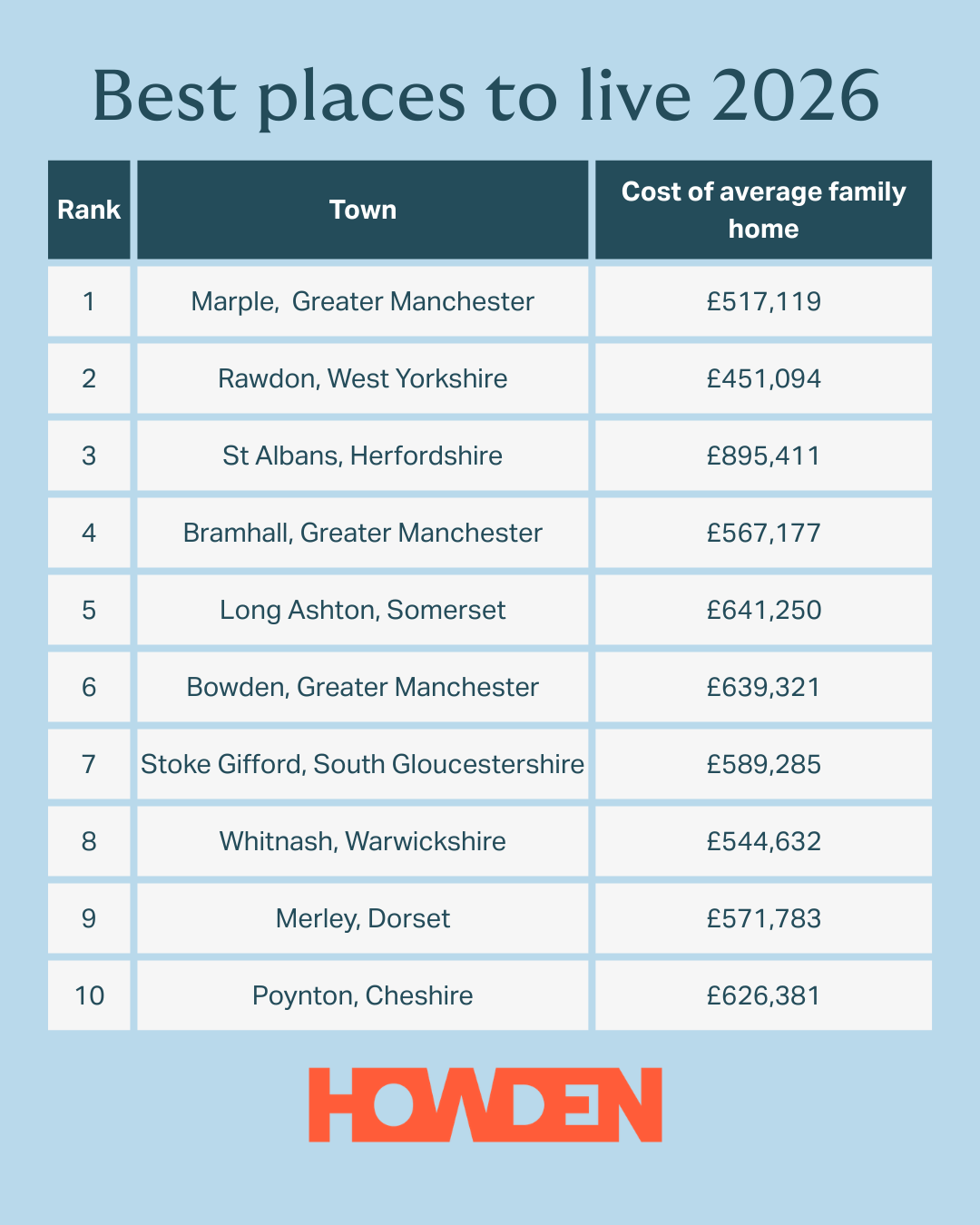
The latest market report has the picturesque small town of Marple in Cheshire in the top spot of best places to live. With the Peak District National Park providing endless green spaces and natural beauty, alongside highly-ranked schools and a much-talked about “community spirit”, it’s no wonder that people are clamouring to purchase a Georgian or Victorian property in the area.
The runner-up baton has been claimed by Rawdon, just outside of Leeds. This sweet spot combines a village-style sense of Yorkshire calm with swift access to the city and all the amenities that come with that. St Albans in Hertfordshire snags a very respectable third place. The ancient Roman city has an abundance of highly-ranked schools, large parks, and culture that has along appealed to Londoners seeking a more enriched lifestyle that promotes personal wellbeing.
The UK Wellbeing Report 2025 notes growing gaps not only between different regions but even within the same cities, stressing that quality of life is heavily influenced by access to reliable transport, amenities, and supportive neighbourhood structures. It’s why markets like the South West, parts of Scotland, and Northern coastal towns are seeing renewed interest: buyers aren’t just looking for homes – they’re looking for better lives.
How life satisfaction ties in with where you live
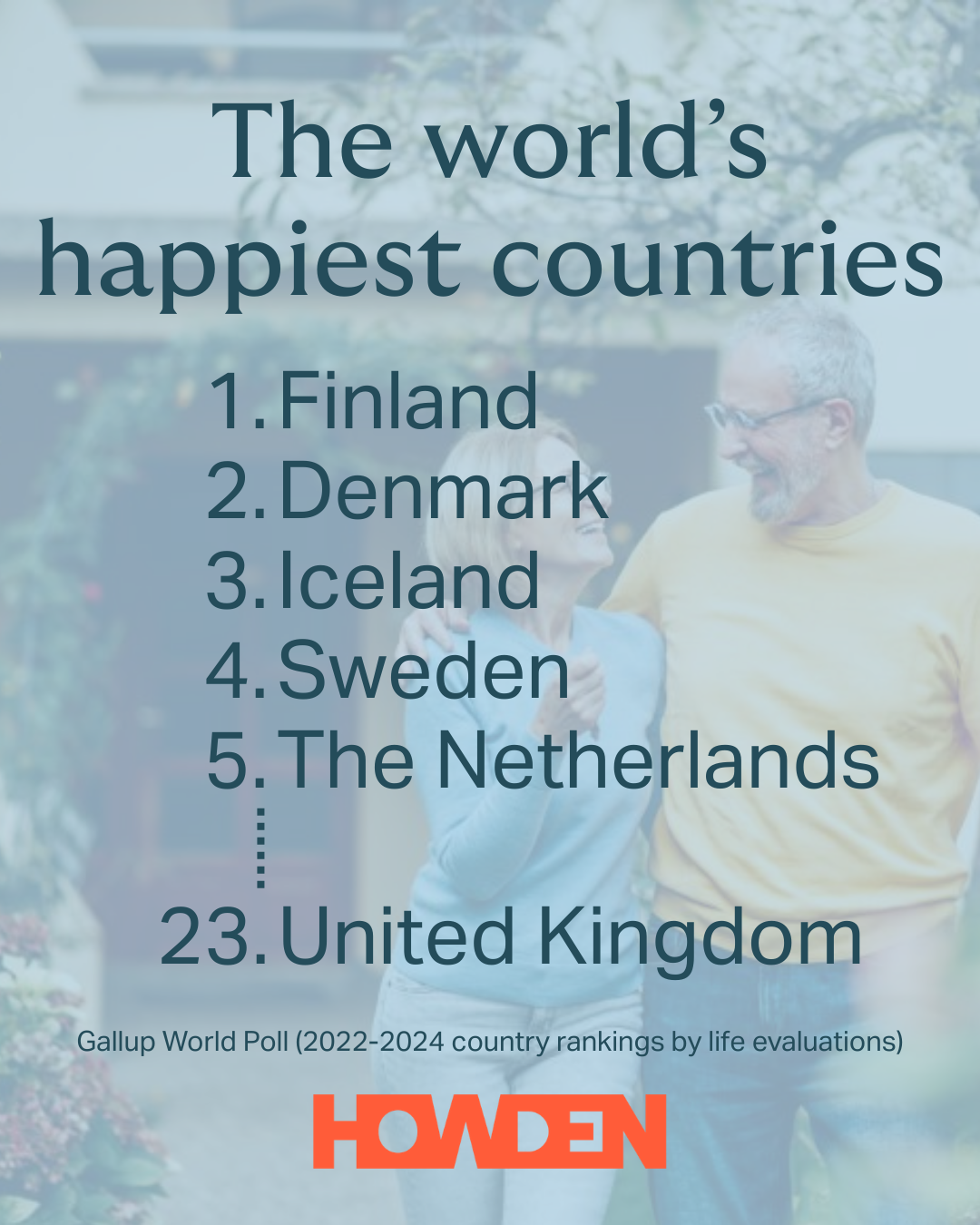
This may or not be a surprise, but the UK has dropped to 23rd out 147 in the 2025 World Happiness Report, its lowest ranking since 2017. This poor show immediately raises concerns and questions as to the “why?”
These stats say plenty about how we actually feel, which can vary hugely between regions and physical environments – for example, town versus rural living. Urban centres often report lower wellbeing scores due to affordability challenges, limited space, and weaker community ties. Coastal and rural areas, by contrast, tend to benefit from stronger social networks, more access to nature, and slower paces of life – all significant contributors to wellbeing and increasingly a draw for relocators.
Meanwhile, UK surveys indicate that the average happiness rating as of July 2025 was seven out of 10, with older adults reporting the highest scores (7.7 among people aged 70+). This trend reinforces why areas with older or more settled communities – often smaller towns, villages, and suburban pockets – are rising in demand: they naturally offer the social stability and sense of belonging that homebuyers are seeking.
There’s no place like a happy (and protected) home
Where you live shapes so much of your day‑to‑day experience – your sense of community, access to green space, and how supported and settled you feel – making it a powerful indicator of overall happiness. As more people choose places that offer connection, calm and a stronger quality of life, it’s clear that the right environment can meaningfully lift wellbeing.
And while finding that place is a big part of feeling happier, protecting it matters too. That’s where Howden comes in –with the reassurance that the home contributing to your wellbeing is covered, so you can focus on enjoying the life it helps you live.
Sources: University of Oxford, World Happiness Index, Garrington
You could also read:
- Who’s responsible for clearing up after a storm?
- Which cars have the highest recall rates?
- The van models most likely to fail their MOT
- Don’t let winter weather stop your home renovation plans!
- The true cost of accidents abroad
This is a marketing blog by Howden.