
The numbers are in, and the National Highway Traffic Safety Administration (NHTSA) has revealed which carmakers topped the recall charts in 2025. While these figures make for eye-catching headlines, they don’t always tell the full story.
A recall doesn’t necessarily mean a car is unreliable – often, it’s about manufacturers acting fast to keep drivers safe. In fact, recalls can be a sign of a company prioritising safety over reputation. Still, if you’re curious whether your car made the list, here’s what the data shows.
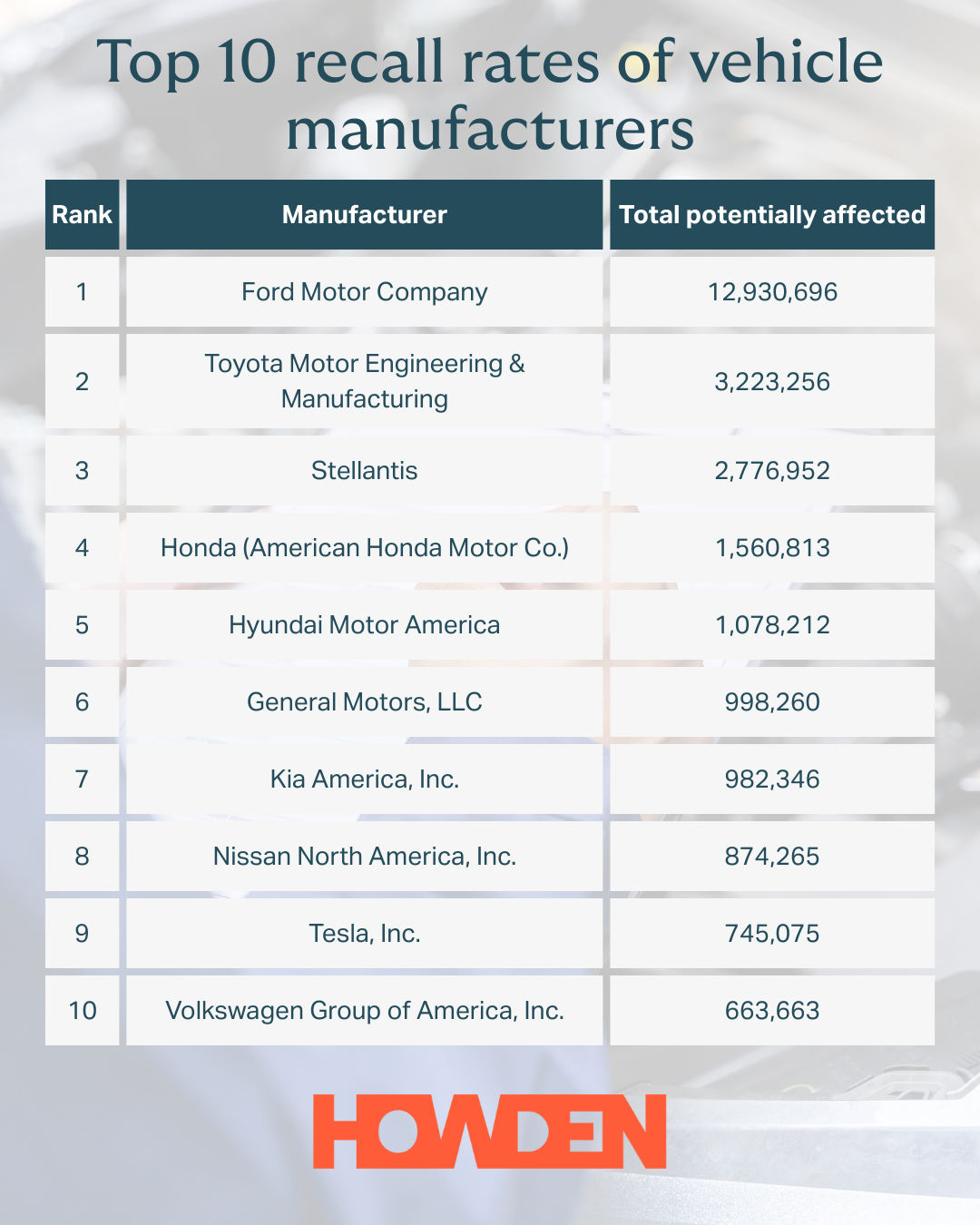
The top 10 car brands for recalls
1. Ford – 12,930,696 vehicles
Taking the top spot is Ford, which smashed through the 10-million mark. But don’t take that to mean their vehicles are poor quality. Last year, Ford issued a record 153 safety campaigns. CEO Jim Farley says this is part of a strategy to catch issues early, even if that means more recalls now to prevent bigger problems later.
2. Toyota – 3,223,256 vehicles
Toyota had far fewer campaigns (just 15), but each covered a huge number of cars. The biggest? A rear view camera defect affecting over a million vehicles.
3. Stellantis – 2,776,952 vehicles
Jeep Wrangler and Grand Cherokee 4xe plug-in hybrids were among those recalled for potential battery fire risks.
- Honda: 1,560,813 vehicles (including Civic alloy wheel issues)
- Hyundai: 1,078,212 vehicles (seat belt buckle concerns)
- General Motors: 998,260 vehicles (engine component defects)
- Kia: 982,346 vehicles (fuel tank fire risk)
- Nissan: 874,265 vehicles (engine failure risk)
- Tesla: 745,075 vehicles (biggest fix delivered via OTA update)
- Volkswagen: 663,663 vehicles (rearview camera and engine cover issues)
These figures highlight how a big recall count doesn’t automatically mean a car brand is unreliable. It’s a bigger picture reflecting how many issues there are, but also how they are identified, reported and addressed.
Are cars becoming less reliable?
“They don’t build ’em like they used to.” You’ve probably heard it before – and there’s some truth behind the nostalgia. Modern cars are packed with tech: advanced infotainment systems, driver-assist features, and complex electronics. That’s great for convenience, but it also means more things can go wrong.
Here’s the surprising part: newer cars (0–4 years old) spend 20% more time off the road for repairs than older ones (5–9 years). But it’s not because they’re more unreliable, necessarily.
The same study found that older cars were, on average, only slightly more likely to have at least one fault in that same time: 31% of older cars had a fault compared with 25% of newer vehicles. So what’s causing the repair hold up?
- Parts shortages: Older models have established supply chains, and manufacturers have optimised their processes to build a stock of common parts. But for newer cars, that’s a bigger work in progress.
- Skills gap: Today’s vehicles are highly technical, and there’s a shortage of trained technicians to fix them quickly.
It’s not that new cars break down more often – both age groups have a similar 7% breakdown rate. But when something does go wrong, fixing a modern car can take longer.
What does this mean for you as a driver?
Cars are more advanced than ever, but complexity brings challenges. Longer repair times, software glitches, and parts delays are becoming part of the ownership experience. And with recalls on the rise, it’s clear that even big brands are struggling to keep pace with innovation.
While tech can let you down, it’s important that your insurance – or roadside recovery – is always there to support you when you need it. From breakdown cover to courtesy car options, Howden helps keep you moving – even when your car doesn’t.
Sources: NHTSA, Autoblog, Which?, CarBuzz
You could also read:
- The true cost of accidents abroad
- Don’t let winter weather stop your home renovation plans!
- Fraudsters turn to AI to fake insurance claims
- Burglary hotspots in the UK
- The new EU rules: what you can (and can’t) bring home!
This is a marketing blog by Howden.