

As temperatures drop across the UK, most drivers will be aware of the dangers of snow and ice on the road. Standard tyres tend to struggle on cold, slippery surfaces, making steering and braking feel a bit more lively than usual.
Cold weather can also affect the pressure in your tyres. Tyre pressure is one of the simplest things to overlook, yet it shapes the way your car handles every journey. Regular checks during the colder months can make all the difference, improving your grip and traction on icy roads, reducing fuel consumption and most importantly keeping you safe on the road this winter!
How does the cold affect your tyres?
Your tyre pressure tends to fall once the cold weather sets in. As temperatures fall, the rubber becomes firmer and less flexible. At the same time, molecules move less actively and “huddle together,” causing the air to become denser and take up less space. This exerts less force against the interior walls of the tyre, leading to a lower pressure reading.
You’ll often sense this before you see any warning light – the car might feel a little heavier on a frosty morning or the steering may feel less responsive. As a rule of thumb, when the temperature decreases by about 10°C, tyre pressure drops between 1 to 2 PSI, or 0.07 and 0.14 bars.
All tyres let out air over time, so a quick monthly top up keeps them working as they should, whether they are summer, winter or all season. Checking them regularly also makes it easier to notice if one tyre is falling behind the rest, which can be a sign of a leak.
The dangers of driving with low pressure tyres
Driving with underinflated tyres comes with its own unique set of risks, which can include:
- Longer braking distances: Soft tyres spread out more on the road. This reduces grip and means the car needs more space to stop, especially on wet or icy surfaces.
- Reduced handing and control: Low pressure affects how the tyre supports the car’s weight. Changes in the size of the tyre’s contact patch will affect how much grip you have and how the car responds.
- Tyre wear: low pressure can cause uneven wear, leading to faster tyre damage and punctures.
- Higher fuel consumption: A softer tyre creates more drag. The car works harder to move, which increases the amount of fuel you use on each journey.
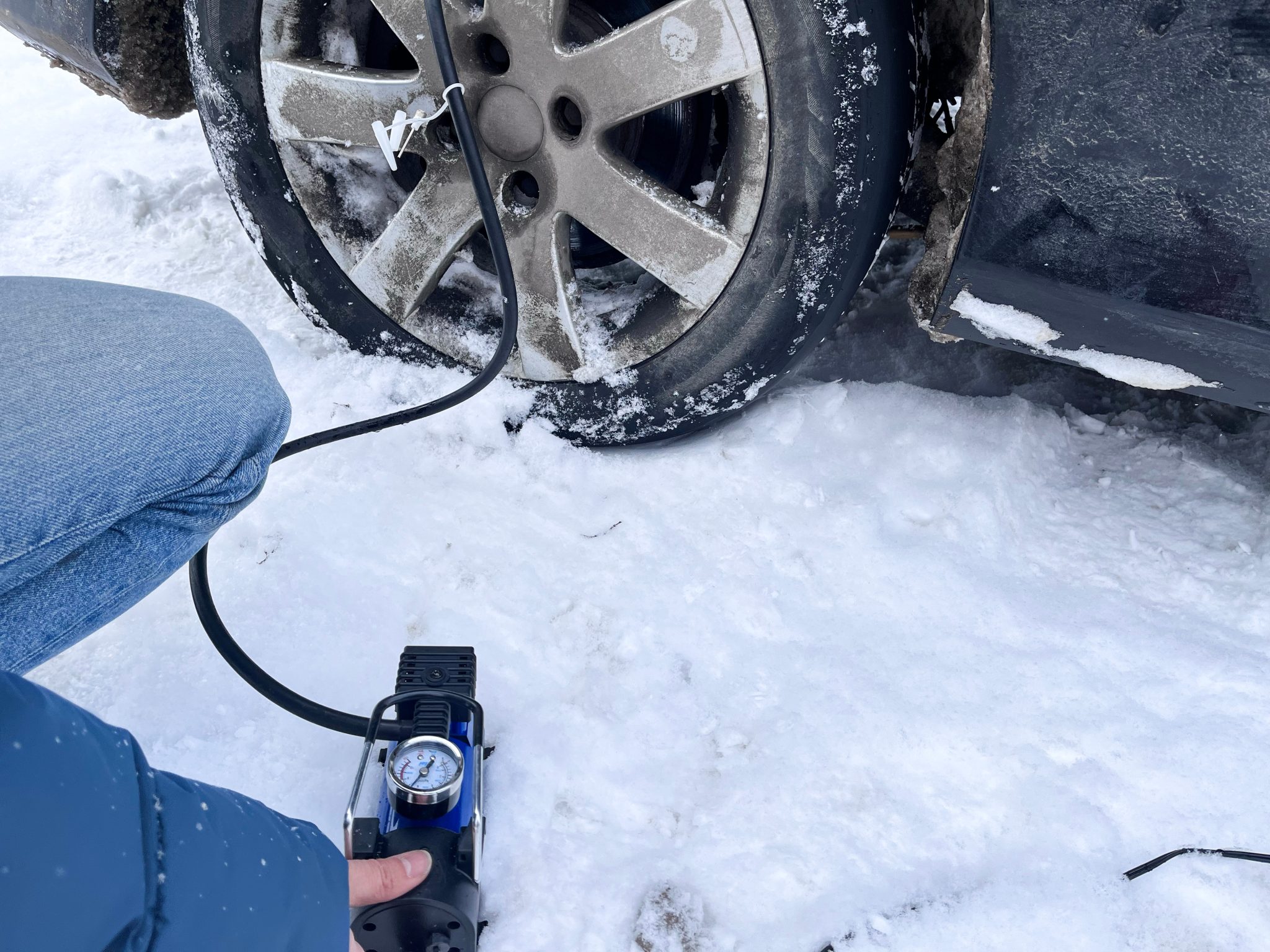
How can I tell that my tyres need inflating?
A pressure gauge is the simplest way to check, but if you don’t have one to hand here are some easy ways to tell that your tyres might be underinflated:
- Dashboard warning light: your tyre pressure monitoring system (TPMS) will warn you if there is an issue with your tyre pressure, although it shouldn’t be a replacement for manual checks.
- Steering feels ‘sluggish’, unresponsive or pulls to one side
- Visible checks: look for tyres that appear to bulge or sit lower to the ground
Tip: Even if your tyres look fine, a tyre can be under‑inflated before anything is obvious to the eye. That’s why it’s always good practice to check them regularly and inflating your tyres to the level set by your car manufacturer, whatever the weather decides to do.
If you’re unsure what pressure your tyres should be, there are several ways to find out:
- Inside the driver’s door
- In your vehicle handbook
- The inside of your fuel cap
How to check and adjust your tyre pressure
As inflation tends to drop with the temperature in cold weather, it’s important to check your tyre pressure every two weeks, or at the very least once a month. Here’s what you need to do:
1. Start with cold tyres
You’ll get the most accurate reading when the tyres have not been driven on for a while, such as first thing in the morning. Once the tyres warm up on the road, the pressure rises slightly, which can make the reading less reliable.
2. Use a reliable pressure gauge and air compressor
You can pick up a good‑quality gauge or small compressor from most auto stores. Many petrol stations also have both available, which makes it easy to check your tyres whenever you stop for fuel.
3. Check the pressure and make any adjustments
To check the current pressure of your tyres, remove the dust cap from the tyre valve and place the gauge firmly onto the valve stem. Hold it in position until any brief hiss of escaping air stops. The gauge will then show your pressure in PSI or bar. Compare this reading with the number in your handbook.
- If the pressure is too high, gently press the valve to release a small amount of air.
- If it is too low, attach the compressor and inflate the tyre until it reaches the recommended level.
While you’re checking pressure, take a moment to look at the tread depth. It needs to sit well above the legal minimum of 1.6 mm across the central three quarters of the tyre, around the entire circumference. Good tread gives you stronger grip when the roads turn slick.
Final thoughts
It’s easy to underestimate the effect cold weather has on your tyres, but with a little TLC you can keep them in good shape through the colder months. Winter driving can feel like enough of a challenge, so regularly checking your tyres is an easy win. Pop it on your winter to‑do list so you can stay safe on the roads, whatever the weather brings!
You could also read:
- Turning ‘likes’ into ‘leads’ – how to use social media to generate new business
- The van models most likely to fail their MOT
- The true cost of accidents abroad
- Don’t let winter weather stop your home renovation plans!
- Fraudsters turn to AI to fake insurance claims
- Burglary hotspots in the UK
This is a marketing blog by Howden.