Category: General Interest

  • Cost of living: our Top 5 inflation busters!

    Cost of living: our Top 5 inflation busters!

    Households are feeling the squeeze – with the energy price cap rising by 54%, or £693, from April, and prices rising across the board, many of us are looking into discount codes and cashback schemes to bridge the gap.

    We’ve asked our team which codes, tips and cashback schemes they recommend, here are our favourites!  
    Discount Sites - A-Plan Insurance
    Discount Sites – A-Plan Insurance

    1. Cashback sites

    Many of the A-Plan team suggested Quidco, with some earning from £52 cashback, to over £2,300!

    Quidco offers deals such as 52% cashback on RAC breakdown cover, 10% cashback if you spend with Very, £35 cashback if you switch gas and electricity with USwitch, plus big cashback deals on broadband and mobile phone contracts.

    If you’re hoping to get away this year, they offer up to £133 cashback for holidays to Disneyland Paris, while EasyJet offers 2.5% cashback and Expedia offers 10%. Most of the big names are catered for, whether vacation or staycation, so take a look at Quidco before you book.

    2. Prescription glasses for £20

    Buying your prescription glasses online can save you a fortune, and they offer a money back guarantee if you’re not happy with your order. It’s easy to upload your prescription, choose your frames and lenses and your glasses will be posted directly to you – all for a hugely discounted price.

    One team member regularly purchases prescription glasses from Goggles4U, the latest discount reduced the total from £82 to £21! Use the code ‘SMILE73’ to save 73% on your frames and lenses. Delivery is an additional £3.99. Frames start at just £6.99 even without a discount. Go to Goggles4U here.

    If you prefer to use Glasses Direct, trying using the code ‘HALFOFF’ to get 50% off your frames, and you’ll get a second pair for free plus free delivery! Alternatively, new customers can currently buy two pairs of designer glasses for just £35. Go to Glasses Direct here.

    Top Tip: Once you sign up for their newsletters, they will send you promotion codes so it can be worth holding out until the biggest discount hits your inbox.

    3. Mobile phone deals

    There are a number of schemes available to reduce your contract price or phone bill:

    Airtime Rewards

    Airtime Rewards works in a similar way to other cashback sites but rewards you by paying your phone bill as you spend.

    It works with most of the major networks including EE, O2, Giff Gaff and Vodafone but do check if you are with a smaller provider. The average user saves £10 per month, however depending on your spend, your rewards could pay your mobile phone bill entirely.

    Download the app to your mobile device, link your payment cards to it, and automatically earn when you shop at Asda, Wilko, New Look, Greggs, Boots and many more!

    Blue Light Card

    If you have friends or family working in the social care sector, services or NHS, Blue Light offers big discounts ranging from Service Days at theme parks, to regular 10% savings at Starbucks and 30% savings at Levi’s.

    O2 is currently offering a 25% discount on their O2 ‘Refresh’ airtime plan while Vodafone offers a discount of 15%, and £25 off with Affordable Mobiles.

    It’s worth noting that anyone who works in the qualifying sectors is eligible, not only frontline workers (it takes a team, after all). Take a look at Blue Light Card here. The best way to manage it is via the app, where your digital card is also stored (as you will need to present this in shops). 

    O2 Open

    O2 don’t advertise the ‘O2 Open’ scheme, which offers employees of certain businesses up to 25% discount. Pop into any O2 branch to ask whether your employer is on the scheme, or alternatively you can text ‘OPEN’ with your company name to 61202 and they will text you back to let you know.

    If your company is registered with the scheme, you can claim back your discount once you’ve bought your new phone or tablet (within 28 days of purchase). Find out about O2 Open here.

    4. Share your online subscriptions

    You don’t need a code to save money by splitting the cost of your streaming services with friends and family, you just need their permission.

    How many profiles can I have on Netflix?

    Create up to five profiles on one Netflix account! For just £9.99 a month, you can split the bill with your family or support those struggling financially, which could save nearly £600 if each person paid for their own account!

    Each person controls their own profile (which you can set up in advance), you just need to share the login. From Hollywood blockbusters to Peaky Blinders and The Crown, there is something for everyone, of any age.

    Top Tip: Make sure you use a different login to those you use for other logins and choose something that you will all remember. Take a look at our blog on password security before setting it up, here.

    What is Amazon Prime Household?

    It’s rarely advertised, however you can share your Amazon Prime account with someone else in your household and save £79 per year. The person who already owns a Prime account can add a non-Prime member by clicking here, entering their name and email, and Amazon will link the accounts. Be aware that the joint account will be able to access the main account holder’s payment methods.

    Share all the benefits of Prime, from Fast and Free Prime Delivery, to the digital sharing of eBooks and audiobooks – a great option for book lovers.

    Can I share Spotify?

    While the free version of Spotify is pretty good, many don’t realise that you can share the Premium version (no ads!) with up to 6 others.

    If you are already paying for Spotify, it could be worth sharing one subscription with someone you live with. There are two option: Premium Duo or Premium Family.

    • Spotify Duo provides two Premium accounts for two individuals in one household for £13.99 per month, or £7 per person, which saves around £70 per year versus two individual accounts not sharing.
    • Spotify Premium Family is designed to share one paid subscription with your household of up to 6 people for £16.99 per month, which equates to £2.83 per month per person for uninterrupted streaming.

    If you are a fan of podcasts, this could be great option for you – take a look at the Spotify Podcast Chart here. You can cancel at any time, so it could be ideal for those ‘summer in the garden’ months, or ‘winter on the sofa’ months.

    5. Cheap cinema tickets

    Here are some of our suggested routes to get cheaper cinema tickets:

    • Tastecard30% off cinema tickets at over 350 cinemas, plus 2-4-1 on meals out plus many other perks. Tastecard is currently offering new subscribers 90 days for free and you can cancel when it expires, ideal for the half term holidays!
    • O2 Odeon Tickets – if you are with O2, download the Priority app to get one free Odeon cinema ticket every week. 10,000 tickets are released each Tuesday from midday and they are only valid on a Monday.
    • Tesco Clubcard – use your vouchers to purchase Cineworld or Picturehouse cinema tickets with £1 of vouchers worth £3 towards your ticket. You can also buy Cineworld Unlimited Pass with vouchers!
    • Go on a Monday – many don’t realise it, but your local cinema usually costs less on a Monday – our local Cineworld charges just £6.99 on a Monday!

    Of course, when it comes to A-Plan savings, those who switch their home and car insurance to A-Plan save £245 on average when moving both policies to us. If you, or someone you know, would more information, simply contact your local branch.

    If you have any suggestions, why not share them in our feed!

  • The Long Way Round for the Spirit of 63!

    The Long Way Round for the Spirit of 63!

    We talk to Jim Crutchley, the latest owner of the celebrity ‘Spirit of 63’ Lambretta! Jim is also the manager of ex-Deep Purple’s Glenn Hughes, and has recently collaborated with Tony Iommi from Black Sabbath and Xerjoff on The Scent of Dark perfume launch and video. This is his adventure.

    A scooter’s journey from BritPop to Australia

    Fun fact: ‘Spirit’ features heavily in the Ocean Colour Scene 1996 video ‘The Circle’, and was subsequently bought by band member Steve Cradock! It is believed to have played a pinnacle part in the 90’s BritPop era and inspired many more mods on many more scooters.

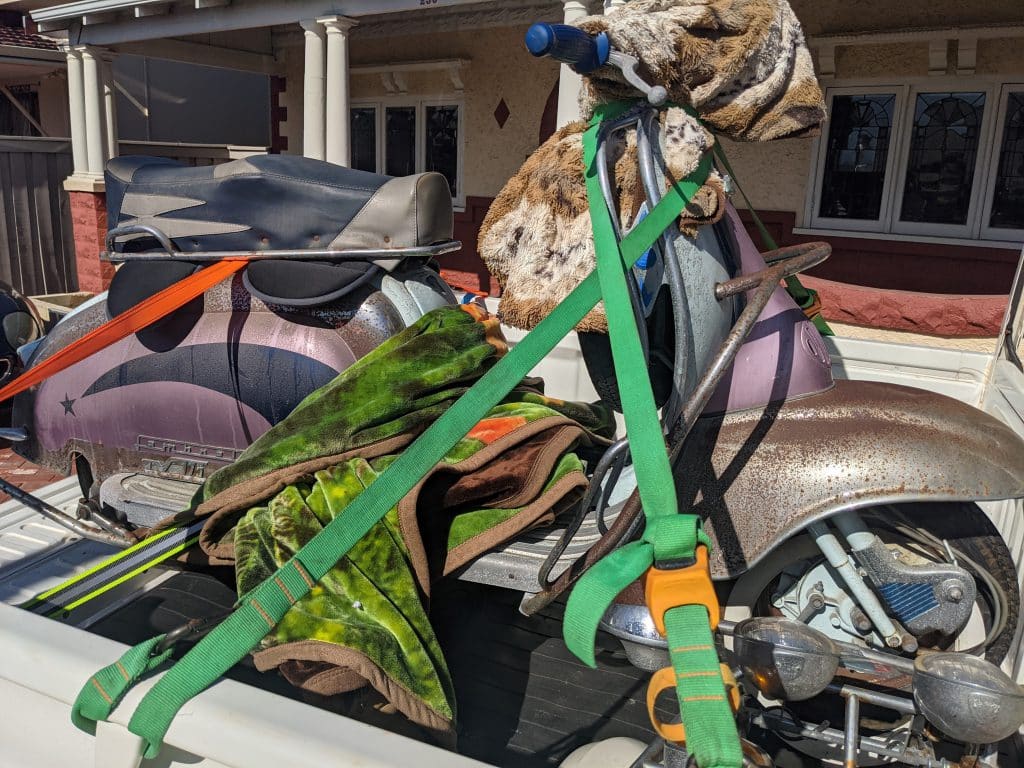
    “In 1998, my brother and I were heavily into the BritPop scene.” remembers Jim. “My father took us to Gran Sport, a Lambretta and Vespa scooter shop in Birmingham – and that’s where I first spotted ‘Spirit’ at the back of the showroom (Dez Askill, the shop owner, pictured on Spirit above, created ‘Spirit of ‘63’ – before then, scooters were being restored to factory colours and specs).  

    BritPop: Steve Cradock on ‘Spirit’. Image courtesy of Jim Crutchley, taken by Tony Briggs.

    “My brother recognized it as the one owned by Steve Cradock of Ocean Colour Scene, but was only 13 at that time, so being able to buy it wasn’t an option – I had to stick with my posters, photos and literature about it for a while longer.

    Seventeen years later, after establishing myself in the music industry, my search began in earnest. Spirit didn’t seem to appear in scooter circles, or on eBay, but eventually it did appear! In Australia.

    “Its British owner had emigrated to Australia, taking Spirit with him, but then moved to the USA for work, keeping Spirit in the back of a shipping container in Perth.

    An eagle-eyed Brit, Paul Gixey, spotted Spirit in the container looking worse for wear, cleaned her up and brought her back to her former glory. I followed the story on Facebook and messaged Paul to congratulate him on the great job he had done, which really ignited a fire in me. We developed a friendship, I offered to buy it and finally, he brought Spirit back to the UK!

    Shortly after Spirit was found in Australia. Image by Paul Gixey.

    “Typically, I was on tour in Mexico, then Sweden, when it returned to the UK, but I thought, ‘I’ve waited 17 years, I can wait a little longer’! Finally seeing it for the first time was a fantastic feeling – it took me back to being in Gran Sport as a 13-year-old with my brother and father. As the scooter was beautifully restored by Dez in 1993, and has seen very few miles since, it is running very well.”

    Part of British Lambretta History

    The Spirit of ’63 has its place with the British Lambretta Archive.

    Built in 1959, the Series 2 TV175 model is a ‘Ridgeback’ example, which features a ridge on the frame tube, built by Innocenti in Milan. The production of this particular model ceased in November 1961.

    It’s hard to believe that ‘Spirit’ is now over 60 years old – with so many used in sporting events, there are few left that haven’t been involved in a crash or collision!

    Not only it is accessorised with an original Covolo seat and Ulma double leg shield trim it also includes 4 mint condition Raydyot lights, original badge bar and twin exhaust, making it truly unique.

    Spirit was also quite the supermodel, gracing the cover of national scooter magazine ‘Scootering’ a number of times!

    Allstyles: passion for scooters, trikes and motorcycles

    In its 60+ years, this Lambretta has certainly enjoyed a full life and shows no signs of retirement thanks to its new owner – and the Allstyles team who are proud to play a small part in its big history!

    Jim came across Gary’s details via a Facebook poll, titled ‘Who is the best to insure scooters?’ and Allstyles, part of A-Plan Insurance, was top of the poll!  Gary Youngs and his Allstyles team are scooterists themselves, with a cool collection of Lambrettas, Vespas and a Triumph complete with ape hangers, to mention a few.

    “Gary has been great from start to finish,” confirms Jim. “I’m very happy with the cover and will continue to use Allstyles for years to come!”

    If you have a motorbike or scooter, whether standard, vintage or customised, and value speaking to fellow enthusiasts, it could be worth a quick call with Allstyles. You can contact the specialist team directly on 01206 821330.

  • 10 Clean Air Zones to be aware of in 2022

    10 Clean Air Zones to be aware of in 2022

    Many towns and cities across the UK have announced the development or extension of Clean Air Zones which will affect both petrol and diesel vehicles. We run through some of the most recent schemes and outline what you need to know.

    What are ‘Clean Air Zones’?

    A Clean Air Zone (CAZ) is an identified area where the oldest, most polluting vehicles are issued a daily charge if they enter the zone, which you will need to pay online. It works in a similar way to the low emission zone in London. It is a UK Government scheme designed to target high-pollution areas, or areas ‘which exceed European legal limits’, as a result of the new World Health Organisation guidelines to reduce air pollution by 2030.

    If you travel to Europe in your van, it’s worth mentioning that there are also a number of European cities that are participating in the initiative, from Limburg in Germany to nine cities in France including Paris and Nice, and Belgium, Sweden, Spain, and Denmark have similar schemes rolling out over the year, so do check before you go.

    Where are the new Clean Air Zones?

    Clean Air Zones in Aberdeen

    Along with other Scottish cities, low emission zones are being considered in 2022 for Aberdeen, with the areas of Willowbank Road and Virginia Street, and Sken Street and West North Street named in the planning. As of November 2021, Aberdeen City Council agreed a final Low Emission Zone which has been submitted to the Scottish Government for approval, and a view to introduce it during 2022.

    The scheme will be launched with a ‘grace’ period of two years which means that non-compliant vehicles won’t be charged until June 2024, after that it’s £60 per vehicle. There is a £2,500 grant available for ‘micro-business’ van drivers (per vehicle) to use for updating, upgrading or replacing vehicles.

    Clean Air Zones in Bath

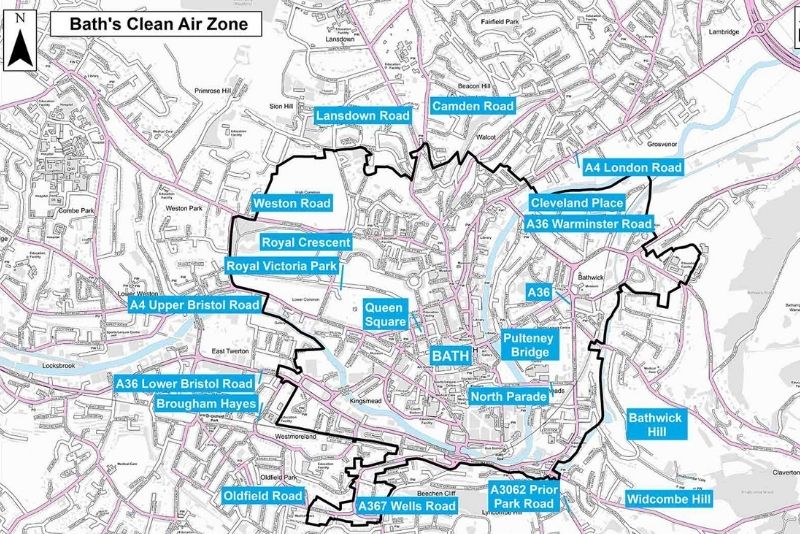
    If you haven’t been to Bath for a while, you may be surprised to know that it now has a ‘Class C’ Clean Air Zone. Launched in Spring 2021, it was the first city outside of London to have a charging zone.

    There are options for local businesses to request an exemption and apply for a discount online.

    If you aren’t exempt and do enter the zone, the charge is £9 for taxis, private hire vehicles and vans, and £100 for buses, coaches, trucks and lorries.

    If you drive a private car, hybrid, motorbike, or vehicle that complies with the emissions requirements or is exempt, there is no charge.

    Clean Air Zones in Birmingham

    Birmingham has a Class D Clean Air Zone, and although launched in June 2021 is still in its infancy and facing some teething problems with incorrect charges and penalties being issued (so do check carefully when you make payment). Just over 6 months into the scheme it has been estimated that 6,000 fewer vehicles are driving within the Clean Air Zone each day. Prior to charging being introduced, it was estimated that 18,787 non-compliant vehicles were driving through this area each day.

    The green zone covers roads inside Birmingham’s A4540 Middleway, with charges of £8 for non-exempt cars, vans and taxis, and £50 for HGVs and coaches. There is £40 million in grants available from the council to support local businesses in adapting their vehicles. Local businesses can apply for an exemption subject to certain conditions, here.

    Clean Air Zones in Bradford

    The new Bradford Clean Air Zone is set to be launched in Spring 2022. The UK Government has instructed Bradford to introduce a Class C Clean Air Zone, which will affect commercial vehicles, including buses, coaches, lorries, vans and taxis, however, passenger cars are not affected.

    Local businesses and registered organisations are eligible to apply for up to 3 vehicle exemptions. This means that if you are one of the 85% of commercial vehicles expected to enter the zone from outside the district, you will need to pay a fee.

    Clean Air Zones in Cardiff

    It has been reported that Cardiff has ‘the worst pollution in Wales’, if not in the entire UK, with 220 deaths reported each year as a result of nitrogen dioxide pollution. Some measures have already been implemented, such as the closure of Castle Street to private vehicles and enforcing 20mph limits.

    A Clean Air Zone is currently being considered, which could span Central Station, Queen Street Station and the castle is currently being proposed, as part of a 10-year, £2bn transport scheme. We would advise you check progress by giving the Council a call before you head out.

    Clean Air Zones in Leeds

    After speaking directly with Leeds Council after seeing a mix of information available online, it has been confirmed that the Leeds Clean Air Zone has been discontinued. The decision was made following air quality improvements primarily linked to local fleets transitioning to cleaner vehicles faster than expected (the Council has attributed this to the Clean Air Zone policy and financial support made available).

    A joint review with Government found that air quality at key locations was unlikely to exceed legal limits again. The council are continuing to take action to improve air quality, but there are no current plans to introduce a charging zone unless air quality degrades again.

    Clean Air Zones in London

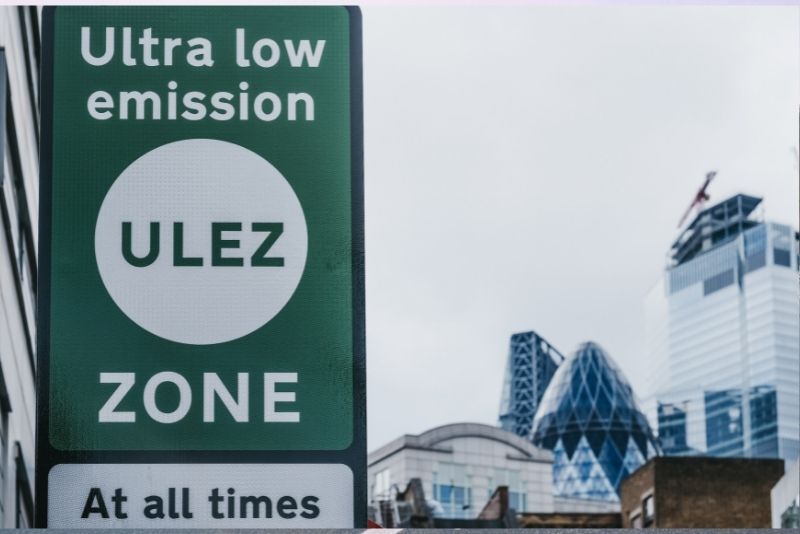
    Many may be aware that the ‘ultra-low emission zone’ was broadened in October 2021 to cover Greater London, charging all but the cleanest of vehicles £12.50 per day. The minimum emission standards for a van are Euro 4 for petrol or Euro 6 for diesel, so do check the zone boundaries before you travel.

    As of January 2022, the Council is considering extending the emission zone across the whole city in a bid to meet the Governments environmental targets by 2030, to cut London’s road use by a further 27% between now and then. The option is to extend the zone or charge non-London registered travellers to access the city.

    Clean Air Zones in Manchester

    From 30 May 2022, there was due to be a Clean Air Zone in Greater Manchester, following after a lengthy review which discovered that pollution levels exceeded legal limits on 152 stretches of road!

    As of 5th February, the scheme has been placed on hold, due to fears of putting thousands of businesses and jobs at risk. Non-compliant drivers were set to be charged £60 a day with the 493 square miles of the Clean Air Zone. The plans have only been paused however, and Manchester will still need to meet the Government’s air pollution requirements by 2026. You can keep tabs on the scheme here.

    Clean Air Zones in Newcastle

    Newcastle’s Clean Air Zone is planned for July 2022. And for businesses wanting to upgrade or modify their vehicles to fit the ‘exemption’ category, the Council has a pot of £23m available for grants. Earlier reports illustrated that up to £4,500 could be made available to those wanting to upgrade any light goods vehicle, while heavy goods vehicle owners could get the maximum grant available of £20,000.

    The zone will cover Newcastle city centre as well as routes over the Tyne, Swing, High Level and Redheugh bridges, and will apply to all taxis, vans, buses, coaches, and HGVs that do not meet the emission standards. It is estimated that the cost for a non-exempt van will be £12.50 a day.

    Clean Air Zones in Portsmouth

    With vehicles causing 50% of air pollution, deemed more harmful than passive smoking, Portsmouth launched their Clean Air Zone in November 2021. If you drive a non-compliant vehicle, it could be worth applying for an exemption or ‘sunset period’ to avoid the charge while you upgrade your vehicle. They have released a useful animation which outlines all you need to know.

    Clean Air Zone exemptions

    You’re automatically entitled to a national exemption, and do not have to pay a charge, if you have:

    • a vehicle that’s ultra-low emission
    • a disabled passenger tax class vehicle
    • a disabled tax class vehicle
    • a military vehicle
    • a historic vehicle (i.e. registered in the DVLA historic tax class and exempt from road tax)
    • a vehicle retrofitted with technology accredited by the Clean Vehicle Retrofit Accreditation Scheme (CVRAS)
    • certain types of agricultural vehicles

    You can find your vehicle’s emission standard in your log book.

    Over 60 Local Authorities have been advised by the Government to implement the scheme. Find out more about where you’ll find Clean Air Zones, including how to create a business account for multiple vehicles via the government website. If you are planning to drive through Clean Air Zones in Bath, Birmingham, Bradford, Greater Manchester or Portsmouth, use this service.

    The Clean Air Zone Financial Support Scheme is available to help either replace or retrofit non-compliant vehicles so that they meet emissions standards. Funding is intended to support micro-businesses, sole traders, the voluntary sector and private owners to upgrade to compliant vehicles. If you are a tradesman and likely to travel into Clean Air Zones frequently, the costs could soon mount up, so it may be worth considering your options sooner rather than later. Find out more about the Clean Air Zone Financial Support scheme here.

  • Are Insurance Brokers Worth It?

    Are Insurance Brokers Worth It?

    Whether you’re buying your very first car or starting a new business venture, insurance is something that everyone has to deal with in life. While insurance can feel like just one more thing on your plate, it’s often a legal requirement (depending on what type of insurance you need). You don’t want to be stuck in a situation where you have to pay out thousands for an incident, because you’re not covered by an insurance policy.

    If you’re looking for an insurance policy, you might be wondering whether insurance brokers are worth it. Is it best to enlist the help of a broker, rather than using an insurance comparison website, or going directly to an insurance company yourself?

    While it can be tempting to deal with insurance yourself, especially with insurance comparison sites that shoot out quotes in seconds, this won’t always get you the cheapest deal, or the right insurance for your business, property or possessions.

    In this article, we’re going to cover exactly what insurance brokers are, what they can do to find you the best insurance policy, and whether insurance brokers are worth it.

    Are insurance brokers worth it?

    Insurance brokers are definitely worth it because they have the expertise to find you the best insurance deal, while making sure that your insurance policy is especially tailored to your situation and whatever you are insuring, unlike insurance comparison websites, whose quotes are likely to be too generalised to cover every eventuality.

    Insurance brokers are also worth it because they can access insurance deals which most insurance companies won’t advertise to customers, and they usually have prior relationships with insurance companies, so they can get much better deals for you than if you were to approach the company yourself, or use an insurance comparison website.

    Choosing insurance is a very complex business, and insurance plans can be complicated. An insurance broker has the skills to decipher subtle differences between policies, and will do the research to ensure you get the best one for you.

    For example, if your vegan cafe is suddenly booming with takeaway orders during lockdown, an insurance broker would be able to identify your need for cyber insurance, to protect you against cyber-hacking if you take payments over the internet, or hold sensitive customer data.

    Insurance brokers also help you after your insurance plan is in place, for example, checking whether you need to change or update your policy, and helping put in insurance claims.

    What is an insurance broker? (UK)

    An insurance broker in the UK is someone who goes between yourself and different insurance companies to find you the best insurance policy.

    Insurance brokers work for you, not insurance companies, so it’s in their best interest to find you the right coverage in your budget, which protects all the things you need to insure.

    Their job is specifically to represent your interests, rather than favouring any particular insurance company. As an insurance broker’s business won’t succeed unless they do a good job for their clients, you can trust that they will find you good deals, tailored to your specific situation.

    It doesn’t cost anything to use an insurance broker. They make their money in small commissions from the insurance company they find you a policy with. Because insurance brokers represent consumers rather than insurance companies, they can’t bind your insurance (confirm that your insurance coverage is in place).

    Usually an insurance agent of the company you end up getting insurance with will do this, and it just means that you’ll be covered in terms of insurance until your policy is officially issued by your insurance company.

    How to find an insurance broker safely

    To ensure that your insurance broker is legitimate, always check that:

    • They are regulated by the Financial Conduct Authority, which works to protect consumers in the financial market. All legitimate brokers should appear on the Financial Services Register on the FCA’s website, and it’s definitely a warning sign if they don’t.
    • They don’t use insurance comparison sites. A legitimate broker will have established relationships with insurance companies and won’t need to look on comparison websites that are publicly available to anyone. Also, it is against the Terms and Conditions of comparison websites for anyone except a customer to use them.
    • That they have a website. If you can only find an insurance broker via a social media account alarm bells should be ringing, as if you don’t have any proof that they’re a real company, they could well be a scam.

    9 reasons insurance brokers are worth it

    Free to use

    It shouldn’t cost anything to get expert guidance from an insurance broker, because they take commission from the insurance provider they link you up with. So, you won’t have to pay any fees on top of your insurance premium (monthly payments to the insurance company you end up with), which means you get personalised, expert advice on the best insurance without paying a penny.

    Although insurance brokers do receive a commission from the insurance company you sign up with, you don’t need to worry about them pushing you to buy something more expensive than you need. Insurance brokers are bound by a fiduciary duty to act in your interests and create a relationship with you based on trust and confidence.

    A fiduciary duty exists to ensure that the people managing how you spend your money (here, your insurance broker) are loyal to you, and that there is no conflict of interest between you, the person they owe the duty to, and themselves.

    Find the best product for you

    Unlike a price comparison website, an insurance broker can take into account every detail of your personal situation, to find you the best policy. And unlike an insurance company, an insurance broker gets no benefit out of encouraging you to choose any provider other than the one which offers you the best coverage.

    Because you communicate with them directly, an insurance broker will also have more details about your insurance needs than a price comparison website, so they’ll be able to tell you if policies are already covered by your existing insurance, so that you don’t end up paying doubly for something you don’t need.

    Also, insurance brokers have connections with a wide range of insurance companies, which means they can access policies which aren’t necessarily advertised by companies.

    Impartial and expert advice

    Because insurance brokers are independent companies who serve you (and whose business flourishes as a result of finding you the best insurance deals), you can trust that you’re getting impartial advice from an insurance broker.

    Price comparison websites are often marketed as good options for time poor people, but getting a quick quote based on a few automated algorithms, and only seeing examples of companies who have paid to be featured on these websites, may not be the best option.

    Having real experts at a company work on your behalf to find you the best insurance plan is a more trustworthy option, as you’ll get the key advice and warnings on coverage and insurance loopholes that you’d be unlikely to access anywhere else.

    As the very reputation (and therefore continued business) of an insurance broker company is based on trust, you can feel secure in the fact that your insurance broker will support your interests alone.

    Cut through the jargon

    Insurance policies are necessarily complex, because they have to spell out in every possible manner what is covered and what is not, and simple language leaves too much room for ambiguity.

    As a result, getting an insurance broker who understands these details and can explain each policy, as well as work out the type of coverage you need, is a huge part of finding the right insurance.

    If you’re opening your dream business for the first time, or insuring the mobile home you and your spouse have finally saved up enough money to buy, you don’t want to have to puzzle out what insurance terms like ‘subrogation’, ‘indemnity’ and ‘uberrimae fidei’ mean.

    Finding an insurance broker who can cut through all the professional jargon to find out which policy will protect your business and possessions the most for the least money, means you can focus on enjoying your new home, or making your first business profit.

    The best prices

    Not only are insurance brokers experts in finding you the best deals for your insurance needs, they can often get you cheaper policies than if you were to go directly to insurance companies, or use comparison sites.

    This is because insurance brokers often have special relationships with insurance providers which mean they can get you a cheaper deal. You’re also more likely to get cheaper coverage through an insurance broker, because insurance companies know that people using insurance brokers make fewer unnecessary claims and are more likely to be insured for the right amount (because they’ve used insurance experts to organise their policies), saving the company money.

    Insurance brokers can also find you the cheapest deals, because their years of experience in the industry mean they can use special tactics to get the most out of insurance companies for the least amount of money.

    Helps you find a specialist provider

    If you need specialist insurance cover – for example, critical illness, income protection or if you have an unusual home (for example, a house with a thatched roof) – you should always go to an insurance broker.

    This is because you’re unlikely to find the range of coverage (or any coverage at all) you need in terms of specialist insurance on an insurance price comparison website.

    Whether you want to insure something unique and highly expensive, like a rare antique or a collection of paintings, or a special day like your wedding, an insurance broker will know both where to go, and the range of options that are available to you, so you secure a fair price for your insurance premium.

    Manages your claims

    Not only are insurance brokers experts in finding you insurance policies, they also deal with your claims (when you need to claim back costs for something you’ve got insurance coverage, for example, damage to your home).

    If you need to make a claim, you’re likely to be in a stressful situation, for example, there may have been an injury in your workplace, or someone has died and you need to claim life insurance.

    Insurance brokers can speak to loss adjusters (the people who investigate claims, especially if they’re complex) and claims departments on your behalf, to ensure that you get your insurance payout, and make the process as hassle-free as possible.

    Long-term support

    Insurance is so much more than just signing up to a policy. As situations change , your insurance needs to reflect this, to ensure that you’re continuing to get the right coverage for the right price.

    It’s common to sign up to an insurance policy and feel like you’re on your own from there (for example, you’d have to negotiate claims yourself), but with an insurance broker, you get a long term source of support and expertise.

    As insurance brokers aim to build long lasting relationships with you, they can offer regular reviews to see that your insurance is working for you, and find you new deals when it needs to change.

    Frees you up to do what you want to do

    Let’s face it, no business owner, home owner or anyone seeking insurance really wants to spend hours of their free time trying to decipher insurance policies.

    We all have busy lives with work, social engagements and caring responsibilities, and the great thing about an insurance broker is that they free up your time to do what you need to do (your job or running your business, for example).

    Insurance brokers take responsibility to explain the fine print of your insurance policy to you, and disclose any cover that isn’t offered in your policy, so you know exactly you’re signing up to.

    Now that we’ve gone through all the details of whether insurance brokers are worth it, we hope you’ve found this a useful read. Remember that you have lots of options when it comes to insurance, and insurance brokers will always be there to explain the complex details to you, and make sure you get the best price.

  • The advantages and disadvantages of using insurance brokers

    How many times in your life will you take out an insurance policy? If you own your own car, home or business, then it will likely be a lot. And it’s not a one-time only task; most policies must be renewed every year.

    Knowing your policy is due for renewal can often cause a groan as you make a note to put aside a few hours of your time to sort out a new policy. If you don’t want to trawl through comparison sites, submitting the same details again and again in a bid to find the cheapest price, not to mention the companies that aren’t listed on comparison sites, you may be weighing up the advantages and disadvantages of using an insurance broker.

    You may think that having someone arrange all of your yearly insurance policies will be too expensive. You might be wary of not getting the proper coverage. Or you may not even know what an insurance broker does!

    In this article we will cover what insurance brokers do, and the advantages and disadvantages of using insurance brokers.

    What are the advantages and disadvantages of using insurance brokers?

    There are many advantages of using insurance brokers. With access to a wide range of products in the market they can often find deals that would not be available to you via insurance companies or through comparison sites. Insurance brokers are very knowledgeable, using their expertise and assessment of risk to find a product that provides cover for exactly what you need. And by not charging a fee (brokers take commission from insurance companies when you take out a policy), you can potentially save a lot of time and money, especially if you have multiple policies.

    The disadvantages of using insurance brokers are similar to using any service: you want to deal with an expert who you can trust and has your best interests at heart. Good insurance brokers should be impartial, work for you, and only recommend products and policies that benefit you. They should not feel like a salesperson.

    We will dive into more detail about the advantages of using an insurance broker, as well as the disadvantages, but first let’s take a quick look at what exactly insurance brokers do.

    What does an insurance broker do?

    An insurance broker acts as an intermediary between you and the insurance provider, helping you to find a policy that best suits your needs. Unlike an insurance provider, insurance brokers are not affiliated with a particular company and have access to multiple products in the market. They don’t charge to use their service, instead they make a commission when a customer takes out a policy with a provider. This arrangement means it is in the broker’s interest to provide you with the best policy within your budget.

    Now that we’ve covered what a broker does, let’s take a more detailed look at the advantages and disadvantages of using one.

    Advantages of using an insurance broker

    If you think that using an insurance broker will be too expensive, will take too much time, or they won’t be knowledgeable enough to help with the niche product you require, then think again. Often the simplest and most cost-effective approach to taking out a policy can be to use an insurance broker. They have access to a wide range of products, don’t charge you any fees, and are highly knowledgeable about the various insurance markets. Let’s take a closer look at the benefits.

    Saves you time

    Over the course of a year the average person may need to take out car insurance, home insurance, travel insurance, health insurance and life insurance. If you manage your own company then you can add business insurance and public liability insurance to the list too. The short of it: managing insurance policies takes up valuable time. If you are sourcing all of these policies directly via insurance providers then you are potentially having to complete multiple quotes and carry out research and price comparisons for lots of different policies.

    The beauty of using an insurance broker is that they can search a range of providers for each of your insurance policies, providing the right coverage at the best price. You won’t be bogged down by lots of choices as they will only show the best products that apply to your circumstances. Even better, an insurance broker will also ensure your policies are up to date and stay on top of any legislation changes.

    Access to more products

    If you go directly to an insurance provider you will only be able to choose from the range of policies they sell, which can often be limited. Insurance brokers, by not being tied to any single provider, have access to a wide variety of products and policies across the market – which is particularly beneficial if you need specialist insurance that is only covered by a few select companies.

    Brokers are also likely to find more options than you would from searching comparison sites. This means they can usually find products that are better tailored to your requirements and at a cheaper price.

    Focused on your needs

    Insurance brokers work for you, not for insurance companies. Their job is to find the most suitable policy for you within the budget you can afford. Unlike comparison sites, you can sit down in person with your broker to set out what you need and discuss any concerns. Your insurance broker will listen to what cover you need, provide independent and impartial advice, and recommend a product that best suits your requirements.

    Knowledge and expertise

    Insurance policies can often be quite confusing, particularly if you need specialist coverage for a niche product. You may be worried about covering yourself for additional damages or liability and end up taking out extras, or even a whole policy, that you don’t need. A good insurance broker will take the time to understand all your needs before recommending a product which fits you best. It is not in their interest to sell you something you don’t need.

    If you do have questions at any stage of the process, or you have a change in circumstances after you’ve taken out a policy, your insurance broker is expertly trained to offer impartial guidance and advice.

    Personal service does not cost you more

    You might think that using an insurance broker is a premium service you can’t afford but that’s not the case! Insurance brokers do not charge any fees but instead receive a commission from the insurance provider if you take out a policy. Their business model relies on repeat customers so it isn’t in their interest to recommend a policy that does not provide the right coverage for you.

    Often people use comparison sites to find the cheapest deal but in most cases, the cheapest deals are those available to brokers. Insurance brokers are in regular contact with insurance companies and can often secure better priced policies than would be available to the customer directly. Also, by only recommending policies that provide the best coverage, the customer is more likely to be insured for the right amount. This means the provider can charge less, saving you money.

    Take care of claims

    In the unfortunate event that you do need to make a claim on your policy, your broker may be able to handle the bulk of the work, speaking to loss adjusters and insurance claims departments on your behalf. Making an insurance claim can sometimes be a lengthy process, so knowing that your broker is on hand to help can be very reassuring.

    Renewal

    Most people dread renewing their annual insurance policies. Spending hours scouring comparison sites to find the best deal can be a pain, especially if you have two or three different policies that renew at different times throughout the year.

    One major advantage of using an insurance broker is that once you’ve used their services, they have all of your details on file and know when your policy is due for renewal. They can do all of the legwork for you, find the best deals available, and save you time and effort. What’s more, if there are any changes to your circumstances, or you need to amend your policy, then they can take care of it.

    Disadvantages of using an insurance broker

    As well as the advantages, there are a few disadvantages of using an insurance brokers. Let’s take a look at some of them.

    Concerns about dealing with a salesperson

    Insurance brokers should be impartial and independent, working to meet your needs and requirements. If you feel like they are trying to sell you a policy that you haven’t asked for or don’t need, then you need to question your involvement with that broker. A good insurance broker should work with your budget to find the best policy available for you.

    May lack knowledge of specific products

    Having access to lots of providers means brokers cover a lot of insurance industries. If you need insurance for a very specific policy such as marine insurance, you may worry that a broker won’t have the same level of expertise as a company who only deals with those types of policies.

    In answer to that, a good insurance broker will already be familiar with many of the policies on the market and will be able to carry out thorough research on any products a customer is interested in.

    Summary

    Having covered the advantages and disadvantages of using insurance brokers, we hope you have found this a useful read. Everyone is likely to take out an insurance policy at some point during their lifetime, and for most people this will include multiple policies every year. Knowing the best options and services available to you can save you time, money and stress. Overall, engaging with a great insurance broker means you have more time and money to spend on the things that matter, letting someone else take care of the paperwork.

  • Don’t get ripped off by fake car insurance claims management companies

    Don’t get ripped off by fake car insurance claims management companies

    Just recently, one of our clients called out of hours what they thought was the Howden Insurance car claims helpline, but luckily were quickly able to identify that it wasn’t in fact Howden Insurance at the end of the line.

    Warnings from both the Insurance Fraud Bureau and the Association of British Insurers were made in 2020, highlighting the risk of these click-to-call advertisers, pretending to be an insurance firm or broker, so they can scam clients out of money.

    If you need to make a car claim

    Always talk to your local Insurance branch, if needed visit our website directly at aplan.co.uk and use the ‘find a branch’ tool to locate the details, and if contacting us out of office hours, call our helpline on 0330 008 4730.

    If you’re ever unsure if it’s us, offer to call us back, and follow the instructions above.  

  • 6 reasons to shop on your local high street

    6 reasons to shop on your local high street

    1. You boost the local economy

    Research on spending by local authorities shows that for every £1 spent with a small or medium-sized business, an estimated 63p stays within the local economy, compared to 40p for a larger business.

    2. You increase the value of your home

    High streets populated with thriving independent businesses boost the prices of nearby homes. Research by American Express in 2013 found that house prices near a prosperous town centre rose by an average of £40,000 more over the previous decade than other properties. Meanwhile, a higher prevalence of charity and discount stores tended to decrease home values in the area.

    3. It is more ethical

    When you shop at a local butchers, bakers, farm shop or greengrocer, it is likely that a decent percentage of the produce has had a short field-to-fork journey. As a bonus, it means that the food is likely to contain more nutrients and have less packaging (particularly plastic).

    4. You support local entrepreneurs

    Head to your local artisan market. These help bolster the talents of the next generation of British designers and retailers. There is a constant turnover of new products and sellers listen to customers’ demands. From food to fledgling clothing designers, there will be something for everyone.

    5. You help to build your local community

    Bookshops, cafes and craft shops often drum up custom by hosting events from reading groups to knitting clubs and children’s events. If local businesses are not supported, these fun local groups tend to disappear too.

    6. You might get a better deal or some good advice

    Local independent businesses can use their discretion to reward regular custom. Small retailers can give advice – such as a butcher giving advice on cooking times or how large a joint you might need to feed a family get-together (with some leftovers!).

    In a survey that we carried out earlier in the year, we found that 81% of high street shoppers trusted advice provided by local shops and businesses, over national chains.

    We also found that:

    • 74% prefer shopping locally to online.
    • 80% trust the advice provided by local shops/businesses over national chains.
    • 48% seek advice from staff before making a purchase.
    • 90% enjoy talking to staff in their local shops.
    • 80% believe their high streets need more independent shops.
    • 81% prefer face-to-face transactions to online.

     
    To speak to one of our local insurance experts, who can make sure you receive the proper advice about insurance, please visit your local A-Plan branch, on a high street near you!

    ·